Knight visor closeup
1344×768 · AVIF · CC BY 4.0
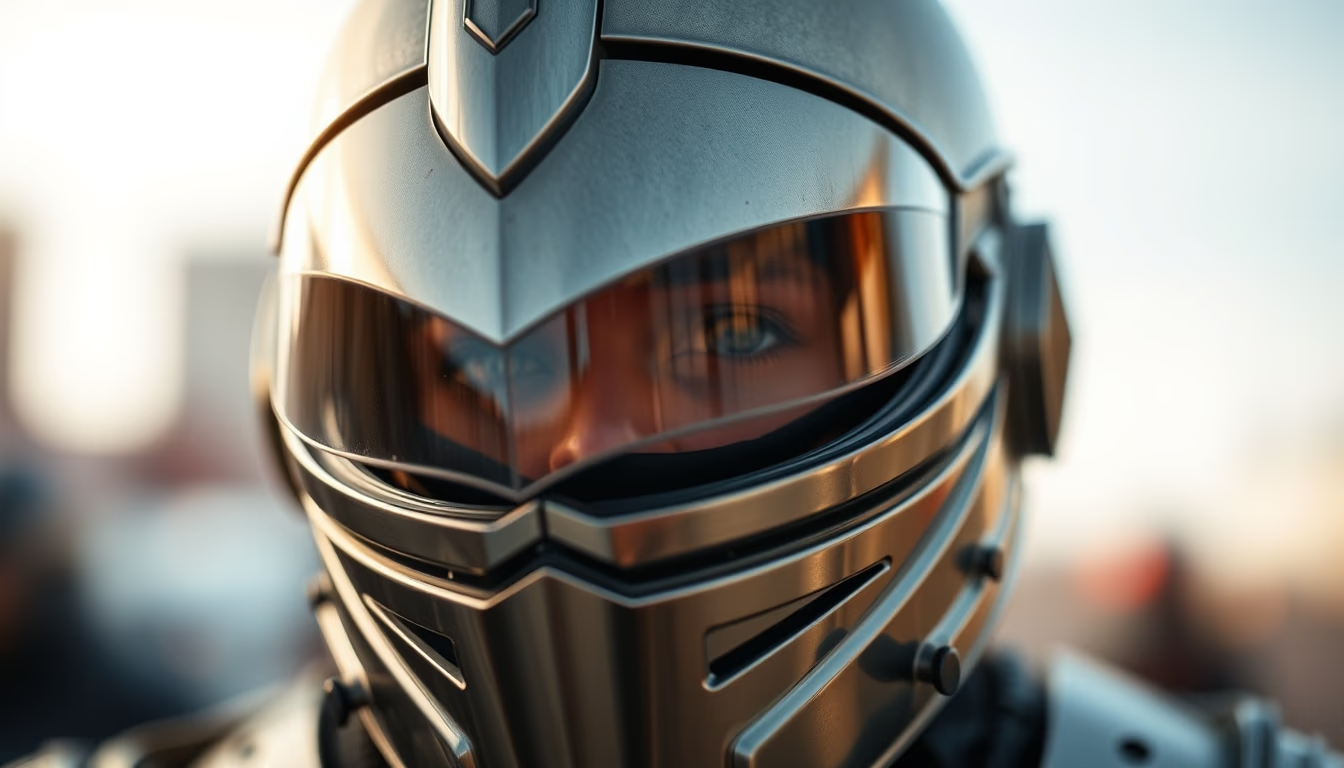
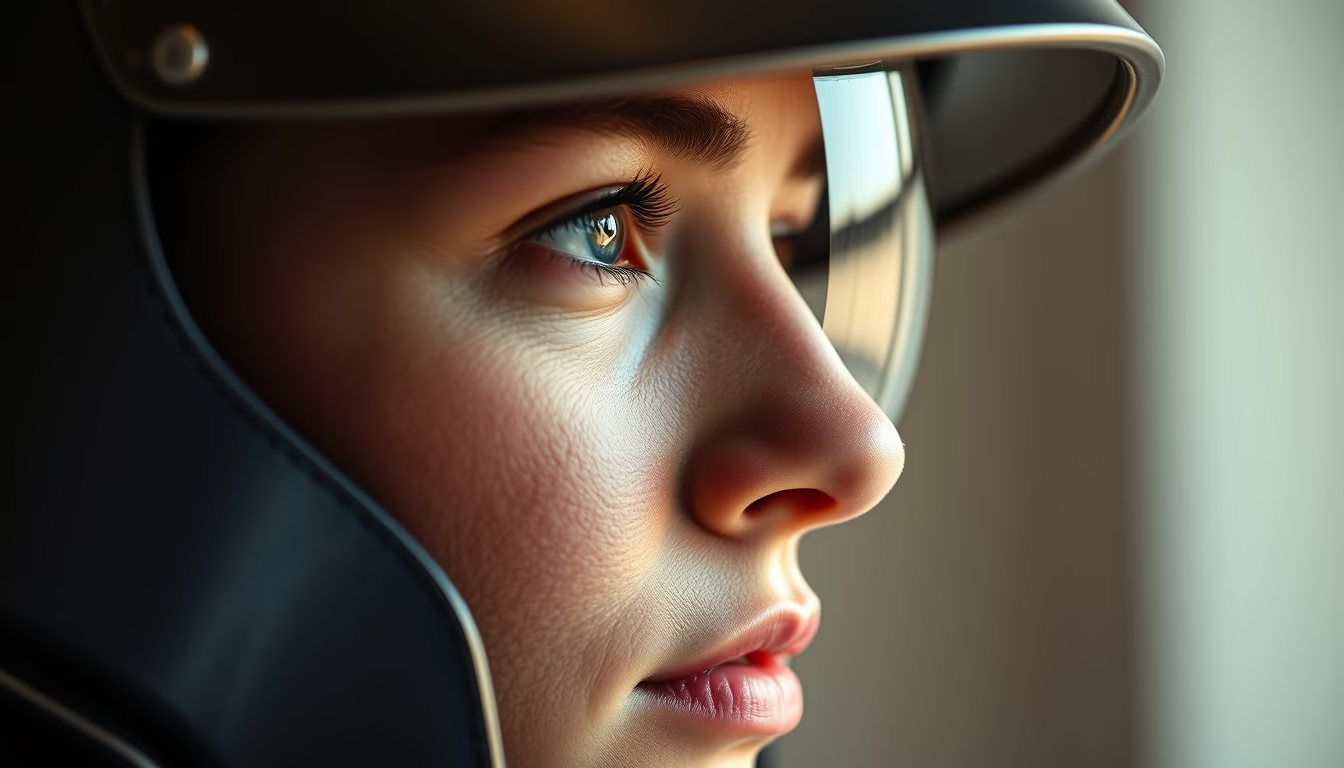
Close-up of a medieval knight helmet visor, a piece of armor that protected the face in battle.
About this subject
The visor of a medieval helmet, as depicted here, was one of the most iconic elements of plate armor. Developed between the 14th and 15th centuries, the visor's primary function was to protect the knight's face from sword blows, lances, and arrows while allowing vision and breathing through narrow slits. Visors varied in shape and complexity, from simple models with a single horizontal slit to articulated pieces with multiple openings and breathing holes.
Visor design evolved according to combat tactics and forging technology. In tournaments, for example, more closed and reinforced visors were common for extra protection, while on the battlefield models with better field of view were preferred. The metal used was usually tempered steel, hammered and polished, with sufficient thickness to withstand impacts without compromising neck mobility. Many visors were attached to the helmet by a lateral pivot, allowing them to be lifted when not in use.
Beyond practical function, the visor carried symbolism. In ceremonies and heraldic representations, a closed visor indicated readiness for combat, while an open one signaled peace. The pointed shape, common in German and Italian helmets, also had a defensive purpose: deflecting blows to the sides. The term 'visor' derives from Old French 'visière', related to 'visage' (face). Original pieces are rare and highly valuable in museum and antiquities collections.
Interestingly, the tilt-shift technique applied to the visor photography creates a miniature illusion, highlighting details of rivets, curvatures, and wear that tell a story of use and artisanal manufacture. Each imperfection in the metal reveals centuries of martial tradition and metalworking.
Frequently Asked Questions
How was the visor attached to the medieval helmet?
The visor was usually attached by a lateral pivot, allowing it to be raised or lowered. This mechanism facilitated ventilation and communication when not in combat.
What is the difference between a visor and a full helmet?
The helmet covers the entire head, while the visor is the movable frontal part protecting the face. Not all helmets had a visor; some used fixed protection with slits.
What materials were used in making visors?
Tempered steel was the most common material, forged and polished to withstand impacts. Some tournament visors could include additional iron or brass reinforcements.
Direct URL
https://pub-c7d6a6ea828543ac903a74a341ccb2e1.r2.dev/imagens/knight-visor-closeup-tilt-shift-miniature-p10.avifHow to credit
Include a visible link back to UtilizAí. Copy one of the snippets below:
<a href="https://xn--utiliza-eza.com/en/midia/imagens/knight-visor-closeup-tilt-shift-miniature-p10">Knight visor closeup</a> by <a href="https://xn--utiliza-eza.com">UtilizAí</a>, licensed under <a href="https://creativecommons.org/licenses/by/4.0/">CC BY 4.0</a>.
[Knight visor closeup](https://xn--utiliza-eza.com/en/midia/imagens/knight-visor-closeup-tilt-shift-miniature-p10) by [UtilizAí](https://xn--utiliza-eza.com), CC BY 4.0
License: CC-BY-4.0