Insect compound eye macro
1344×768 · AVIF · CC BY 4.0
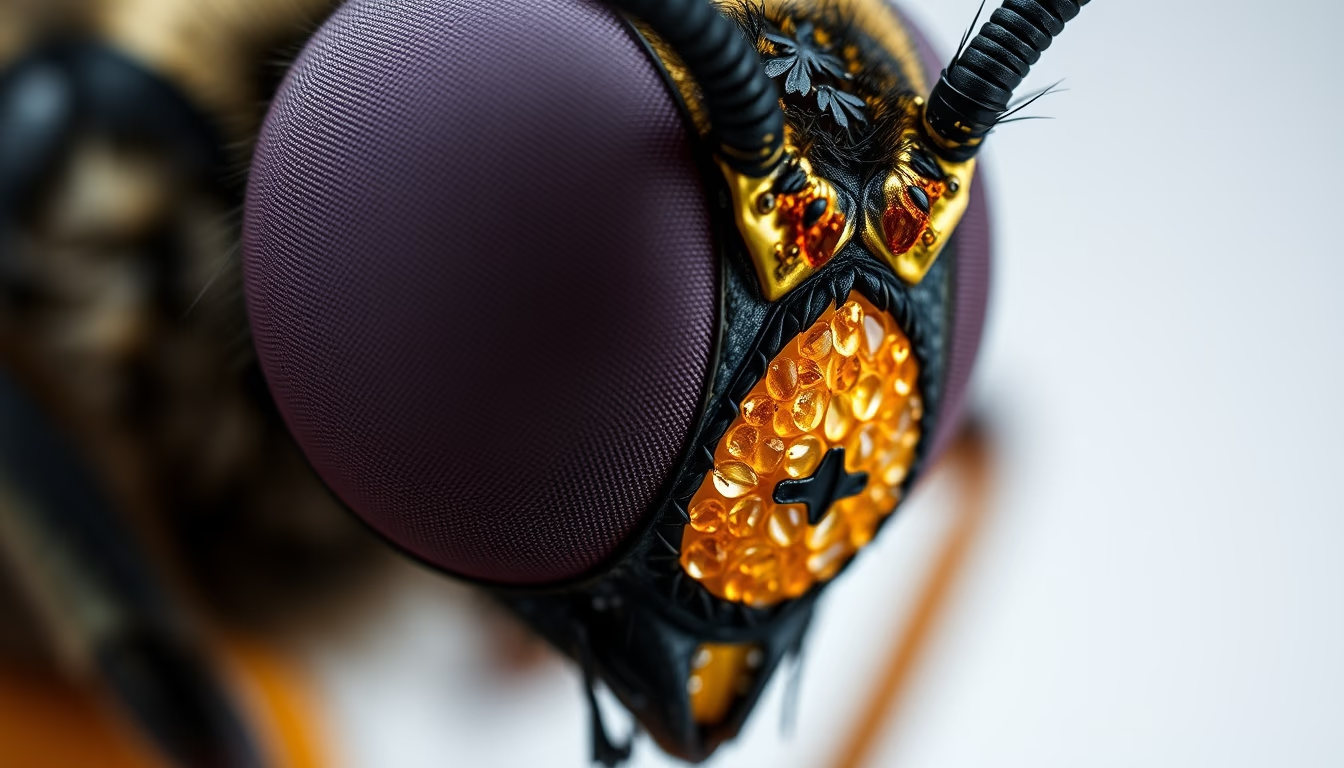
Insect compound eyes are fascinating structures composed of thousands of ommatidia, each functioning as an individual lens.
About this subject
Compound eyes are the primary visual organs of most insects, crustaceans, and some arachnids. Unlike human eyes, which have a single lens, compound eyes are made up of units called ommatidia. Each ommatidium contains a lens, a crystalline cone, and light-sensitive photoreceptor cells. The number of ommatidia varies widely among species: a dragonfly can have up to 30,000 per eye, while ants may have only a few hundred. This architecture provides an almost panoramic field of view, excellent motion detection, and good vision in low light, although resolution is generally low compared to vertebrate eyes.
The structure of compound eyes inspires technological innovations, especially in cameras and sensors. Researchers develop lenses inspired by ommatidia to create devices with wide angles of view and low distortion. In high fashion, the hexagonal pattern of ommatidia has been used in prints, fabrics, and jewelry, symbolizing precision and technological nature. The term 'high-fashion editorial' in the context of this image suggests a fusion between biology and aesthetics, where macro photography reveals details that look like abstract designs or luxurious textures.
A notable curiosity is that compound eyes do not see colors the same way humans do. Many insects see in the ultraviolet spectrum, which influences their navigation and foraging. Additionally, some insects, like the fruit fly, have compound eyes that change color depending on the angle of incident light, an effect called iridescence. This property results from nanoscale structures that interfere with light, a phenomenon also exploited in cosmetic pigments and automotive paints.
In nature, the compound eye is an example of evolutionary efficiency. Despite its apparent structural simplicity, it allows insects to perform acrobatic flights, avoid predators, and locate mates with precision. Macro photography of these structures reveals a microscopic world of geometry and function, which continues to inspire science, art, and design.
Frequently Asked Questions
How many ommatidia does an insect compound eye have?
It varies widely: ants may have a few hundred, while dragonflies can have up to 30,000 per eye. A yellow jacket wasp has about 5,000.
Do insects see in color?
Yes, but in a different spectrum. Many see ultraviolet, green, and blue. Few perceive red. UV vision helps them locate nectar in flowers.
Why are compound eyes used as inspiration in fashion?
The hexagonal pattern and iridescence of compound eyes create geometric textures and color effects reminiscent of high fashion, used in prints, embroidery, and jewelry.
Direct URL
https://pub-c7d6a6ea828543ac903a74a341ccb2e1.r2.dev/imagens/insect-compound-eye-macro-high-fashion-editorial-p3.avifHow to credit
Include a visible link back to UtilizAí. Copy one of the snippets below:
<a href="https://xn--utiliza-eza.com/en/midia/imagens/insect-compound-eye-macro-high-fashion-editorial-p3">Insect compound eye macro</a> by <a href="https://xn--utiliza-eza.com">UtilizAí</a>, licensed under <a href="https://creativecommons.org/licenses/by/4.0/">CC BY 4.0</a>.
[Insect compound eye macro](https://xn--utiliza-eza.com/en/midia/imagens/insect-compound-eye-macro-high-fashion-editorial-p3) by [UtilizAí](https://xn--utiliza-eza.com), CC BY 4.0
License: CC-BY-4.0