Industrial robot arm welding
1344×768 · AVIF · CC BY 4.0
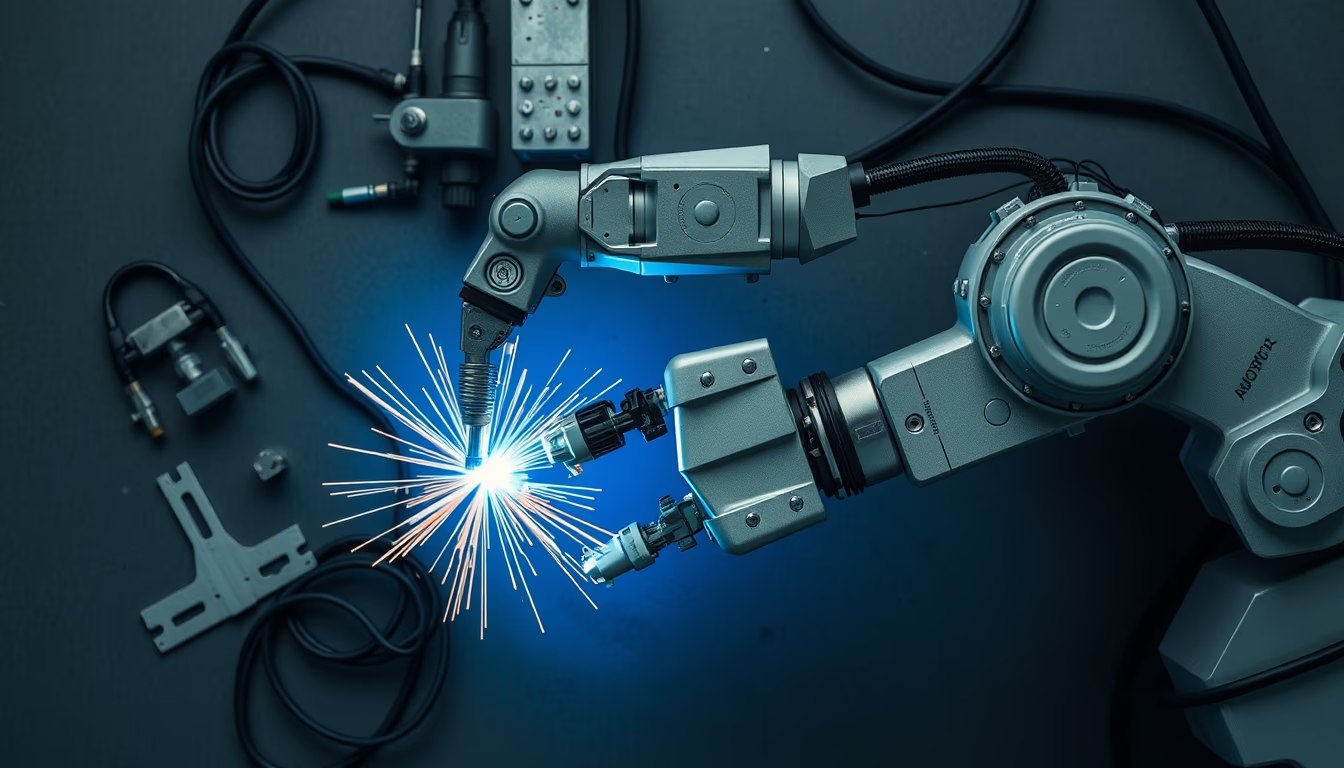
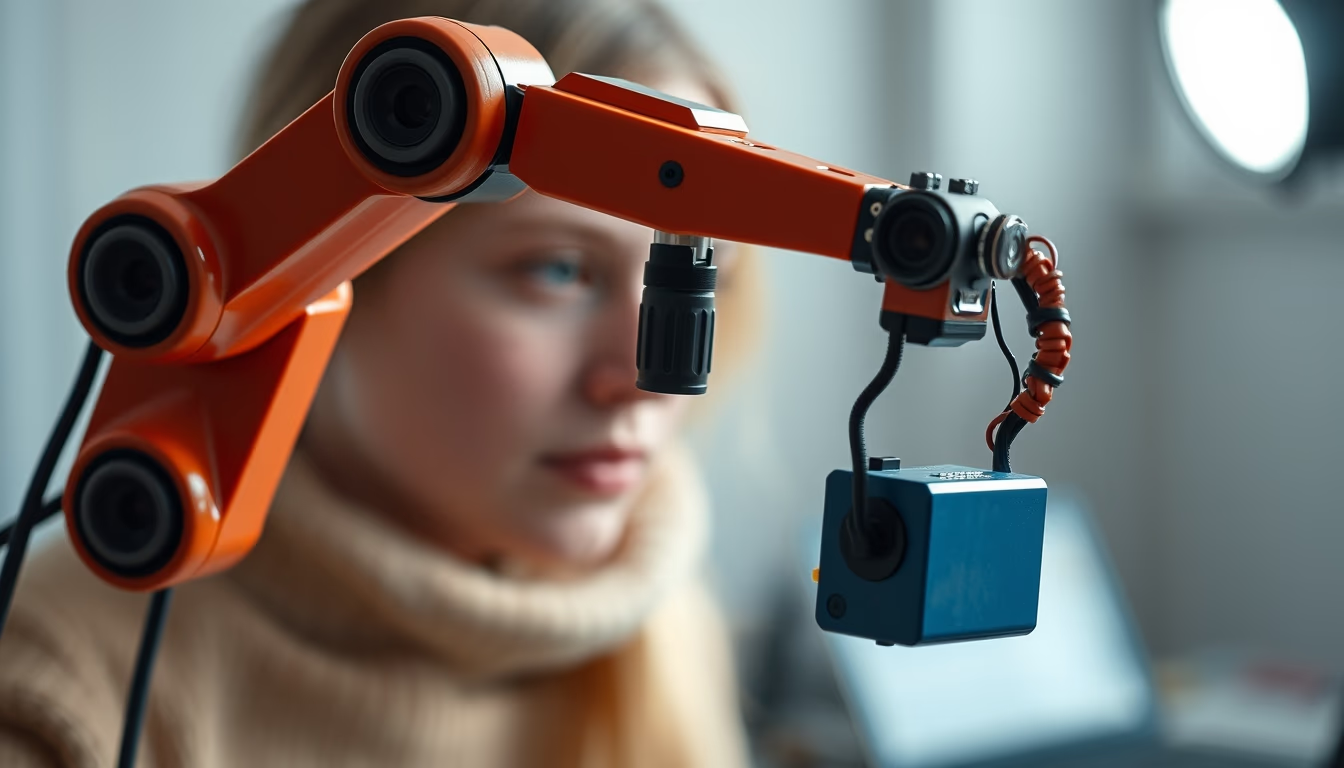
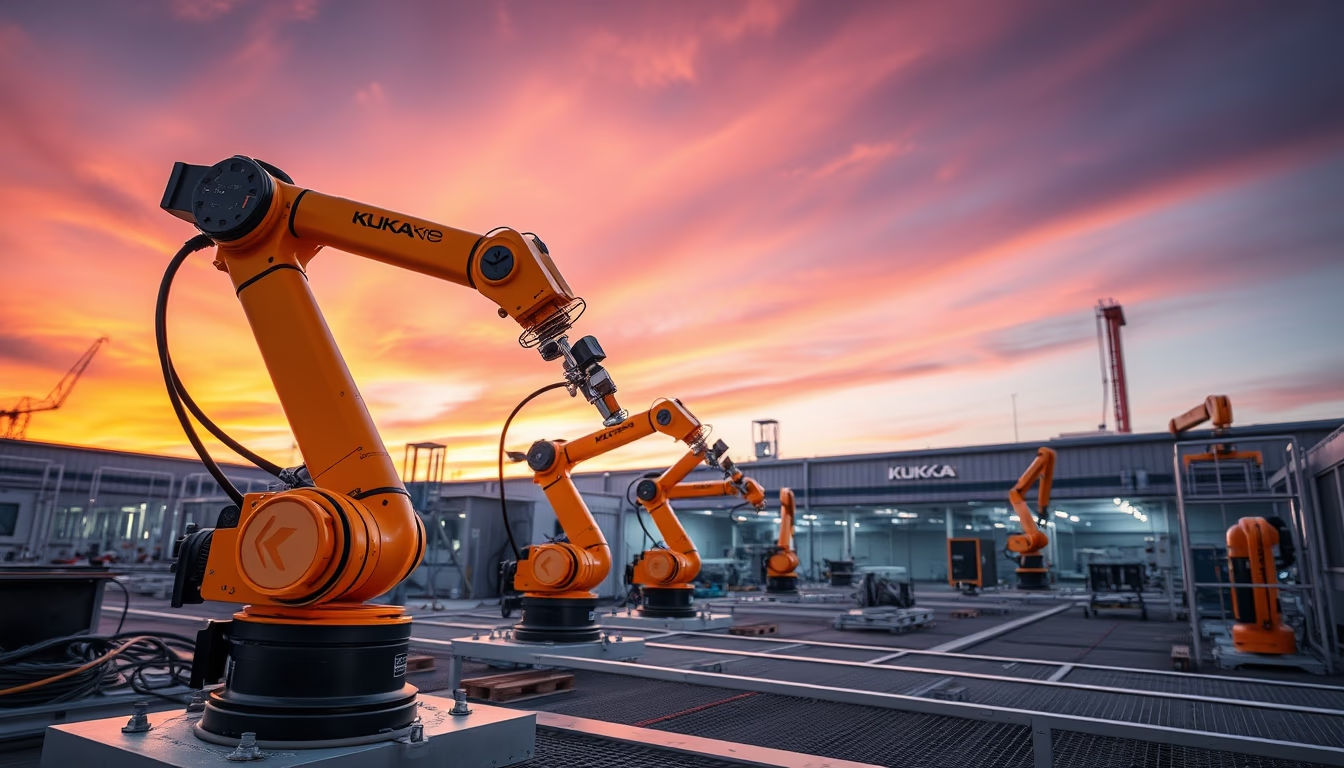
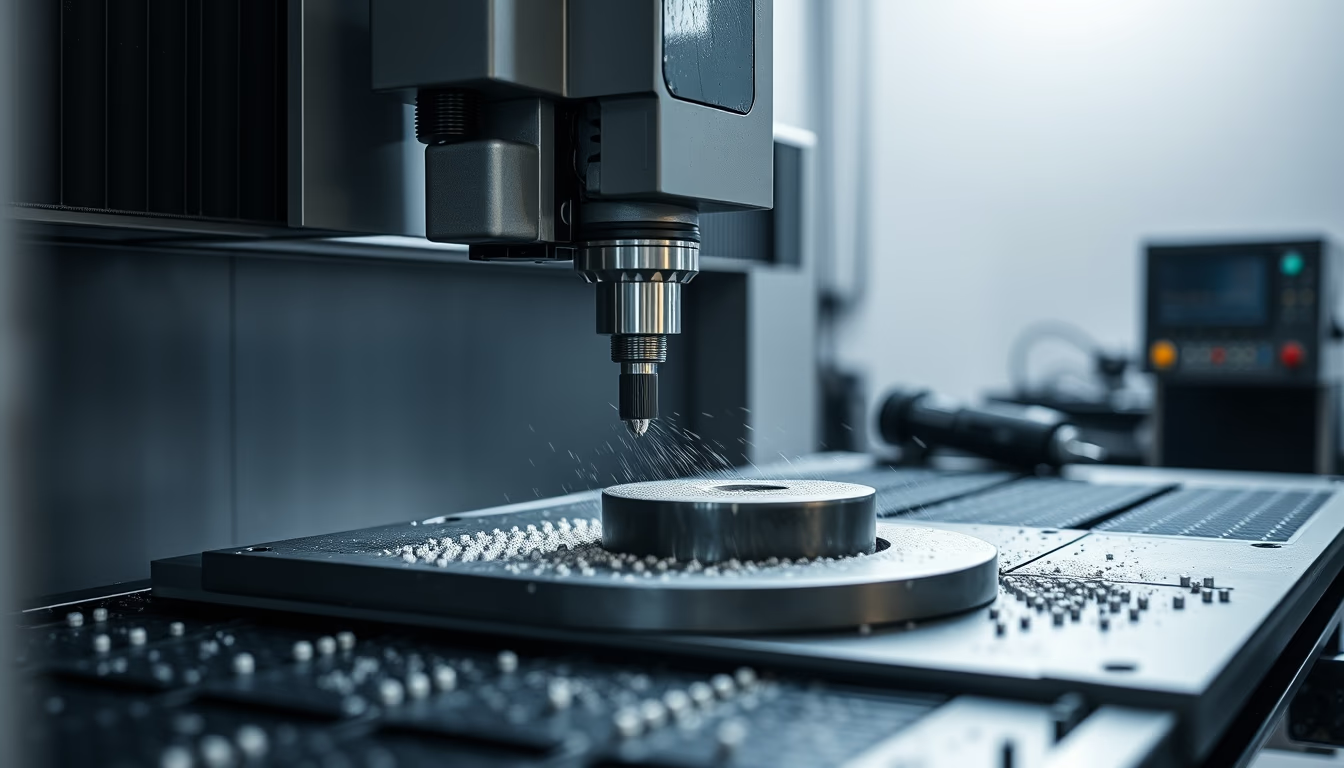
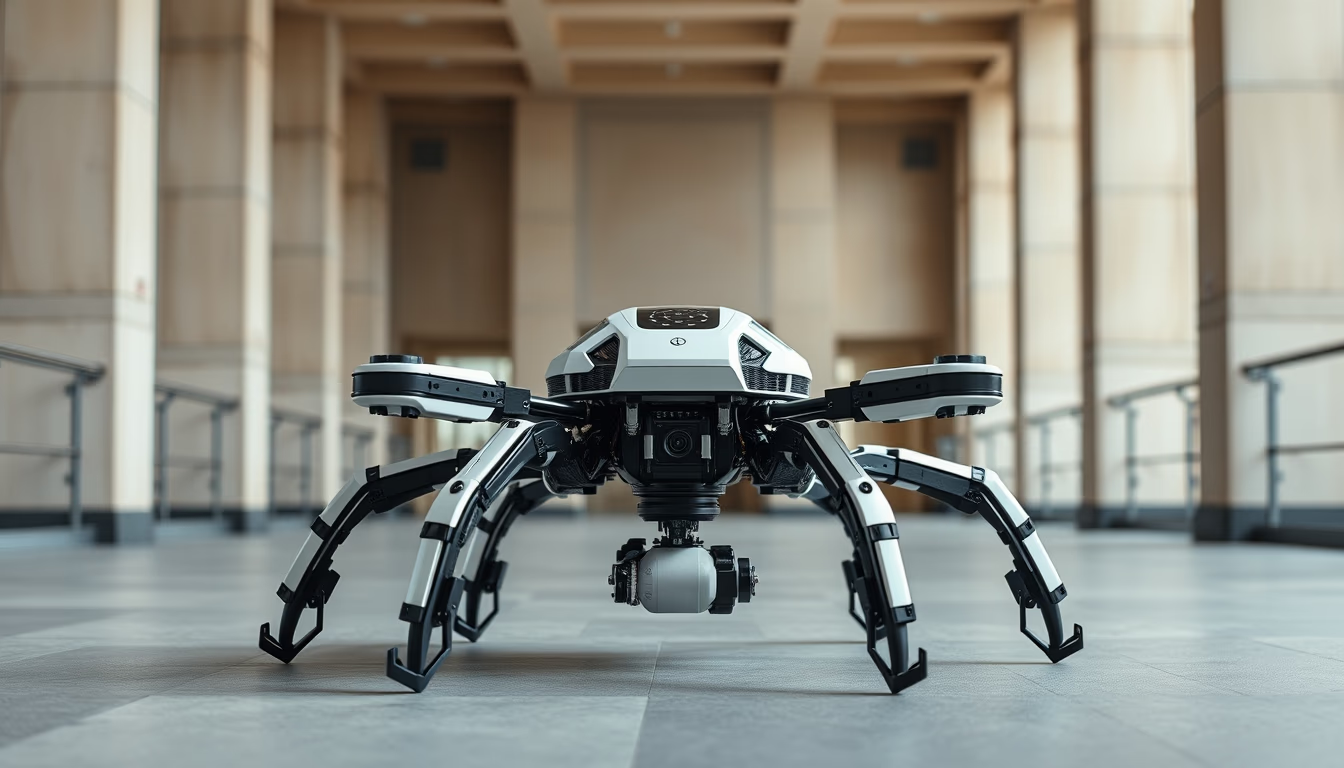
Industrial robotic arms for welding automate processes with precision and safety, used in manufacturing vehicles, machinery, and metal structures.
About this subject
Robotic welding employs articulated arms fitted with welding torches to join metal parts with programmed precision and consistency. These robots are essential in automotive, aerospace, and heavy machinery production lines, where high throughput and repeatability are required. They can operate around the clock with minimal quality variation, reducing rework and material waste. Various welding processes, including MIG, TIG, and submerged arc, can be configured based on metal type and thickness, with sensors adjusting the tool path in real time.
Robotic welding cells incorporate safety fences, light curtains, and presence sensors to protect workers. Programming is done offline in virtual environments, allowing motion simulation and parameter tuning without halting production. Modern robots feature teach-by-demonstration, easing adaptation to new part geometries. Globally, the automotive sector accounts for over 30% of robotic welding installations, followed by construction and shipbuilding. Countries like China, Japan, Germany, and the United States lead in adoption, with thousands of units installed annually. Emerging markets in Southeast Asia and Latin America are rapidly increasing their robotic workforce to boost competitiveness.
The first industrial welding robots were introduced in the 1960s by Unimation and General Motors. Since then, advances include numerical control, computer vision, and force sensing. Collaborative robots (cobots) now work alongside humans, taking over hazardous tasks such as welding in confined spaces or with toxic fumes. Robotic welding also promotes sustainability by lowering energy consumption per unit produced. Industry experts note that automation does not eliminate welders but shifts their role to system supervision, programming, and maintenance.
Frequently Asked Questions
What are the main advantages of robotic welding?
Increased productivity, consistent quality, cost reduction, operator safety, and 24/7 operation capability.
What types of welding can robots perform?
Processes such as MIG, TIG, submerged arc, laser, and plasma, depending on the tooling and setup.
Does robotic welding completely replace human welders?
No, but it reduces demand for repetitive manual work. Humans are still needed for programming, supervision, and maintenance.
Direct URL
https://pub-c7d6a6ea828543ac903a74a341ccb2e1.r2.dev/imagens/industrial-robot-arm-welding-isometric-flat-lay-p11.avifHow to credit
Include a visible link back to UtilizAí. Copy one of the snippets below:
<a href="https://xn--utiliza-eza.com/en/midia/imagens/industrial-robot-arm-welding-isometric-flat-lay-p11">Industrial robot arm welding</a> by <a href="https://xn--utiliza-eza.com">UtilizAí</a>, licensed under <a href="https://creativecommons.org/licenses/by/4.0/">CC BY 4.0</a>.
[Industrial robot arm welding](https://xn--utiliza-eza.com/en/midia/imagens/industrial-robot-arm-welding-isometric-flat-lay-p11) by [UtilizAí](https://xn--utiliza-eza.com), CC BY 4.0
License: CC-BY-4.0