Industrial robot arm welding
1344×768 · AVIF · CC BY 4.0
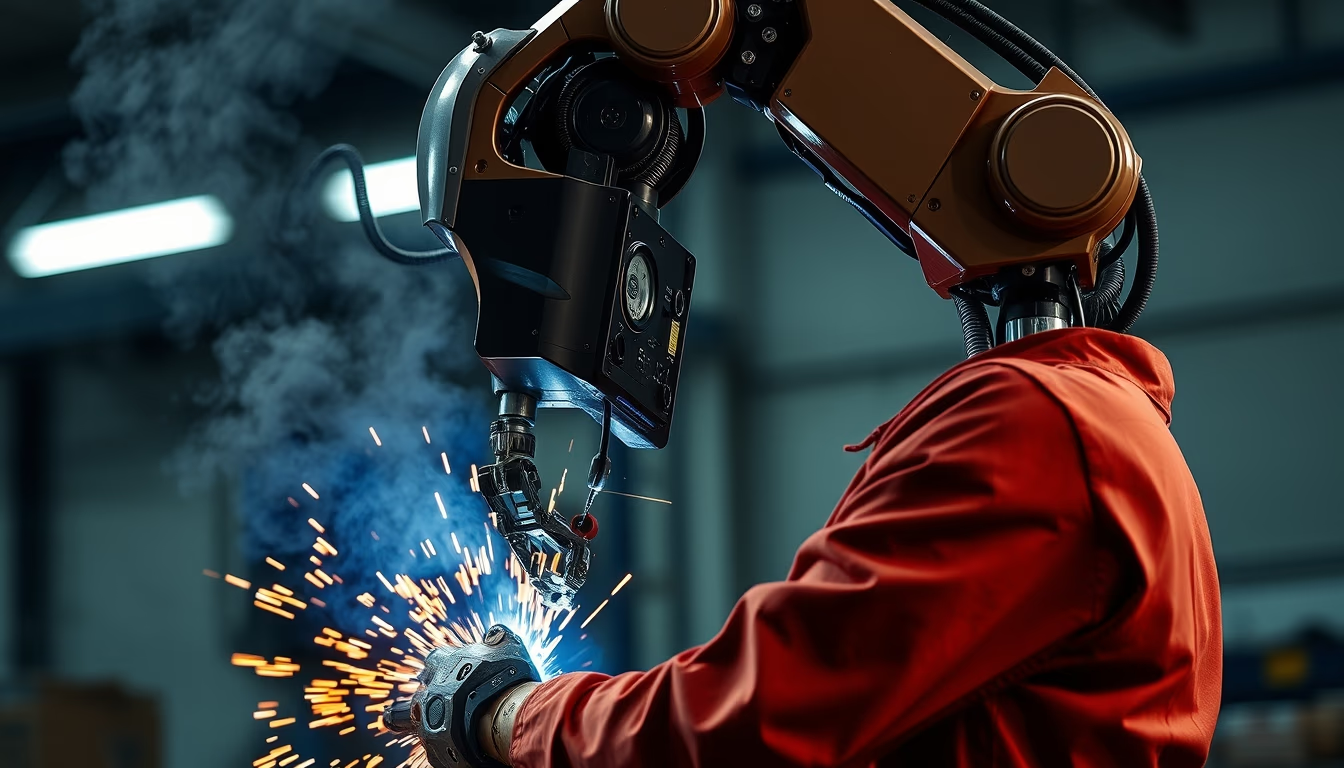
Industrial robot arms revolutionized welding, delivering millimeter precision and high productivity in automotive, aerospace, and metallurgical assembly lines.
About this subject
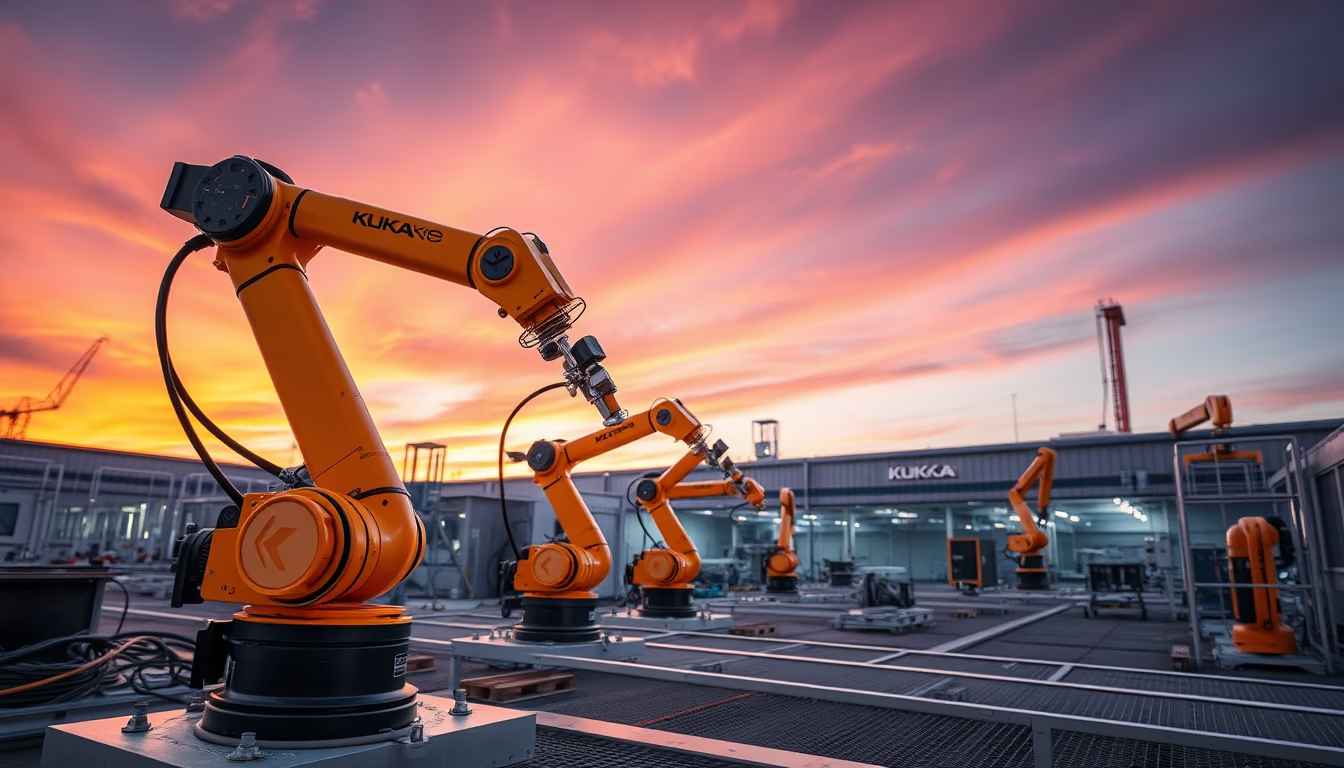
Industrial robot arms are widely used in welding processes, especially in automotive, aerospace, and heavy equipment industries. These automated systems perform arc, spot, and laser welding with repeatability superior to manual labor, reducing defects and rework. Robotic welding is common in vehicle assembly lines, where hundreds of robots work in synchrony to join chassis, panels, and structural components.
Technologies such as vision sensors and adaptive control allow the robotic arm to correct deviations in real time, adapting to variations in the part or joint. This is crucial for welding aluminum and high-strength steels, materials increasingly used in modern cars to reduce weight and enhance safety. Additionally, collaborative robots (cobots) equipped with 6-axis articulated arms are being introduced in small and medium enterprises, democratizing access to automation.
Integration with artificial intelligence and the Internet of Things enables continuous monitoring of parameters such as current, voltage, and welding speed, generating data for predictive maintenance. Major manufacturers like FANUC, ABB, and KUKA dominate the market, offering arms with payloads ranging from 3 kg to over 500 kg and reaches up to 3 meters. Economically, robotic automation in welding is estimated to increase productivity by 20, 30% and reduce operating costs by up to 50%, though it requires high initial investment and skilled labor for programming and maintenance.
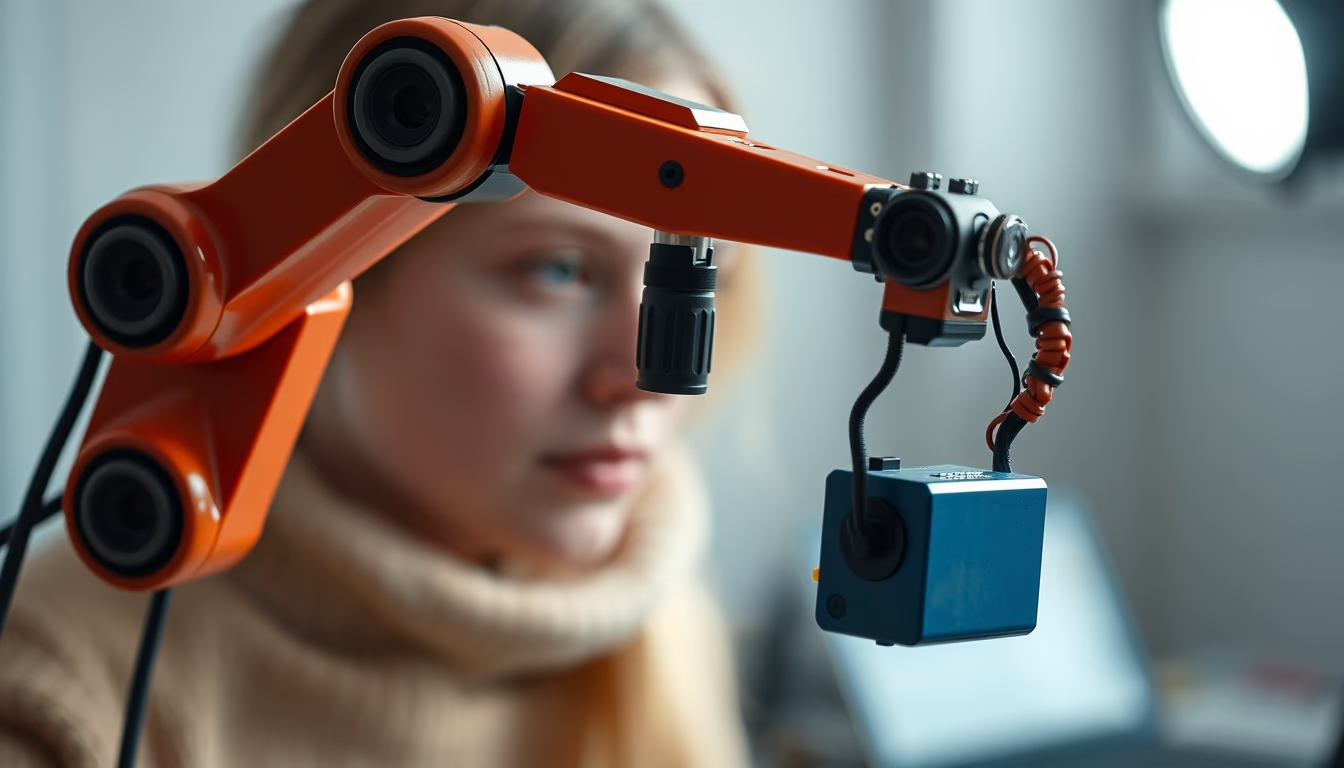
Interestingly, the industrial aesthetics of these robots, with their biomechanical designs and precise movements, have inspired high-fashion editorial shoots, where they are depicted as symbols of modernity and efficiency. This artistic representation highlights the contrast between machine coldness and human creativity, reinforcing the robot's role as a tool for industrial transformation.
Frequently Asked Questions
What types of welding can robot arms perform?
Industrial robot arms can perform arc welding, spot welding, laser welding, and resistance welding, depending on the application and attached equipment.
What is the typical precision of a robotic arm in welding?
The repeatability precision of an industrial robot arm ranges from 0.02 mm to 0.1 mm, ensuring consistent quality in welded joints.
Does robotic welding completely replace human welders?
No. While it automates repetitive tasks, human welders are still needed for programming, maintenance, complex welds, and quality control.
Direct URL
https://pub-c7d6a6ea828543ac903a74a341ccb2e1.r2.dev/imagens/industrial-robot-arm-welding-high-fashion-editorial-p5.avifHow to credit
Include a visible link back to UtilizAí. Copy one of the snippets below:
<a href="https://xn--utiliza-eza.com/en/midia/imagens/industrial-robot-arm-welding-high-fashion-editorial-p5">Industrial robot arm welding</a> by <a href="https://xn--utiliza-eza.com">UtilizAí</a>, licensed under <a href="https://creativecommons.org/licenses/by/4.0/">CC BY 4.0</a>.
[Industrial robot arm welding](https://xn--utiliza-eza.com/en/midia/imagens/industrial-robot-arm-welding-high-fashion-editorial-p5) by [UtilizAí](https://xn--utiliza-eza.com), CC BY 4.0
License: CC-BY-4.0