Industrial robot arm welding
1344×768 · AVIF · CC BY 4.0
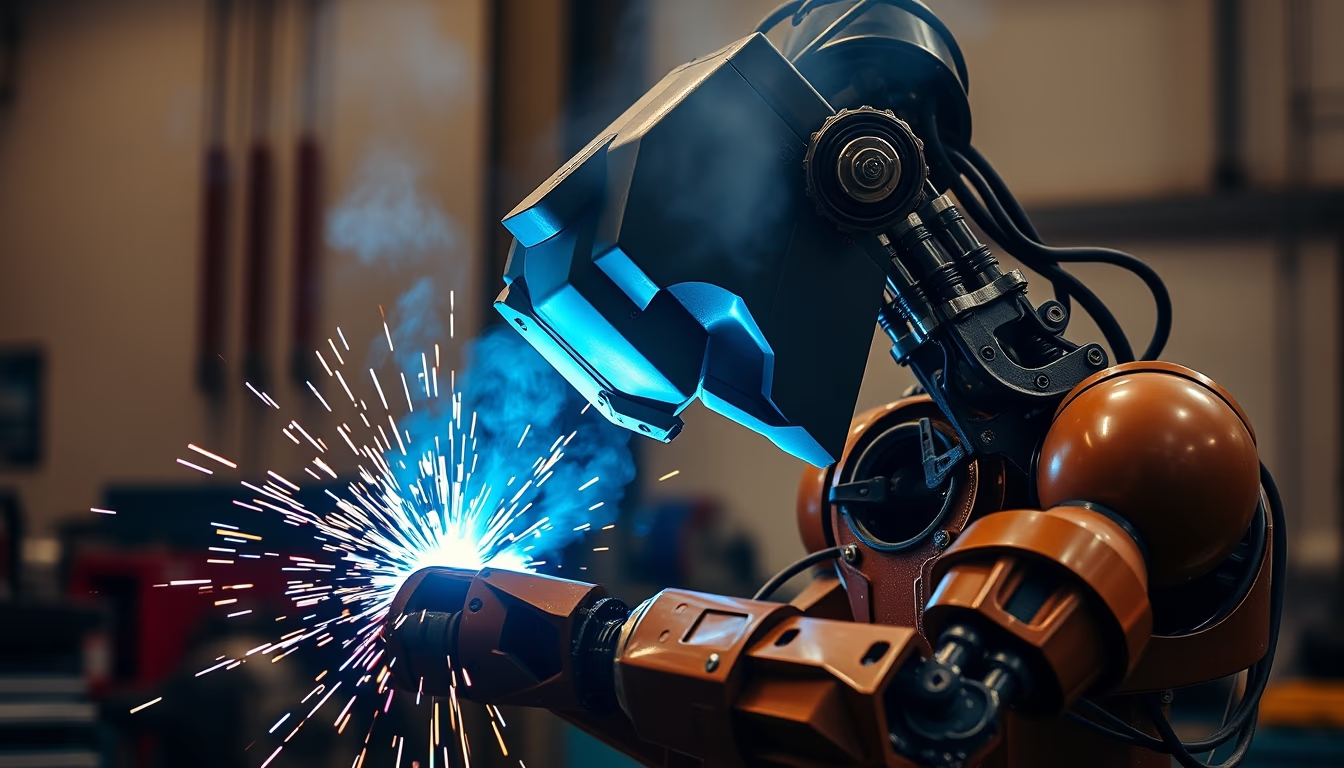
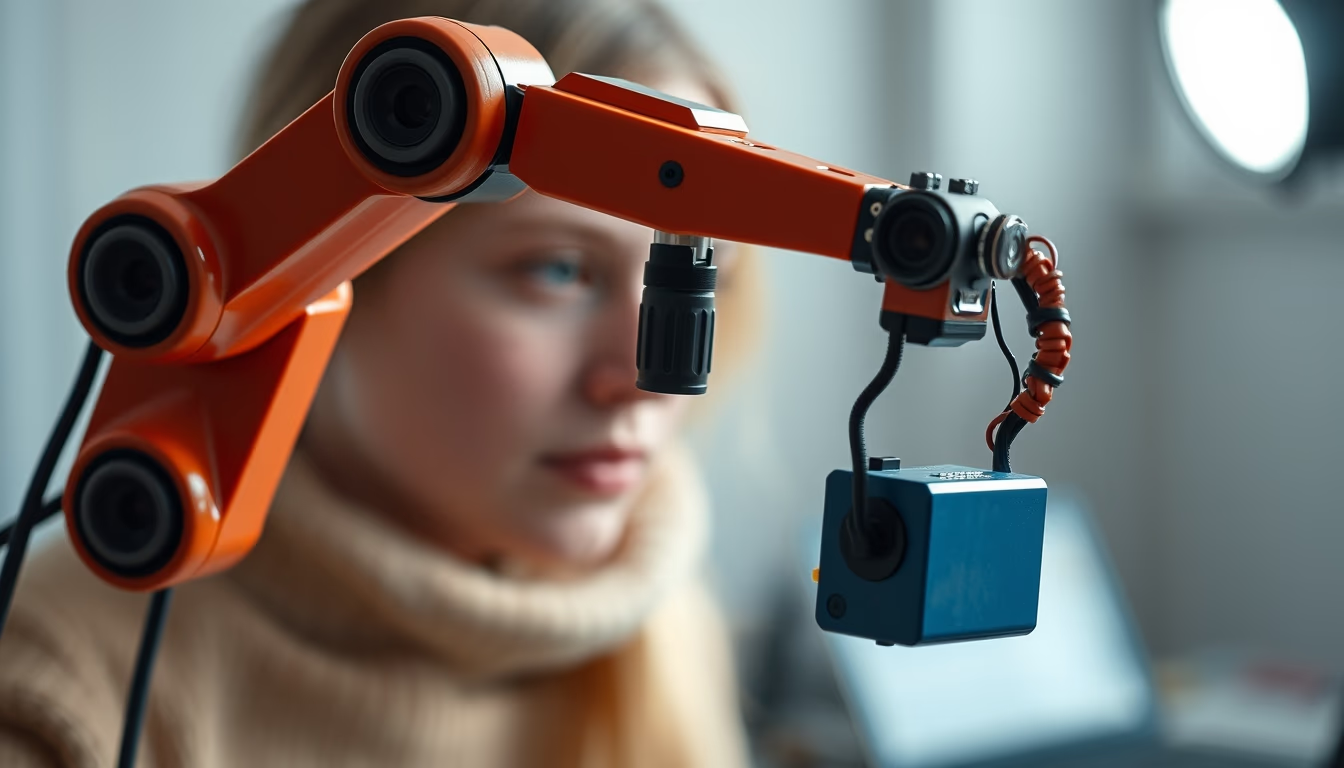
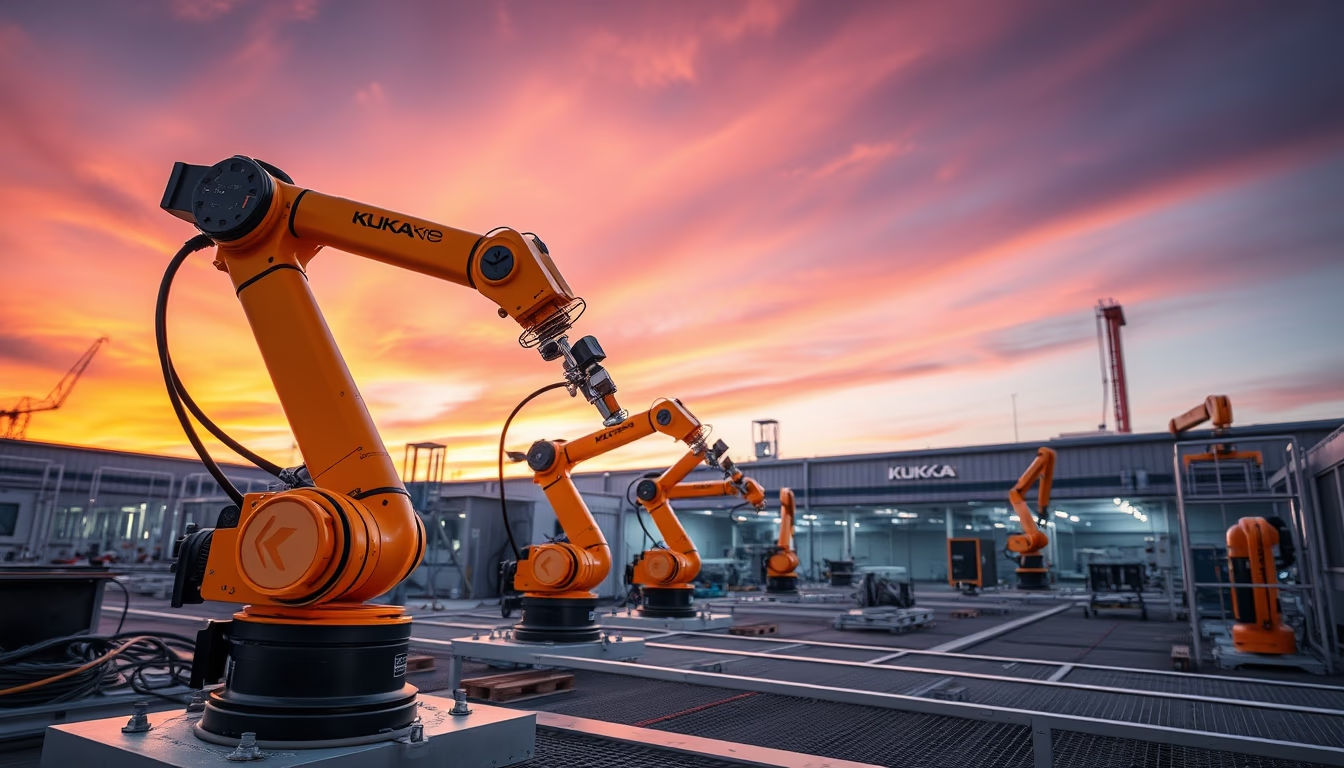
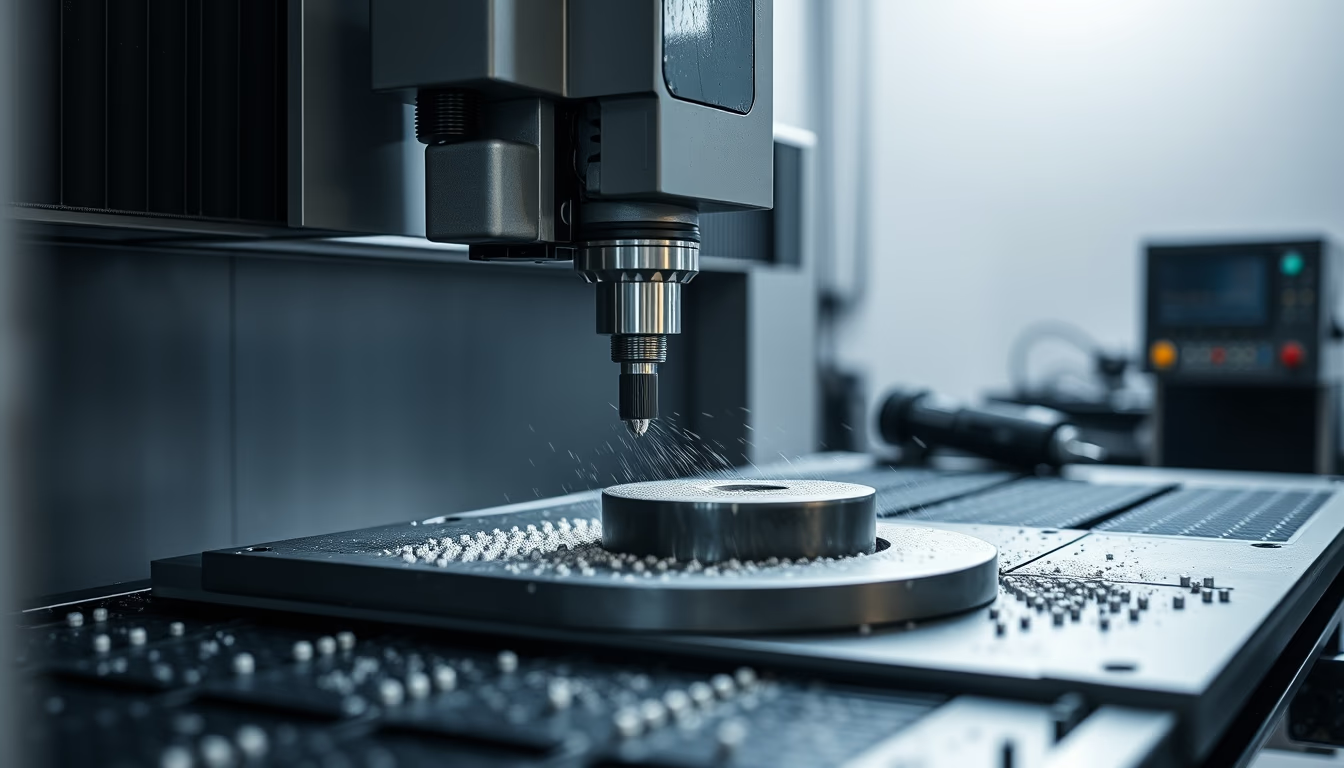
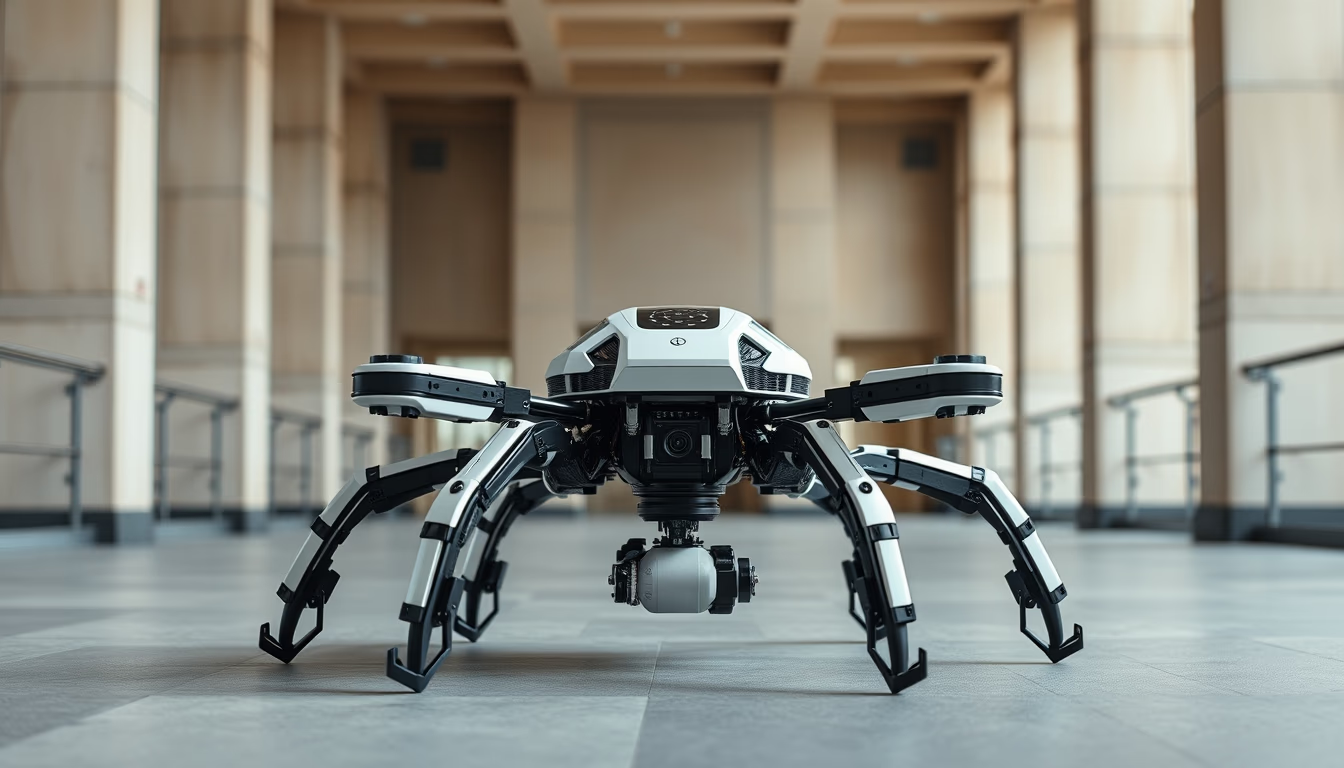
Industrial robotic arms for welding automate processes with precision and speed, revolutionizing modern manufacturing.
About this subject
Industrial robotic arms for welding are automated systems widely used in production lines across automotive, aerospace, metalworking, and shipbuilding industries. These robots perform arc welding, MIG, TIG, or spot welding with millimetric repeatability, operating 24/7 without fatigue. Programming is done via teach pendant or offline with 3D simulation, allowing fine adjustments of trajectory, speed, and welding parameters. Force sensors and computer vision ensure quality even on parts with dimensional variations.
The adoption of welding robots grew exponentially from the 1980s, when Japanese and American automotive industries started using them on a large scale. Today, companies like Fanuc, ABB, Kuka, and Yaskawa dominate the market, offering models from collaborative to high-payload versions for heavy components. Safety is prioritized with isolated cells using fences, light curtains, and emergency stop systems.
Beyond productivity gains, robotic welding drastically reduces defects and rework, while protecting workers from toxic fumes and UV radiation. The current trend is integration with artificial intelligence for real-time adaptation of welding conditions, such as gap variation and thermal distortion. The global welding robot market is projected to surpass US$15 billion by 2027.
Frequently Asked Questions
What are the main advantages of robotic welding over manual welding?
Robotic welding offers higher precision, repeatability, speed, and safety. It reduces rework costs and protects operators from hazards like fumes and radiation. However, it requires high initial investment and specialized programming.
How is a welding robot programmed?
Programming can be done via teach pendant (point-by-point learning) or offline using 3D simulation software. Parameters such as electric current, wire feed speed, torch angle, and trajectory are adjusted according to material and joint type.
Which sectors most use robotic welding arms?
Automotive (body assembly), aerospace (fuselages), shipbuilding (thick plates), and metalworking (agricultural machinery, pipelines). The trend is expansion into small and medium enterprises with collaborative robots.
Direct URL
https://pub-c7d6a6ea828543ac903a74a341ccb2e1.r2.dev/imagens/industrial-robot-arm-welding-fine-art-photography-p0.avifHow to credit
Include a visible link back to UtilizAí. Copy one of the snippets below:
<a href="https://xn--utiliza-eza.com/en/midia/imagens/industrial-robot-arm-welding-fine-art-photography-p0">Industrial robot arm welding</a> by <a href="https://xn--utiliza-eza.com">UtilizAí</a>, licensed under <a href="https://creativecommons.org/licenses/by/4.0/">CC BY 4.0</a>.
[Industrial robot arm welding](https://xn--utiliza-eza.com/en/midia/imagens/industrial-robot-arm-welding-fine-art-photography-p0) by [UtilizAí](https://xn--utiliza-eza.com), CC BY 4.0
License: CC-BY-4.0