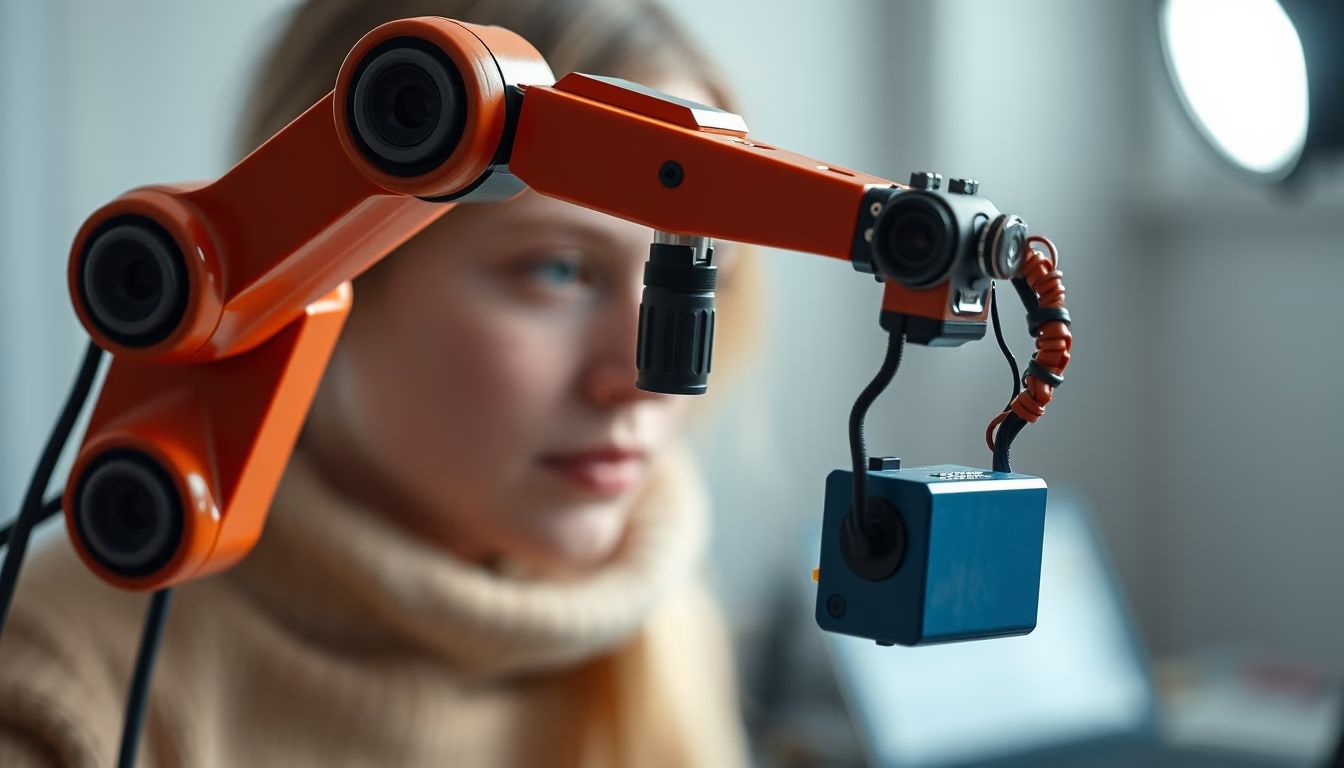
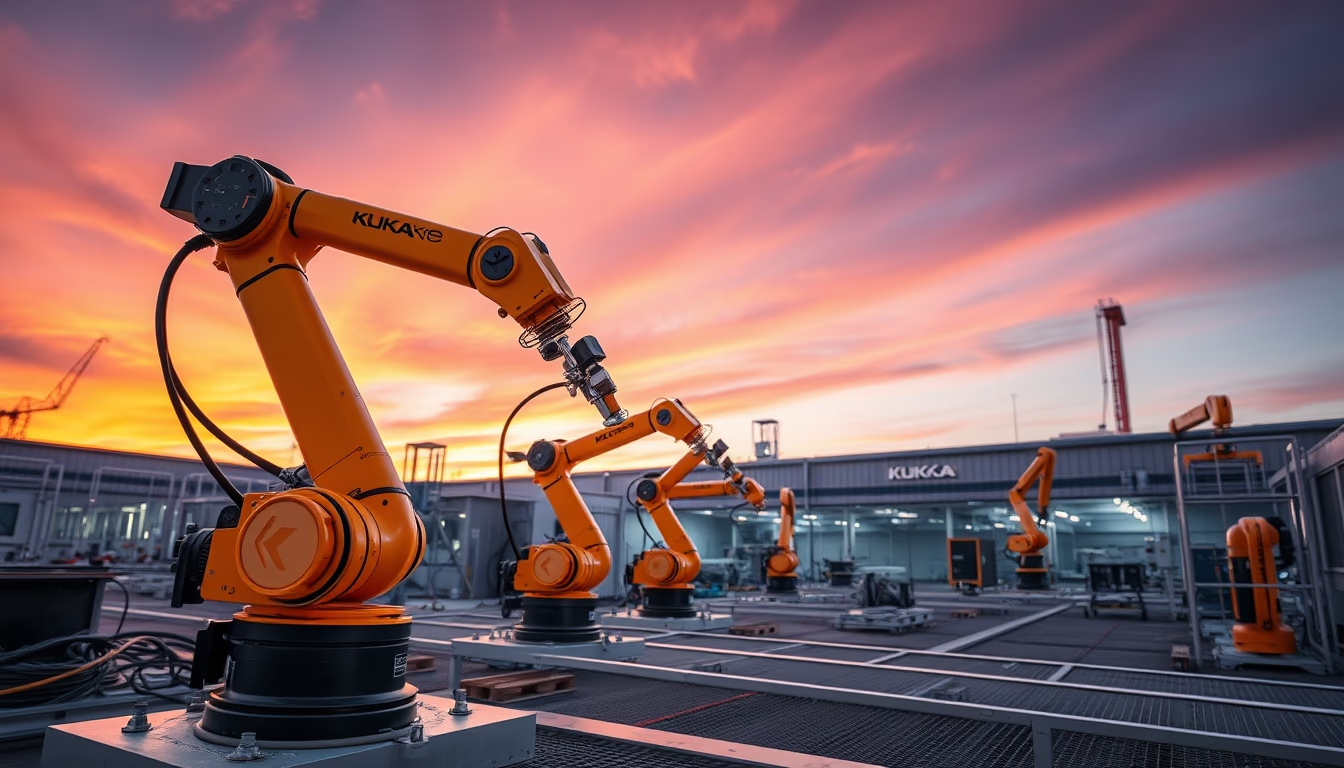
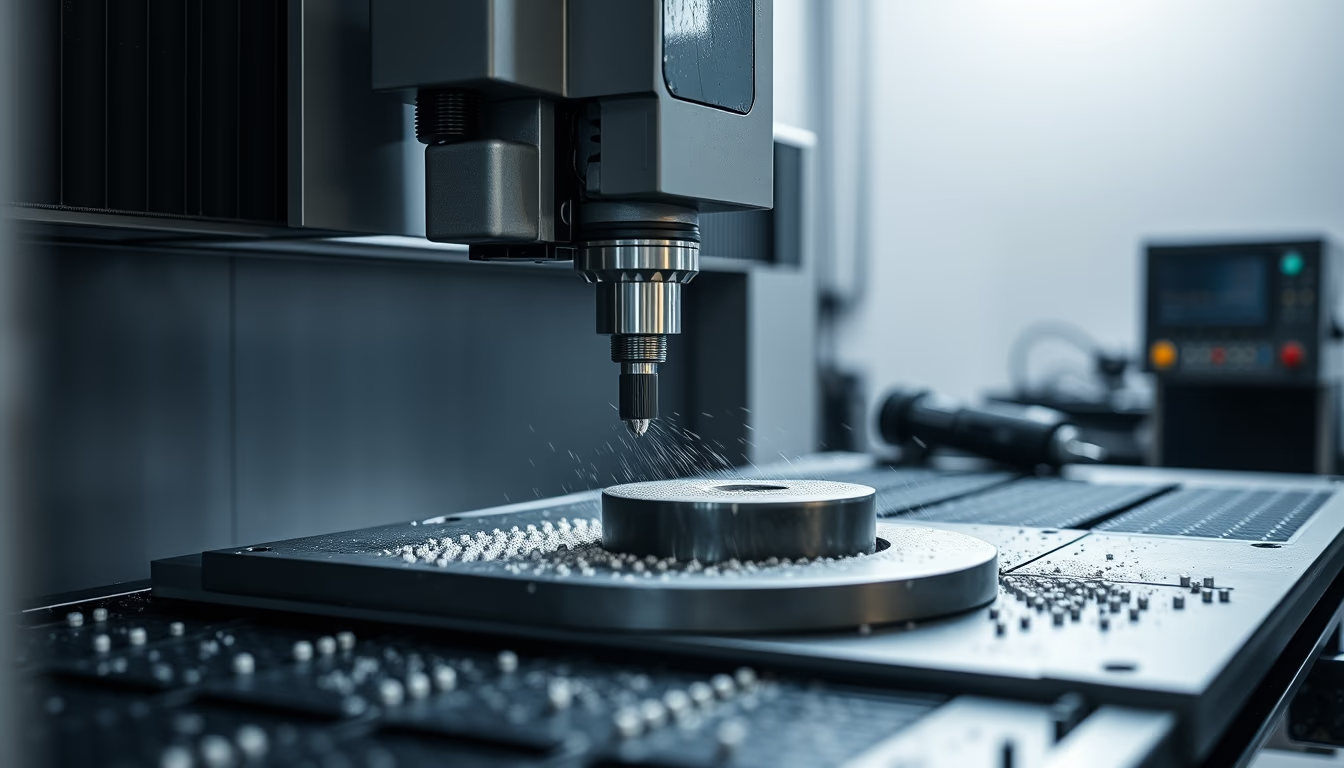
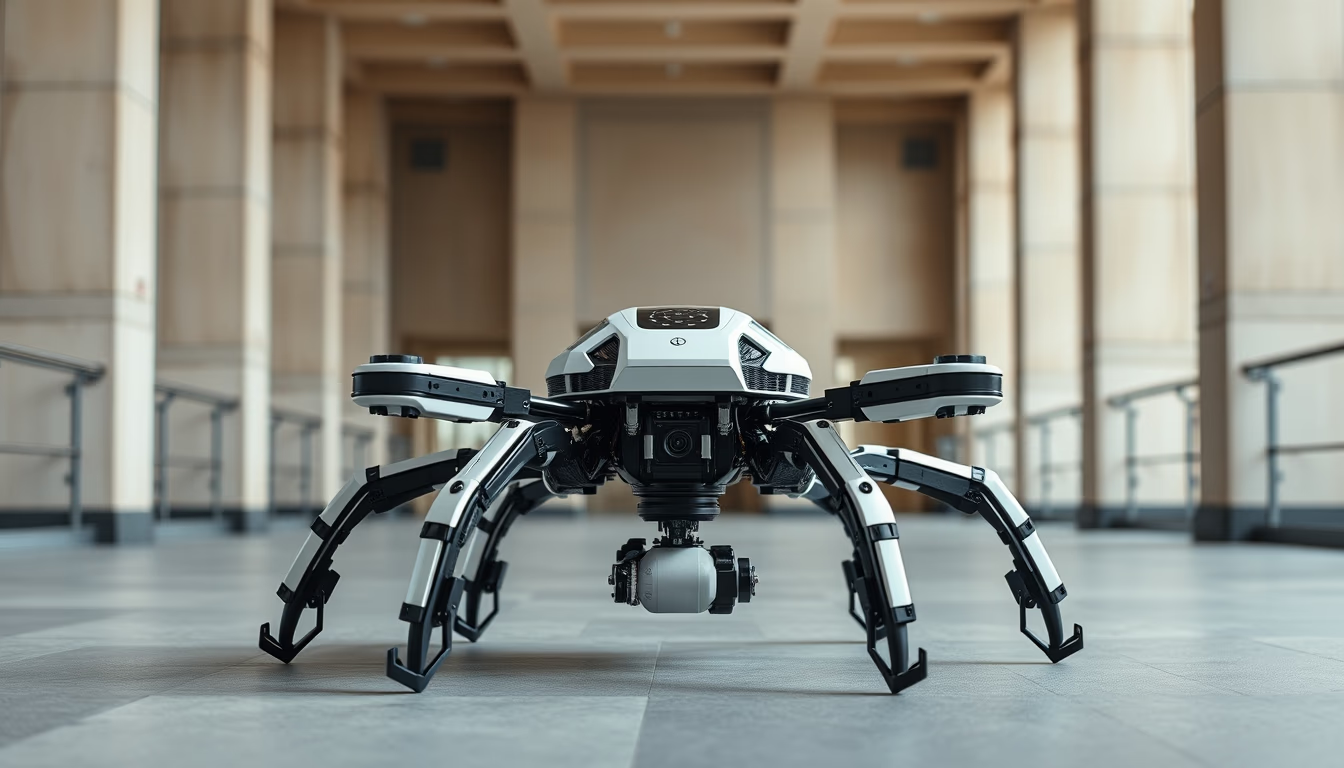
Industrial robot arm welding
1344×768 · AVIF · CC BY 4.0
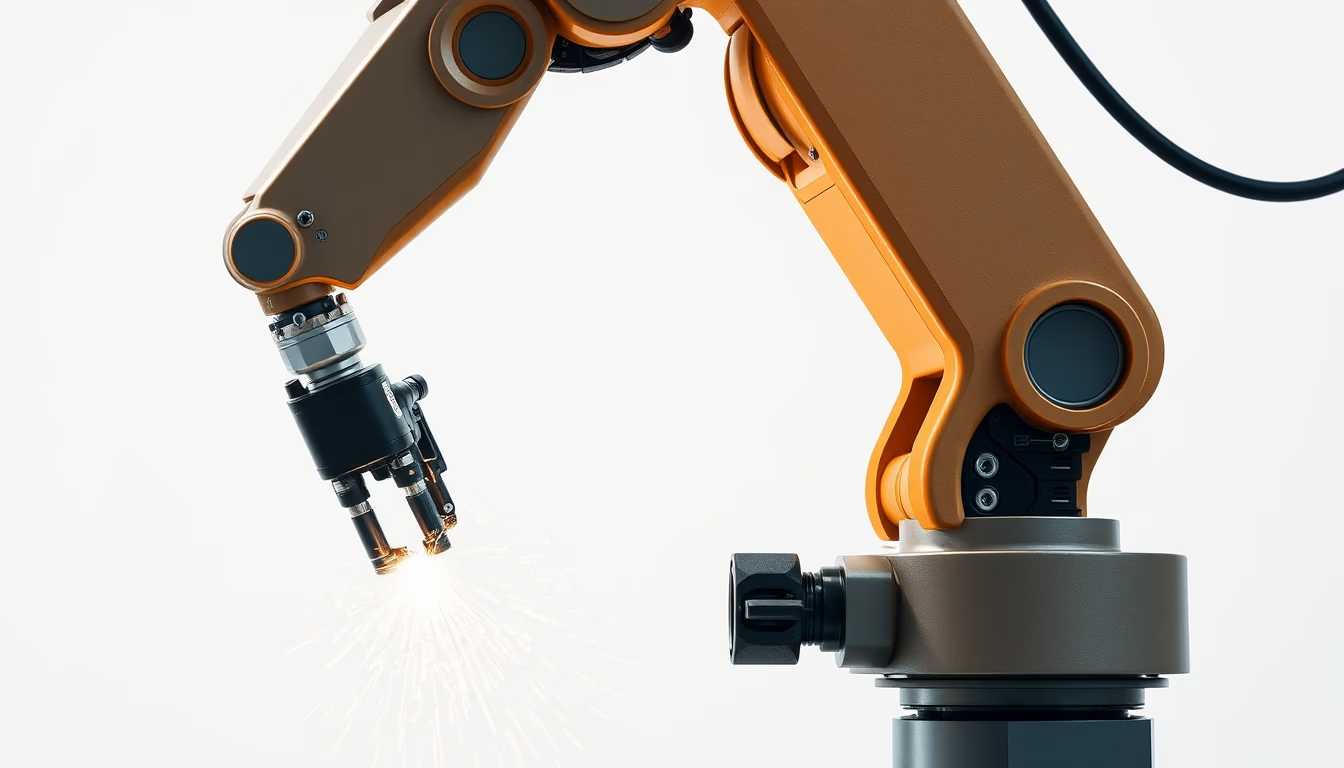
Industrial robotic welding arms automate processes, enhancing precision and safety in the manufacturing of vehicles, machinery, and metal structures.
About this subject
Industrial robotic welding arms are critical equipment in modern manufacturing. They perform arc welding, laser welding, or resistance welding with high repeatability and speed, replacing manual operations in hazardous environments. Robotic welding is widely used in the automotive industry, aircraft manufacturing, shipbuilding, and heavy equipment production.
These robots consist of an articulated arm, controller, welding torch, and sensors. The controller programs movements and parameters such as current, voltage, and wire feed speed. Force and vision sensors allow real-time adjustments to compensate for part variations. Robotic welding reduces defects like porosity and lack of fusion, lowering rework costs.
The history of robotic welding dates back to the 1960s, with the first industrial robot Unimate applied at General Motors. Since then, technology has evolved with machine vision, artificial intelligence, and integration with the Internet of Things. Today, collaborative robots (cobots) work alongside humans, increasing flexibility. The trend is autonomous welding with machine learning to optimize parameters.
A curiosity: the global robotic welding market is expected to surpass 10 billion USD by 2027, driven by demand for electric vehicles and Industry 4.0. Countries like China, Germany, and Japan lead adoption. In Brazil, robotic welding is common in automakers and white goods industries, notably in the ABC region of São Paulo.
Frequently Asked Questions
What are the main advantages of robotic welding?
Robotic welding offers higher precision, repeatability, and speed. It reduces accident risks, improves joint quality, and lowers rework costs. Additionally, it boosts productivity by operating 24/7.
What types of welding can a robotic arm perform?
Robotic arms can perform arc welding (MIG/MAG, TIG), laser welding, resistance welding, and friction welding. The choice depends on material, thickness, and application.
How is robotic welding programmed?
Programming can be done via teach pendant (point-to-point learning), offline using CAD/CAM software, or by demonstration with manual guidance. Sensors automatically adjust parameters.
Direct URL
https://pub-c7d6a6ea828543ac903a74a341ccb2e1.r2.dev/imagens/industrial-robot-arm-welding-commercial-product-photography-p2.avifHow to credit
Include a visible link back to UtilizAí. Copy one of the snippets below:
<a href="https://xn--utiliza-eza.com/en/midia/imagens/industrial-robot-arm-welding-commercial-product-photography-p2">Industrial robot arm welding</a> by <a href="https://xn--utiliza-eza.com">UtilizAí</a>, licensed under <a href="https://creativecommons.org/licenses/by/4.0/">CC BY 4.0</a>.
[Industrial robot arm welding](https://xn--utiliza-eza.com/en/midia/imagens/industrial-robot-arm-welding-commercial-product-photography-p2) by [UtilizAí](https://xn--utiliza-eza.com), CC BY 4.0
License: CC-BY-4.0