Illuminated manuscript
1344×768 · AVIF · CC BY 4.0
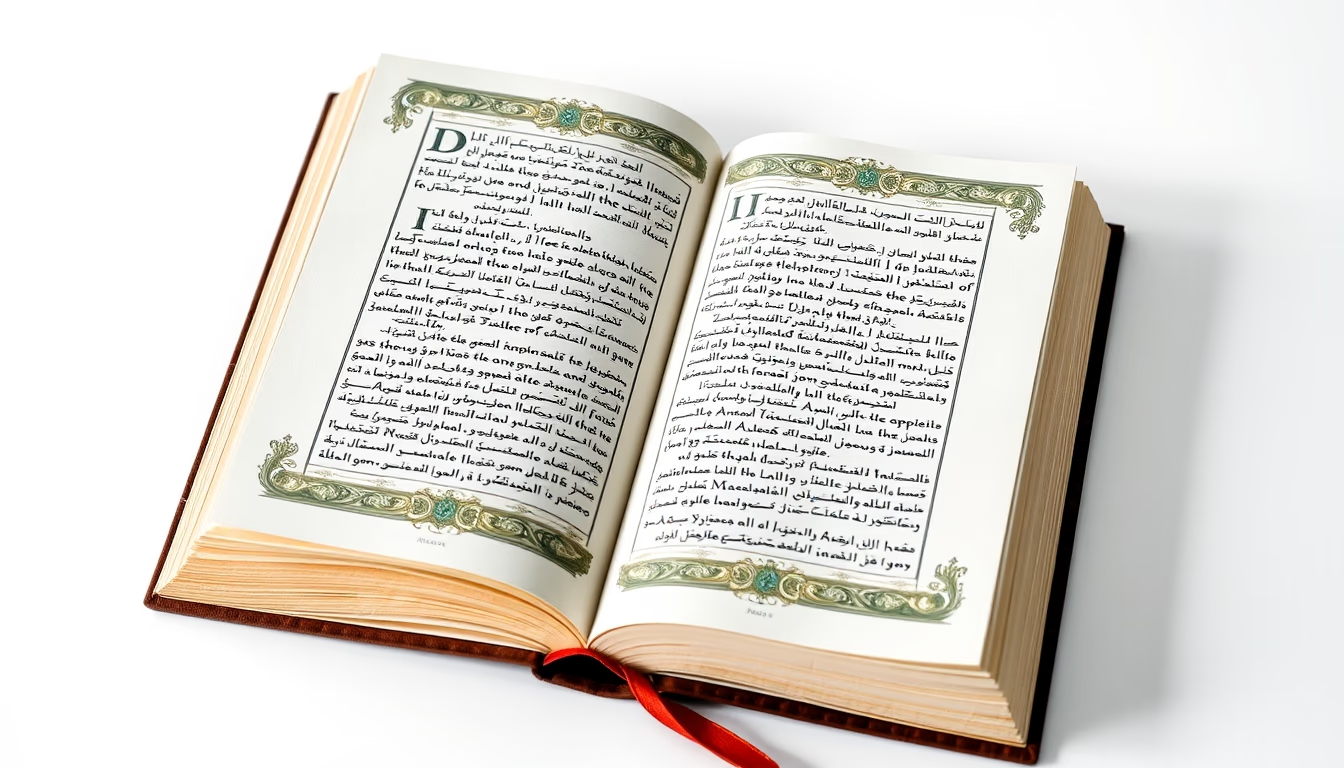
Illuminated manuscripts are medieval artworks combining religious text with detailed illustrations and gold leaf.
About this subject
Illuminated manuscripts are testaments to the skill of scribes and illuminators working in European monasteries and scriptoria between the 5th and 15th centuries. They were produced on parchment or vellum using mineral and vegetable inks, often decorated with gold or silver leaf. Subjects were predominantly religious: Bibles, books of hours, and psalters. Each page required weeks of labor, and illumination served both to glorify the word of God and to aid the faithful's visual literacy.
The illumination technique included rare pigments such as ultramarine blue (from lapis lazuli) and vermilion (mercury sulfide). Page borders were adorned with arabesques, flowers, and fantastic animals known as 'marginalia'. A famous example is the Book of Kells, produced around 800 AD in Ireland, containing over 2,000 illustrations across 340 folios. It is estimated that less than 10% of illuminated manuscripts have survived to the present day.
In art history, illuminated manuscripts are precursors to printed books and represent a period of intense cultural output during the Middle Ages. They also reveal information about daily life, medicinal plants, and astronomical knowledge of the time. Today, many are preserved in libraries and museums, such as the National Library of France and the British Museum. Digitization of some copies allows global access to these rare works.
Frequently Asked Questions
What distinguishes an illuminated manuscript from a regular manuscript?
Illuminated manuscripts feature elaborate decorations, such as ornate initials, border decorations, and illustrations, often using precious pigments and gold or silver leaf. Regular manuscripts typically contain plain text without adornment.
How long did it take to produce an illuminated manuscript?
Production of a single book could take months or years, depending on size and illustration complexity. A simple psalter might require six months, while a large missal could take several years of work by a team of scribes and illuminators.
Where can I see illuminated manuscripts today?
Many are held in libraries and museums, such as the National Library of France in Paris, the British Museum in London, and the Vatican Apostolic Library. Some have been digitized and can be viewed online via sites like the British Library and the World Digital Library.
Direct URL
https://pub-c7d6a6ea828543ac903a74a341ccb2e1.r2.dev/imagens/illuminated-manuscript-commercial-product-photography-p9.avifHow to credit
Include a visible link back to UtilizAí. Copy one of the snippets below:
<a href="https://xn--utiliza-eza.com/en/midia/imagens/illuminated-manuscript-commercial-product-photography-p9">Illuminated manuscript</a> by <a href="https://xn--utiliza-eza.com">UtilizAí</a>, licensed under <a href="https://creativecommons.org/licenses/by/4.0/">CC BY 4.0</a>.
[Illuminated manuscript](https://xn--utiliza-eza.com/en/midia/imagens/illuminated-manuscript-commercial-product-photography-p9) by [UtilizAí](https://xn--utiliza-eza.com), CC BY 4.0
License: CC-BY-4.0