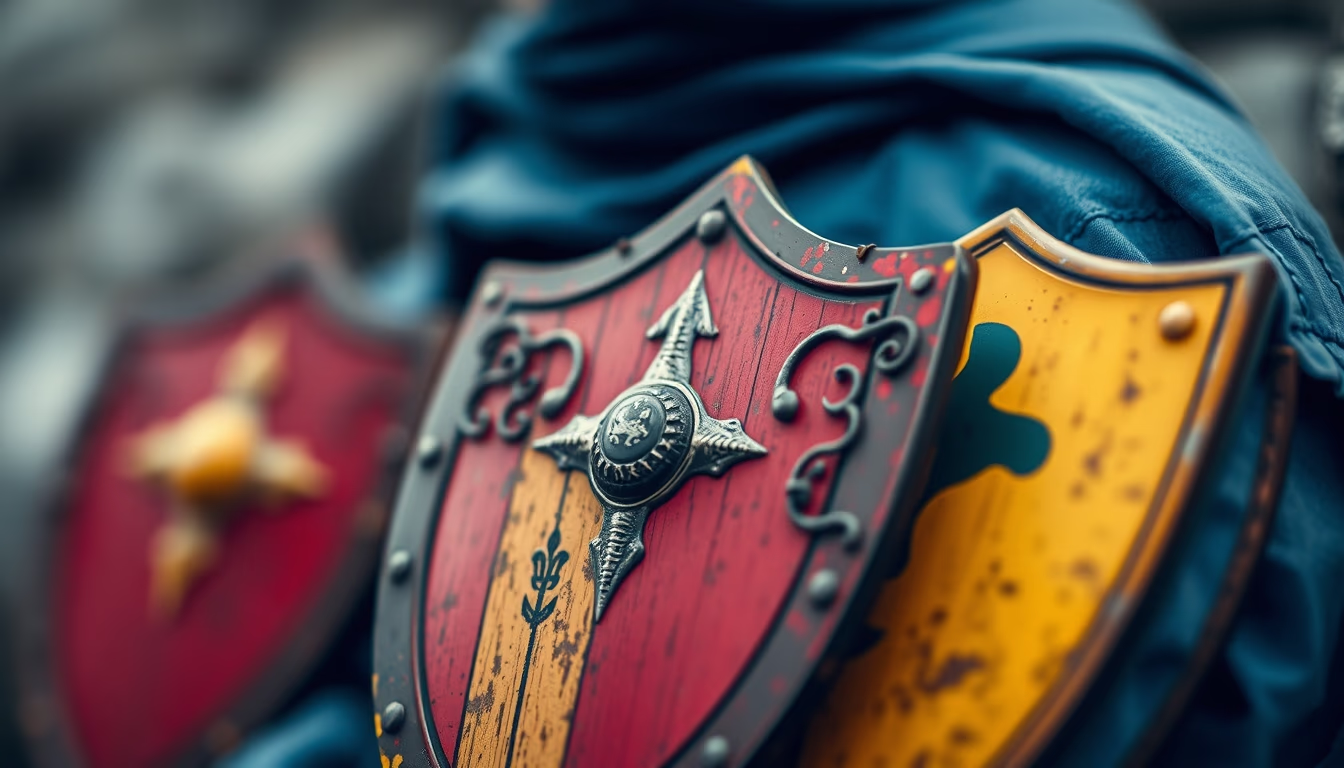
Illuminated manuscript
1344×768 · AVIF · CC BY 4.0

Illuminated manuscripts are handwritten works decorated with ornate capital letters, elaborate borders, and miniature illustrations, typical of the European Middle Ages.
About this subject
Illuminated manuscripts represent one of the most refined artistic and cultural expressions of the Middle Ages, produced mainly in monasteries between the 5th and 16th centuries. These books were hand-copied by monk scribes, who dedicated years to a single work, using parchment or vellum as support. Illumination involved the application of gold and silver leaf, as well as pigments extracted from minerals, plants, and insects, such as ultramarine blue from lapis lazuli and vermilion red from cinnabar.
The significance of these manuscripts extends beyond aesthetic value; they were crucial for preserving classical and religious knowledge during periods of political and social instability. Works like the Book of Kells (Ireland, 9th century) and the Hours of Jeanne d'Évreux (France, 14th century) are notable examples combining biblical or liturgical text with intricate illustrations. Each page was planned as a visual composition that guided reading and spiritual contemplation.
Interestingly, producing a single illuminated manuscript could take over a year of work by multiple craftsmen. Colors carried symbolic meanings: gold represented divinity, blue stood for heaven and royalty, and red symbolized the blood of Christ or the fires of hell. With the advent of Gutenberg's printing press in the 15th century, the production of illuminated manuscripts gradually declined, but their legacy influences calligraphy and illustration art to this day.
Frequently Asked Questions
What distinguishes an illuminated manuscript from a regular book?
Illuminated manuscripts are decorated with artistic elements like capital letters, ornate borders, and miniatures, often using gold and silver. They were hand-crafted on parchment, while regular books were plain texts without illustrations.
How did monks produce the colors for illuminations?
Pigments came from natural sources: ultramarine blue from lapis lazuli, red from cinnabar or the cochineal insect, green from malachite, and yellow from orpiment. The binder was gum arabic or egg white.
Where can I see illuminated manuscripts today?
Many are held in national libraries and museums, such as the British Library (London), the National Library of France (Paris), and Trinity College (Dublin). Some are digitized and available online for viewing.
Direct URL
https://pub-c7d6a6ea828543ac903a74a341ccb2e1.r2.dev/imagens/illuminated-manuscript-cinematic-wide-shot-p2.avifHow to credit
Include a visible link back to UtilizAí. Copy one of the snippets below:
<a href="https://xn--utiliza-eza.com/en/midia/imagens/illuminated-manuscript-cinematic-wide-shot-p2">Illuminated manuscript</a> by <a href="https://xn--utiliza-eza.com">UtilizAí</a>, licensed under <a href="https://creativecommons.org/licenses/by/4.0/">CC BY 4.0</a>.
[Illuminated manuscript](https://xn--utiliza-eza.com/en/midia/imagens/illuminated-manuscript-cinematic-wide-shot-p2) by [UtilizAí](https://xn--utiliza-eza.com), CC BY 4.0
License: CC-BY-4.0