Illuminated manuscript
1344×768 · AVIF · CC BY 4.0
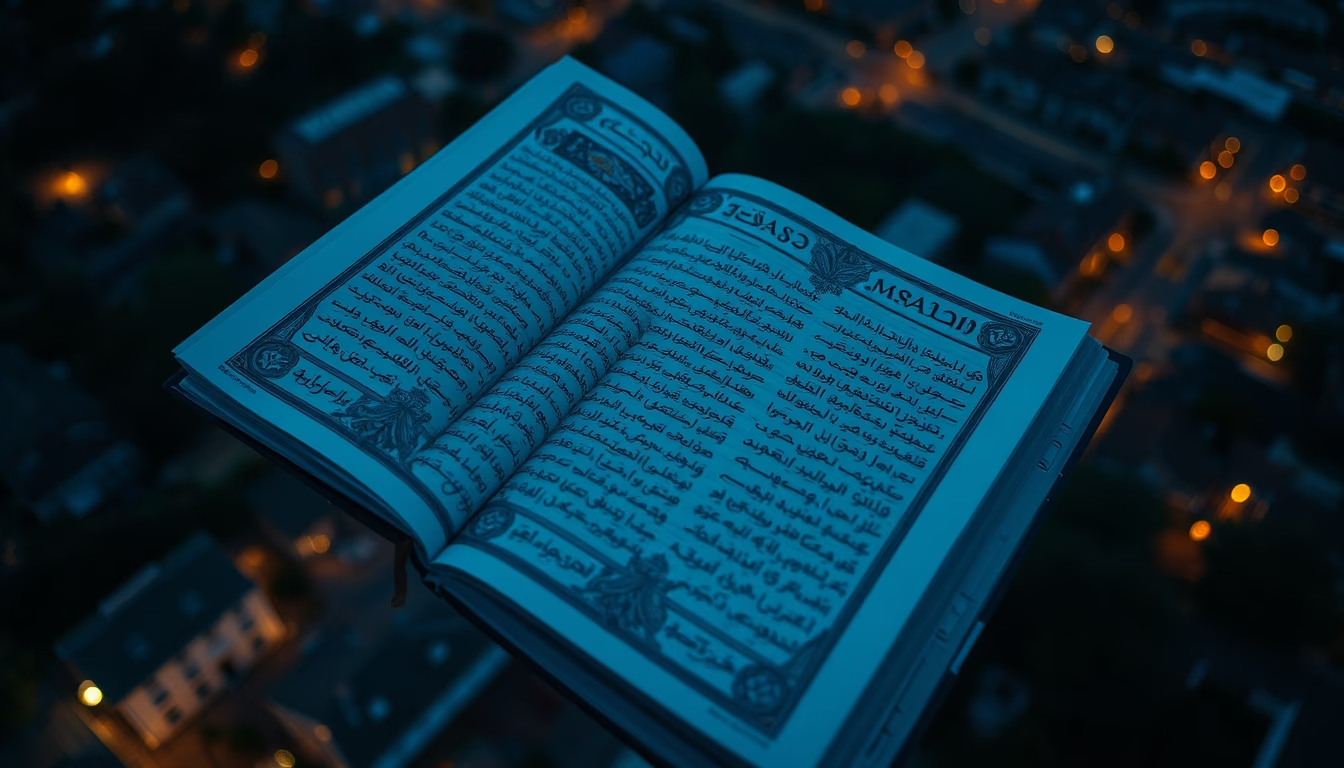
Illuminated manuscripts are artistic and historical testimonies from the Middle Ages, combining text and ornaments in unique works.
About this subject
Illuminated manuscripts are handwritten books that received elaborate decorations, such as ornamented initials, decorated borders, and miniatures. They flourished in Europe between the 6th and 16th centuries, produced mainly in monasteries and scriptoria. The term "illuminated" comes from the Latin "illuminare", meaning to light up, referring to the use of gold leaf and vibrant colors that seemed to bring light to the pages. These works combined religious, historical, or literary text with visual art, making each copy a unique piece.
The production of an illuminated manuscript was extremely labor-intensive and costly. The parchment was made from animal skin, such as vellum or calfskin. Scribes copied the text by hand, leaving spaces for the illuminator to add decorations. Pigments were obtained from minerals, plants, and even insects, such as ultramarine blue from lapis lazuli. Gold was applied in thin sheets and burnished to create a metallic sheen. This process could take months or years depending on the complexity of the work.
Culturally, illuminated manuscripts were crucial for preserving classical and religious knowledge during the Middle Ages. Besides liturgical books like missals and psalters, works on Natural History, Medicine, and Philosophy were produced. Famous examples include the Book of Kells (9th century, Ireland), the Très Riches Heures du Duc de Berry (15th century, France), and the Codex Vaticanus (4th century). Many are now in museums and libraries, studied by historians and conservators.
The invention of the printing press by Gutenberg in the 15th century drastically reduced the production of illuminated manuscripts, but they were never completely replaced for luxury works. Today, illuminated manuscripts are valued as world heritage, displayed in institutions like the National Library of France, the British Library, and the Monastery of São Bento in São Paulo. They offer a glimpse into medieval mentality, technique, and aesthetics, connecting modern readers to a distant past.
Frequently Asked Questions
What is an illuminated manuscript?
It is a handwritten book decorated with artistic elements like ornamented initials, borders, and miniatures, often using gold and vibrant colors. Produced between the 6th and 16th centuries, they combined text and art into unique works.
How were illuminated manuscripts made?
Texts were copied by hand onto animal-skin parchment. Illuminators added decorations using mineral and plant pigments, plus gold leaf. The process could take months or years and was costly and artisanal.
Where can I see illuminated manuscripts today?
They are preserved in libraries and museums worldwide, such as the British Library in London, the National Library of France in Paris, and the Monastery of São Bento in São Paulo. Many are digitized and accessible online.
Direct URL
https://pub-c7d6a6ea828543ac903a74a341ccb2e1.r2.dev/imagens/illuminated-manuscript-aerial-drone-shot-p4.avifHow to credit
Include a visible link back to UtilizAí. Copy one of the snippets below:
<a href="https://xn--utiliza-eza.com/en/midia/imagens/illuminated-manuscript-aerial-drone-shot-p4">Illuminated manuscript</a> by <a href="https://xn--utiliza-eza.com">UtilizAí</a>, licensed under <a href="https://creativecommons.org/licenses/by/4.0/">CC BY 4.0</a>.
[Illuminated manuscript](https://xn--utiliza-eza.com/en/midia/imagens/illuminated-manuscript-aerial-drone-shot-p4) by [UtilizAí](https://xn--utiliza-eza.com), CC BY 4.0
License: CC-BY-4.0