Hydroelectric dam from above
1344×768 · AVIF · CC BY 4.0
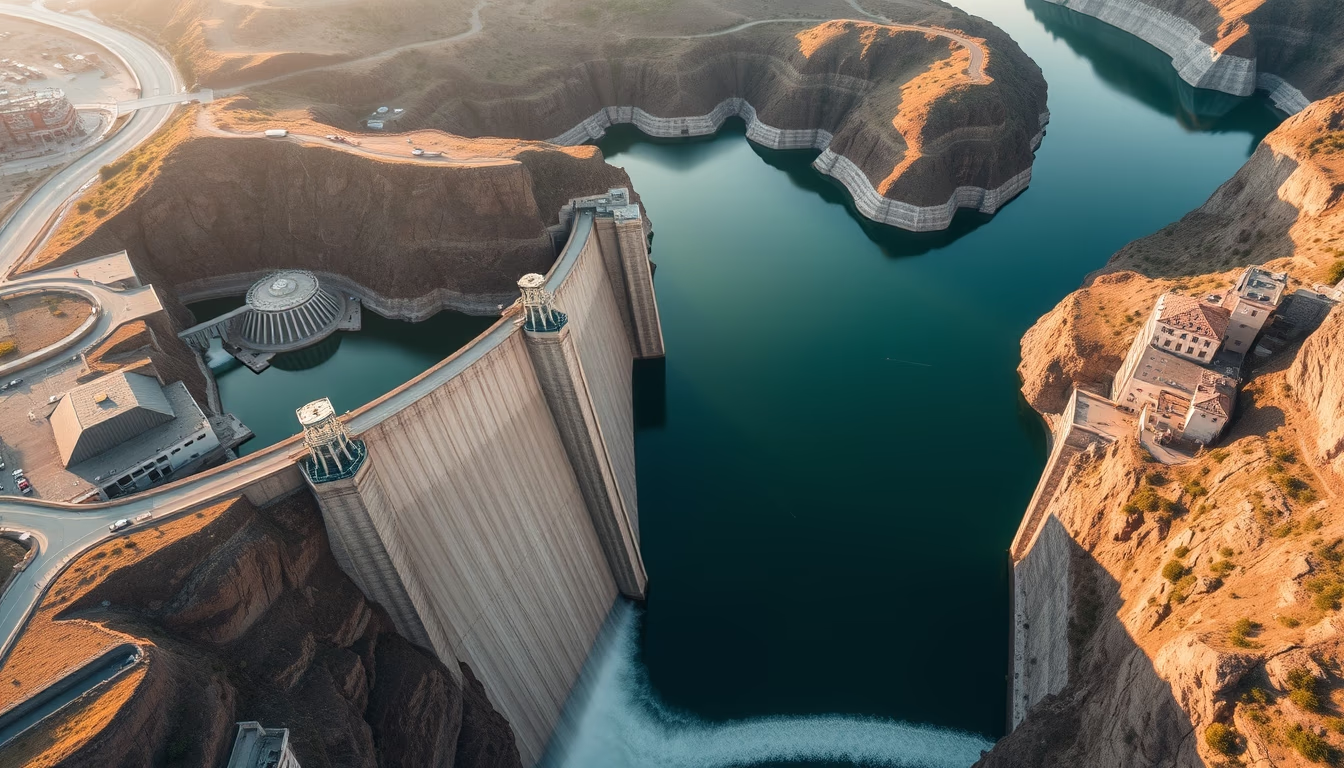
Hydroelectric dams represent a critical intersection of engineering innovation and renewable energy production, shaping global infrastructure for over a century.
About this subject
Hydroelectric dams are engineered structures designed to harness water flow for electricity generation. They operate by channeling water through turbines connected to generators, converting kinetic energy into electrical current. The Three Gorges Dam in China, the world's largest hydroelectric project, spans 2,309 meters and produces over 100 terawatt-hours annually, meeting 15% of China's electricity demand.
In Brazil, the Itaipu Dam, built between Brazil and Paraguay in the late 1970s, ranks second globally with a 14 GW capacity. Its construction involved 25,000 workers and created a 105 km² artificial lake, submerging 65 villages and 1,200 km of roads. Today, it supplies 10% of Brazil's and 25% of Paraguay's electricity.
Environmental challenges are significant. UN studies indicate that 30% of fish species in dammed rivers face extinction risks due to habitat fragmentation. Methane emissions from artificial lakes, caused by organic matter decomposition, account for 1% of global greenhouse gas emissions, exceeding all worldwide vehicles combined. Conversely, these dams annually replace 150 million tons of coal that would otherwise be burned for thermal generation.
Frequently Asked Questions
How do hydroelectric dams generate electricity?
Hydroelectric power is generated by converting water's kinetic energy into electricity. Water stored in a reservoir is released through turbines connected to generators, producing electrical current.
What are the main environmental impacts of dams?
Key impacts include river ecosystem fragmentation, methane emissions from artificial lakes, and disruption of natural river cycles affecting fish species and local communities.
What is the size of the world's largest hydroelectric plant?
The Three Gorges Dam (China) spans 2,309 meters with a 22.5 GW capacity, producing over 100 terawatt-hours annually.
Direct URL
https://pub-c7d6a6ea828543ac903a74a341ccb2e1.r2.dev/imagens/hydroelectric-dam-from-above-magazine-editorial-v8.avifHow to credit
Include a visible link back to UtilizAí. Copy one of the snippets below:
<a href="https://xn--utiliza-eza.com/en/midia/imagens/hydroelectric-dam-from-above-magazine-editorial-v8">Hydroelectric dam from above</a> by <a href="https://xn--utiliza-eza.com">UtilizAí</a>, licensed under <a href="https://creativecommons.org/licenses/by/4.0/">CC BY 4.0</a>.
[Hydroelectric dam from above](https://xn--utiliza-eza.com/en/midia/imagens/hydroelectric-dam-from-above-magazine-editorial-v8) by [UtilizAí](https://xn--utiliza-eza.com), CC BY 4.0
License: CC-BY-4.0