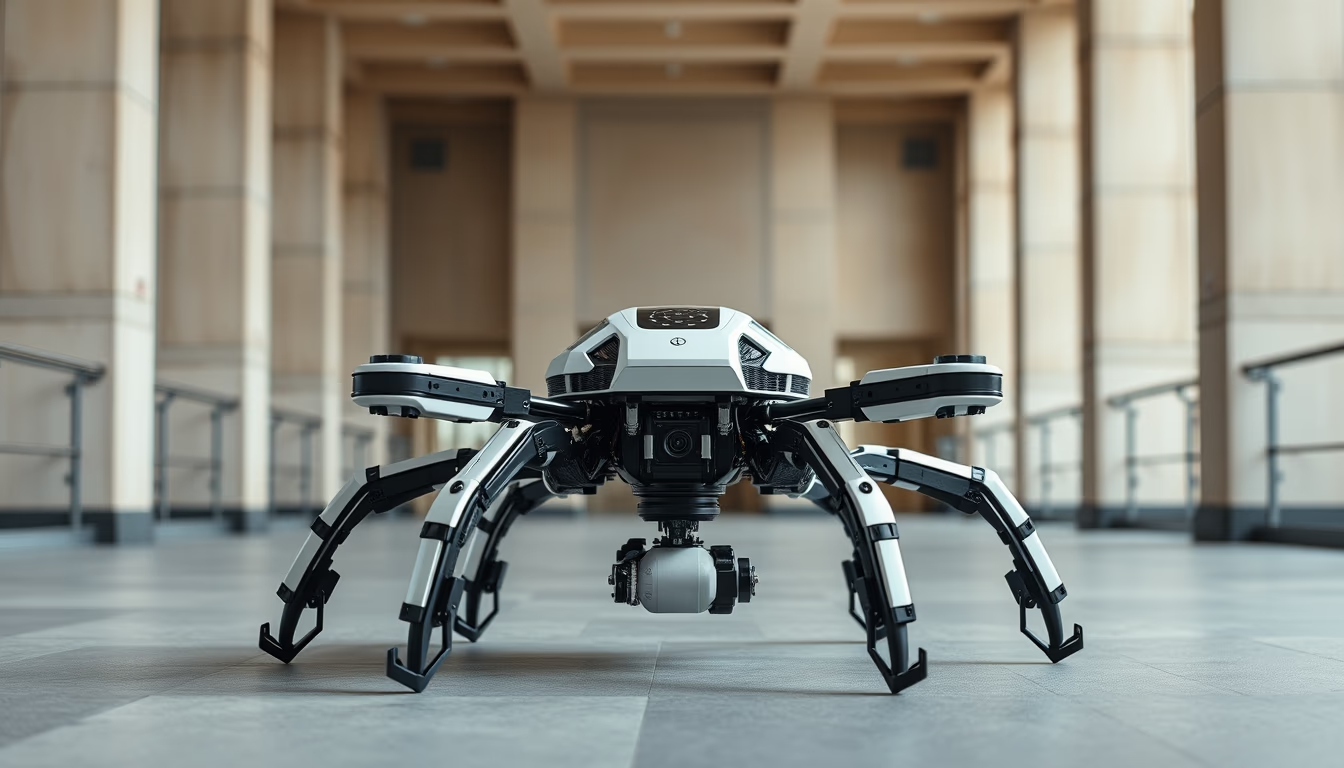
Hexapod robot moving
1344×768 · AVIF · CC BY 4.0
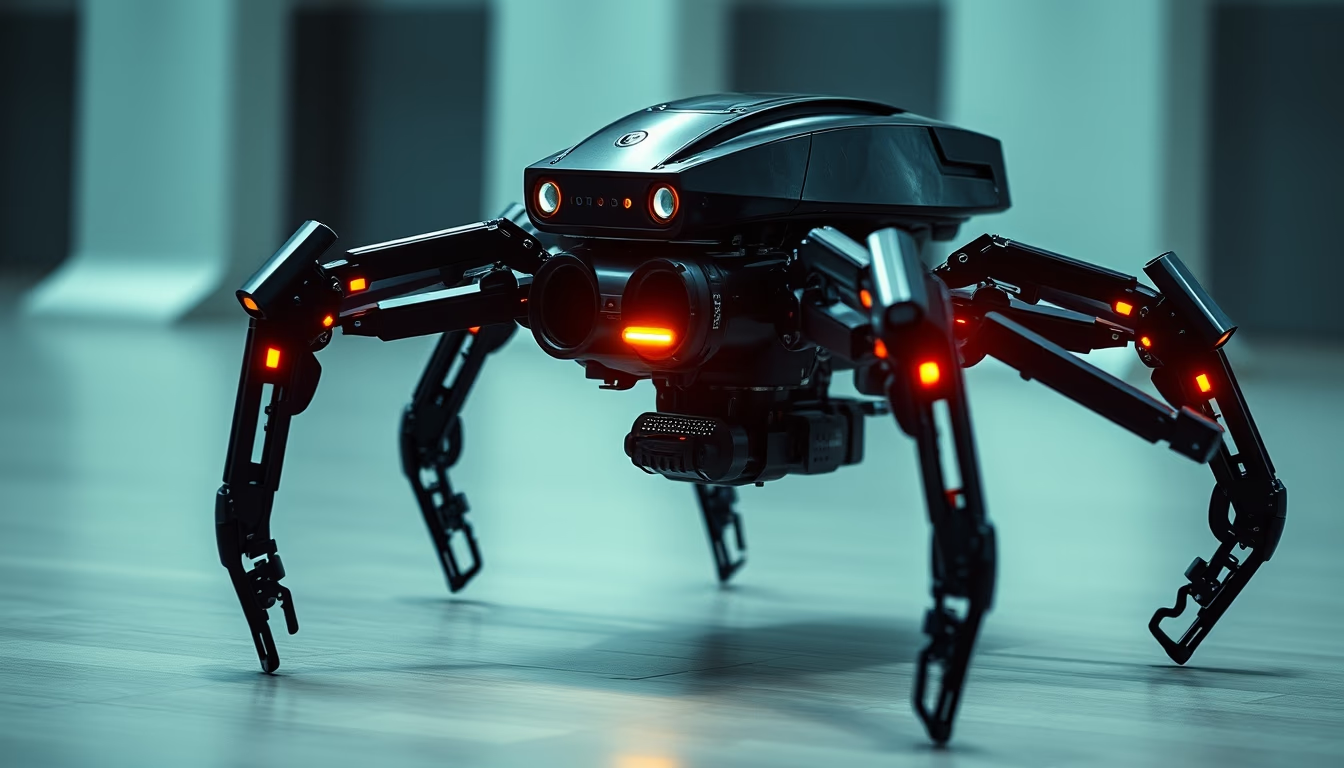
Hexapod robots, inspired by insects and arthropods, combine stability and adaptability for locomotion on uneven terrain.
About this subject
A hexapod robot is a robotic vehicle with six legs, designed to mimic the locomotion of biological organisms such as ants, cockroaches, and spiders. Its configuration offers significant advantages over wheeled or tracked robots on rough terrain, as each leg can be independently controlled to overcome obstacles, climb surfaces, and maintain dynamic balance. Early examples date back to the 1980s with GE's Walking Truck, but recent decades have seen hexapods gain prominence in academic research and practical applications.
Technically, a hexapod uses a variety of sensors, including gyroscopes, accelerometers, and force sensors, to adjust its steps in real time. Algorithms such as gait control enable walking, running, climbing, and even jumping. Modern models like the PhantomX AX Hexapod or the more advanced Mantis Robot are used in search-and-rescue missions, volcanic exploration, and industrial inspection. The redundancy of six legs ensures that even if one leg fails, the robot remains operational.
In the cultural realm, hexapods transcend engineering and enter fashion and art. Their alien silhouette and synchronized movements make them protagonists in high-fashion editorials, such as those in Vogue or performances by the Japanese design studio teamLab. The partnership between robotics and fashion explores cybernetic aesthetics, questioning the boundaries between natural and artificial. Companies like Boston Dynamics (known for the quadruped Spot) have inspired artists to create stylized hexapods that walk runways or pose for cameras, blending cutting-edge technology with visual curation.
Interestingly, the use of hexapods in fashion editorials is not merely visual: they can carry cameras or props, interact with human models, and perform programmed choreography. This convergence between robotics and high fashion reflects a contemporary trend of humanizing technology, making it part of the aesthetic discourse. Thus, the hexapod transforms from a mere functional tool into a cultural icon that dialogues with sustainability, innovation, and artistic expression.
Frequently Asked Questions
What is a hexapod robot?
It is a robot with six legs, inspired by insects and spiders, that moves across uneven terrain with high stability. Each leg is independently controlled by servomotors and gait algorithms.
How does a hexapod robot move?
It uses different gait patterns, such as tripod, ripple, or gallop. Force and orientation sensors allow the robot to adjust leg positions in real time to maintain balance and overcome obstacles.
Why are hexapods used in fashion editorials?
Their futuristic aesthetics and precise movements create an interesting visual contrast with human models. They can carry cameras, interact with the set, and represent the cybernetic theme present in contemporary fashion.
Direct URL
https://pub-c7d6a6ea828543ac903a74a341ccb2e1.r2.dev/imagens/hexapod-robot-moving-high-fashion-editorial-p11.avifHow to credit
Include a visible link back to UtilizAí. Copy one of the snippets below:
<a href="https://xn--utiliza-eza.com/en/midia/imagens/hexapod-robot-moving-high-fashion-editorial-p11">Hexapod robot moving</a> by <a href="https://xn--utiliza-eza.com">UtilizAí</a>, licensed under <a href="https://creativecommons.org/licenses/by/4.0/">CC BY 4.0</a>.
[Hexapod robot moving](https://xn--utiliza-eza.com/en/midia/imagens/hexapod-robot-moving-high-fashion-editorial-p11) by [UtilizAí](https://xn--utiliza-eza.com), CC BY 4.0
License: CC-BY-4.0