Hexapod robot moving
1344×768 · AVIF · CC BY 4.0
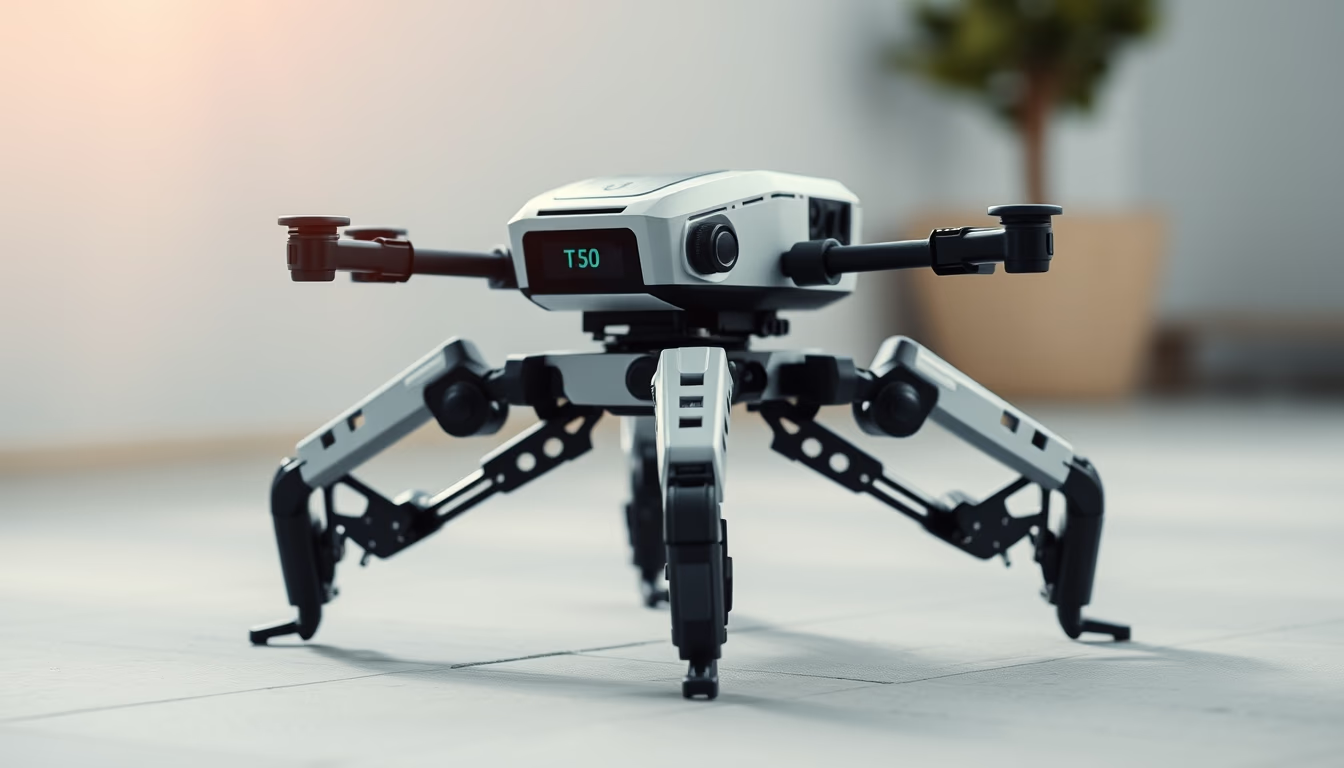
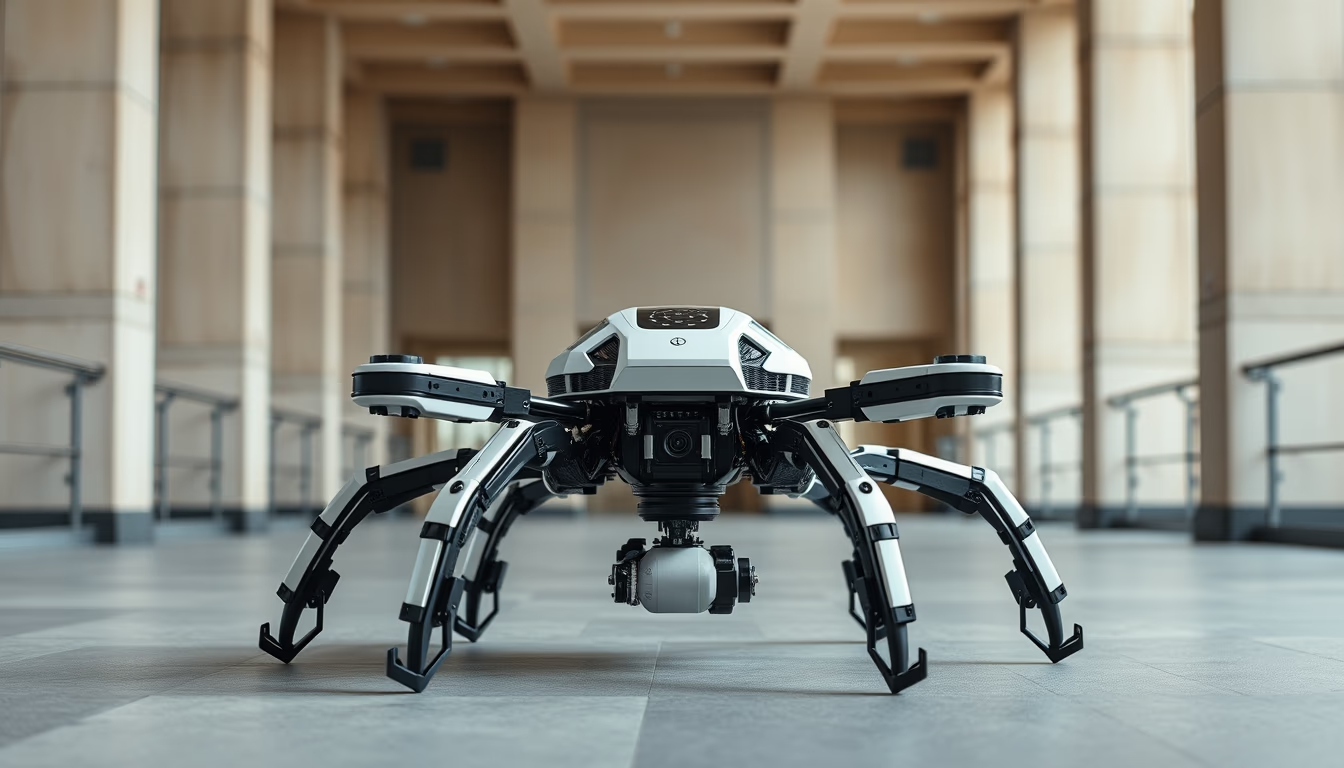
Hexapod robots with six legs provide stable locomotion over uneven terrain, inspired by insects and arachnids.
About this subject
Hexapod robots are machines with six articulated legs that mimic the movement of insects and other arthropods. Unlike wheeled or tracked robots, they can traverse obstacles like rocks, stairs, and muddy terrain without losing stability. The hexapod design is common in exploration, rescue, and research robots because it offers redundancy: if one leg fails, the remaining five maintain balance.
A famous example is the Hexapod robot developed at MIT, which uses control algorithms inspired by cockroach gait to quickly adjust stride length. In industry, smaller versions are used in laboratories to study animal locomotion and test artificial intelligence. In entertainment, models like the PhantomX from Trossen Robotics are popular among hobbyists and in robotics competitions.
The main advantage of a hexapod is its versatility. While bipedal robots struggle with balance and wheeled robots face limitations on rough terrain, the hexapod distributes weight across three stable contact points during movement. This characteristic makes it ideal for missions in unpredictable environments, such as after natural disasters or on lunar craters.
Interestingly, the number of legs is not arbitrary. Six legs allow two basic gait patterns: the alternating tripod (three legs on the ground at a time) and the ripple gait (smooth wave motion). Programmers can choose the pattern based on energy efficiency or desired speed. Additionally, force sensors and gyroscopes help the robot adapt in real time to changes in the ground.
Frequently Asked Questions
What is the main advantage of a hexapod robot over other types?
The main advantage is stability on uneven terrain. With six legs, it maintains three points of contact on the ground at each movement, providing balance even if one leg fails.
How are hexapod movements controlled?
Movements are controlled by algorithms that coordinate the angle and force of each leg. Sensors like gyroscopes and force gauges allow the robot to adapt to the terrain in real time.
In which fields are hexapods most commonly used?
They are used in exploration (harsh environments), rescue (rubble), academic research (animal locomotion), and entertainment (robotics competitions).
Direct URL
https://pub-c7d6a6ea828543ac903a74a341ccb2e1.r2.dev/imagens/hexapod-robot-moving-documentary-photography-p0.avifHow to credit
Include a visible link back to UtilizAí. Copy one of the snippets below:
<a href="https://xn--utiliza-eza.com/en/midia/imagens/hexapod-robot-moving-documentary-photography-p0">Hexapod robot moving</a> by <a href="https://xn--utiliza-eza.com">UtilizAí</a>, licensed under <a href="https://creativecommons.org/licenses/by/4.0/">CC BY 4.0</a>.
[Hexapod robot moving](https://xn--utiliza-eza.com/en/midia/imagens/hexapod-robot-moving-documentary-photography-p0) by [UtilizAí](https://xn--utiliza-eza.com), CC BY 4.0
License: CC-BY-4.0