Green roof on building
1344×768 · AVIF · CC BY 4.0
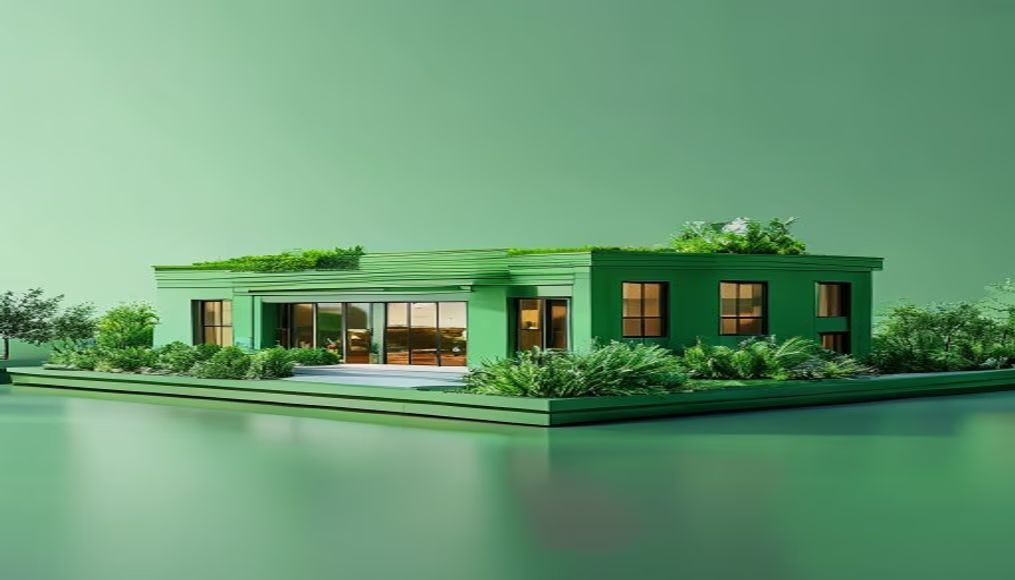
Green roofs transform rooftops into vegetated areas, reducing urban heat islands and improving building thermal insulation.
About this subject
A green roof, also known as a vegetated roof, is a structure that incorporates vegetation grown on a waterproof membrane atop a building. There are two main types: extensive, with shallow substrate and hardy plants like sedums, and intensive, with deeper soil and larger plants, even trees. This technology gained traction in Germany in the 1970s and is now a global trend.
Environmental benefits are significant. Green roofs absorb up to 80% of rainwater, reducing flooding and easing drainage systems. They lower ambient temperatures by up to 4°C, combating urban heat islands. They also filter air pollutants and provide habitat for birds and pollinators, boosting urban biodiversity.
Economically, green roofs save energy: in winter, they retain heat; in summer, they block solar radiation, reducing air conditioning use. The waterproof membrane lasts twice as long because it is shielded from UV rays and temperature swings. Properties with green roofs can appreciate up to 15% in value.
In Brazil, notable examples include the Museum of Tomorrow in Rio de Janeiro, with its landscaped green roof, and the Green Roof of São Paulo City Hall, a pioneering project from 2012. Interestingly, the world's largest green roof is at Frankfurt Airport in Germany, spanning over 30 hectares. Installation in Brazil is growing but still faces barriers such as lack of tax incentives and specialized labor.
Frequently Asked Questions
What are the main benefits of a green roof?
Benefits include reducing urban heat islands, absorbing rainwater, improving air quality, saving energy, extending roof lifespan, and providing habitat for biodiversity.
How much does it cost to install a green roof?
Costs vary by type: extensive can range from $15 to $30 per square foot, while intensive can exceed $50 per square foot. Long-term energy savings often offset the initial investment.
What plants are most commonly used on green roofs?
For extensive roofs, sedums, grasses, and succulents are common. For intensive roofs, shrubs, vines, and small trees adapted to local climate and drought resistance are used.
Direct URL
https://pub-c7d6a6ea828543ac903a74a341ccb2e1.r2.dev/imagens/green-roof-on-building-commercial-product-photography-v9.avifHow to credit
Include a visible link back to UtilizAí. Copy one of the snippets below:
<a href="https://xn--utiliza-eza.com/en/midia/imagens/green-roof-on-building-commercial-product-photography-v9">Green roof on building</a> by <a href="https://xn--utiliza-eza.com">UtilizAí</a>, licensed under <a href="https://creativecommons.org/licenses/by/4.0/">CC BY 4.0</a>.
[Green roof on building](https://xn--utiliza-eza.com/en/midia/imagens/green-roof-on-building-commercial-product-photography-v9) by [UtilizAí](https://xn--utiliza-eza.com), CC BY 4.0
License: CC-BY-4.0