Globe vintage spinning
1344×768 · AVIF · CC BY 4.0
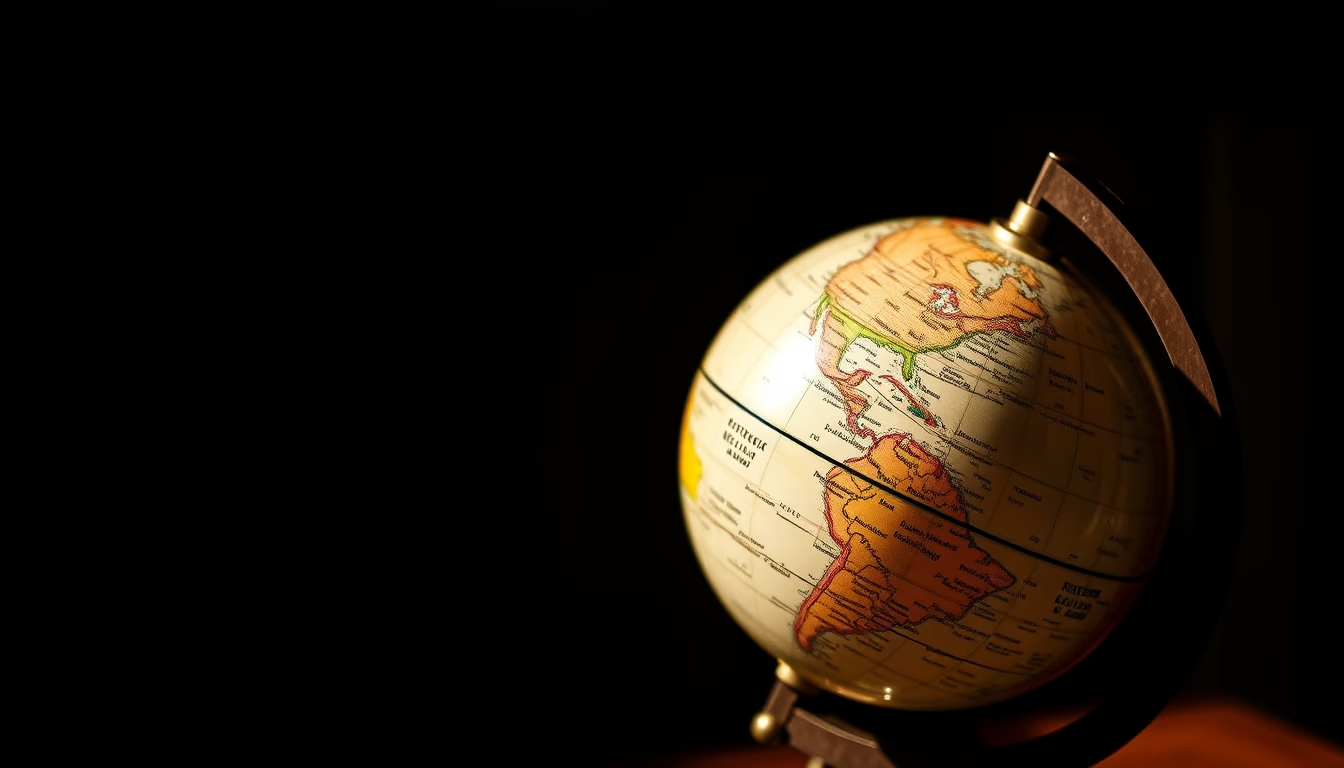
Vintage globes, like the one depicted, blend art and science as valuable educational tools and collectible pieces.
About this subject
Vintage globes are more than mere decorative items; they represent the evolution of cartography and humanity's understanding of the world. Since the first known terrestrial globe, the Erdapfel created by Martin Behaim in 1492, these objects have been refined with printing and assembly techniques. In the 19th century, mass production made globes accessible to schools and libraries, with prominent manufacturers such as Rand McNally and Replogle. Each globe reflects the geographical knowledge of its era, displaying political boundaries that have changed, names of extinct countries, and oceans explored from different perspectives. Typical construction includes a wooden or metal stand, a tilted axis to represent Earth's axial tilt, and a sphere covered with maps made of paper gores, hand-glued together. The patina and wear of antique globes tell stories of decades of use, making each piece unique. Collectors particularly value mid-20th-century globes, which blend art deco design with cartographic precision. Additionally, celestial globes, which map stars and constellations, are equally prized. In contemporary settings, a vintage globe serves not only as a learning tool but also as a design element evoking nostalgia and erudition. Preserving these objects requires care, such as avoiding direct sunlight and moisture, which can warp the paper or rust the stand.
Frequently Asked Questions
How can I determine the age of a vintage globe?
Check the date on the map, usually in the lower right corner or on the stand. Countries that no longer exist (like the Soviet Union) or altered borders help date the piece. Manufacturers like Replogle often include serial numbers or copyright stamps.
What materials are used in antique globes?
The sphere is typically made of papier-mâché, cardboard, or plastic, covered with paper gores. The stand can be wood (walnut, oak), brass, or cast iron. The axis and meridian ring are usually metal.
Are vintage globes still geographically accurate?
It depends on the age. 19th-century globes may have outdated territories, colonial names, and scale errors. Mid-20th-century ones are more faithful but still reflect political views of the time, such as the absence of countries that emerged later.
Direct URL
https://pub-c7d6a6ea828543ac903a74a341ccb2e1.r2.dev/imagens/globe-vintage-spinning-magazine-editorial-p0.avifHow to credit
Include a visible link back to UtilizAí. Copy one of the snippets below:
<a href="https://xn--utiliza-eza.com/en/midia/imagens/globe-vintage-spinning-magazine-editorial-p0">Globe vintage spinning</a> by <a href="https://xn--utiliza-eza.com">UtilizAí</a>, licensed under <a href="https://creativecommons.org/licenses/by/4.0/">CC BY 4.0</a>.
[Globe vintage spinning](https://xn--utiliza-eza.com/en/midia/imagens/globe-vintage-spinning-magazine-editorial-p0) by [UtilizAí](https://xn--utiliza-eza.com), CC BY 4.0
License: CC-BY-4.0