Globe vintage spinning
1344×768 · AVIF · CC BY 4.0
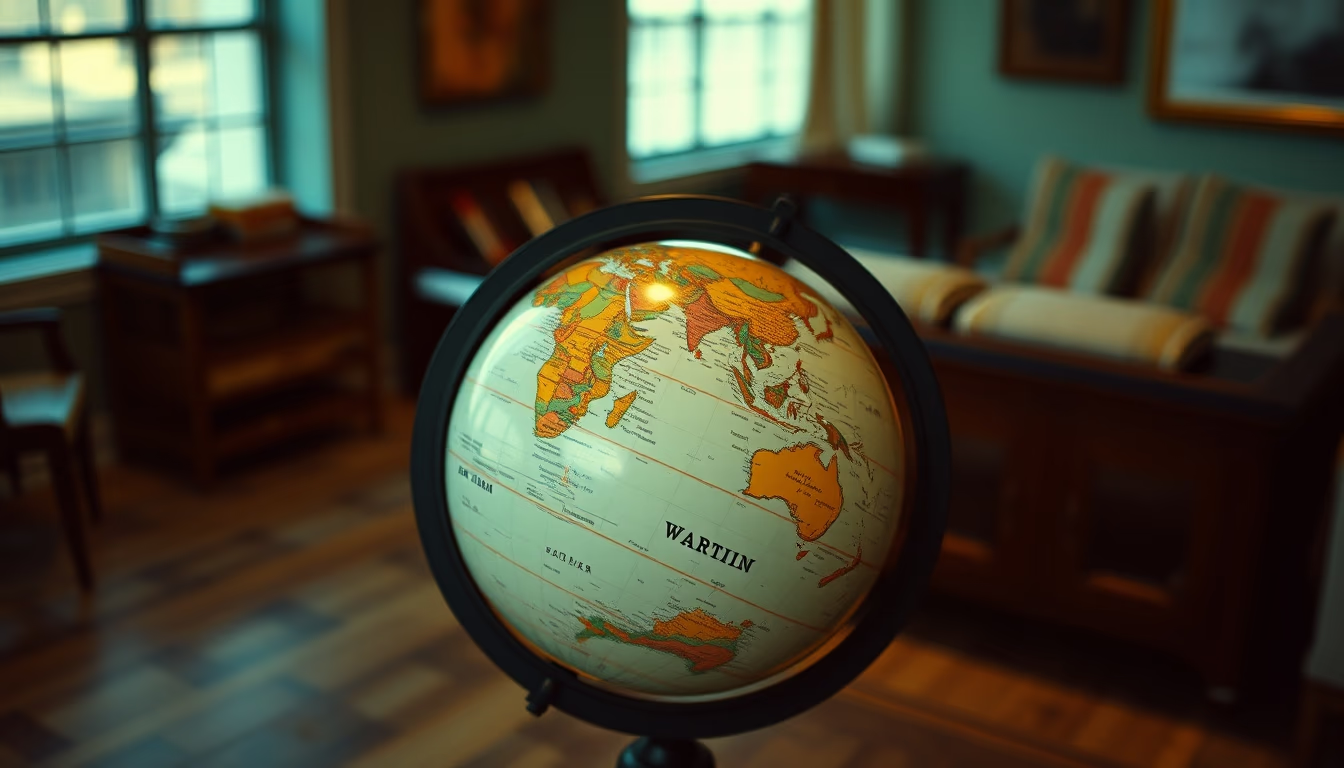
A vintage spinning globe evokes the age of exploration and the craftsmanship of antique cartographic instruments.
About this subject
The terrestrial globe, as a three-dimensional cartographic instrument, has roots in Classical Antiquity. The earliest known terrestrial globe was built by Crates of Mallus in the 2nd century BC, but it was the great explorers of the 15th and 16th centuries who popularized its use. Over time, globes became symbols of status and erudition, adorning libraries and cabinets of curiosities.
Crafting a vintage globe involved meticulous handmade techniques. First, a sphere of wood or plaster was carved, then covered with strips of paper or parchment. Onto this surface, cartographers hand-drew the continents and oceans, based on the most up-to-date maps of the era. The stand, usually of turned wood or metal, allowed the globe to spin on an axis tilted at 23.5 degrees, mimicking the Earth's actual inclination.
Beyond educational value, vintage globes are prized for their aesthetics. The natural wear of paper, faded colors, and film grain texture in modern images evoke a time when the world seemed vaster and more mysterious. Collectors seek pieces from renowned makers, such as the Blaeu family in the Netherlands or the Italian publisher Vincenzo Coronelli, who produced some of the most detailed globes of the 17th century. Today, these objects can be found in museums, auctions, and reproductions that retain the original charm.
Frequently Asked Questions
How is a vintage globe manufactured?
Manufacturing involved carving a sphere from wood or plaster, covering it with strips of paper or parchment, and hand-drawing the maps. The stand was made of wood or metal, with an inclined axis to simulate the Earth's actual rotation.
What is the difference between a celestial and a terrestrial globe?
A terrestrial globe represents the Earth's surface, with continents and oceans. A celestial globe shows the positions of stars and constellations in the sky as seen from Earth, used for astronomical studies.
Why are antique globes valuable?
Antique globes are valuable for their rarity, historical context, artisanal beauty, and the cartographic accuracy of their time. Pieces by renowned makers or featuring maps of colonial regions can fetch high prices at auctions.
Direct URL
https://pub-c7d6a6ea828543ac903a74a341ccb2e1.r2.dev/imagens/globe-vintage-spinning-film-grain-authentic-p6.avifHow to credit
Include a visible link back to UtilizAí. Copy one of the snippets below:
<a href="https://xn--utiliza-eza.com/en/midia/imagens/globe-vintage-spinning-film-grain-authentic-p6">Globe vintage spinning</a> by <a href="https://xn--utiliza-eza.com">UtilizAí</a>, licensed under <a href="https://creativecommons.org/licenses/by/4.0/">CC BY 4.0</a>.
[Globe vintage spinning](https://xn--utiliza-eza.com/en/midia/imagens/globe-vintage-spinning-film-grain-authentic-p6) by [UtilizAí](https://xn--utiliza-eza.com), CC BY 4.0
License: CC-BY-4.0