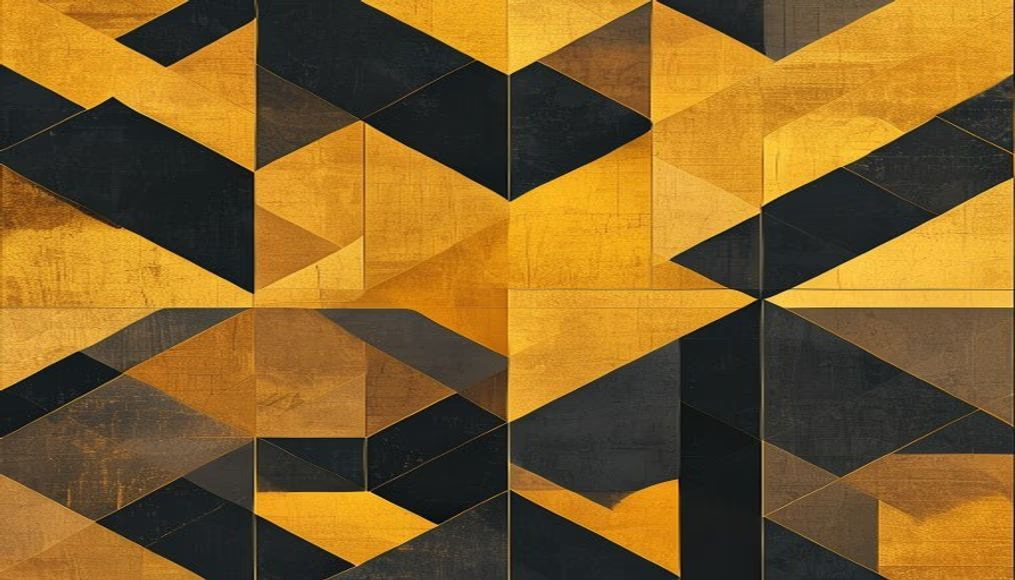
Geometric pattern minimalist
1344×768 · AVIF · CC BY 4.0
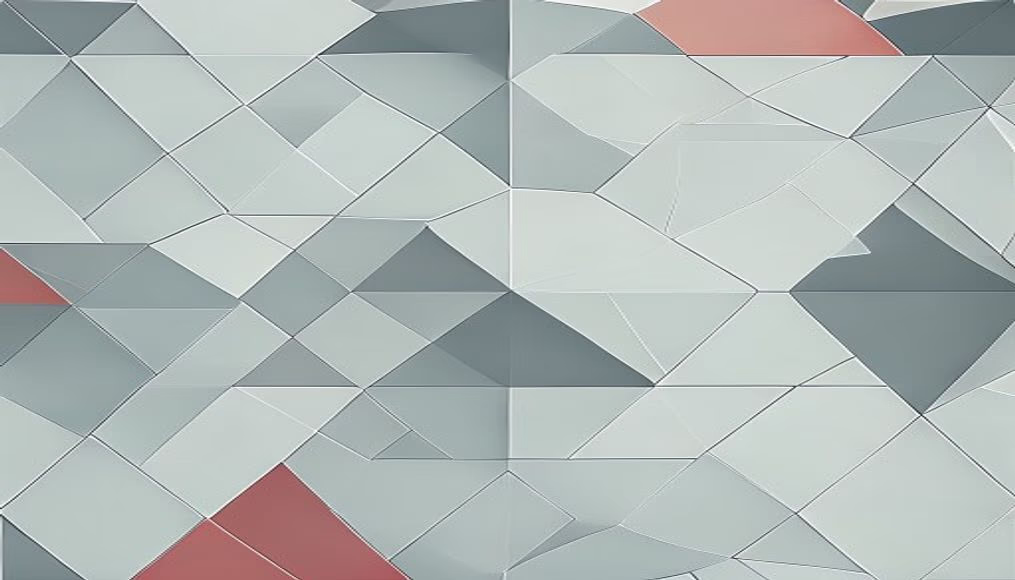
Minimalist geometric patterns combine simplicity, symmetry, and repetition to create timeless, impactful visual compositions in art and design.
About this subject
Geometric minimalism has roots in early 20th-century art movements, especially abstract art and the Bauhaus. Artists like Piet Mondrian and Kazimir Malevich explored basic geometric forms such as squares, rectangles, and lines to express a universal essence. The style also gained traction in graphic design, architecture, and fashion, always prioritizing functionality and purity of form.
In practice, minimalist geometric patterns are created by repeating simple elements, generating visual rhythm and balance. They can be found in logos, wallpapers, textile prints, and architectural cladding. Symmetry is often used to convey order and calm, while neutral or monochromatic colors reinforce the clean aesthetic.
Interestingly, the use of minimalist geometric patterns dates back to ancient civilizations, such as Islamic art and Roman mosaics, which already employed geometric repetitions with symbolic meaning. In contemporary design, the minimalist trend responds to the visual saturation of the digital world, offering clarity and focus. The "less is more" philosophy, championed by architects like Mies van der Rohe, continues to inspire creations that value the essential.
Furthermore, minimalist geometric patterns are widely used in commercial product photography because they highlight the object without distractions. The absence of ornamentation allows the product to be the center of attention, while the geometry conveys a sense of modernity and sophistication. Brands in technology, fashion, and home decor often adopt this style in their visuals.
Frequently Asked Questions
What defines a minimalist geometric pattern?
It uses basic geometric shapes (squares, circles, triangles) in repetition, emphasizing simplicity, symmetry, and neutral colors, eliminating superfluous details.
Where are these patterns applied in everyday life?
In logos, wallpapers, clothing prints, tiles, cladding, and product photography, especially in modern and minimalist designs.
What is the historical origin of geometric minimalism?
It dates back to early 20th-century art movements (Bauhaus, De Stijl) and has earlier roots in Islamic art and Roman mosaics, which already used geometric repetitions.
Direct URL
https://pub-c7d6a6ea828543ac903a74a341ccb2e1.r2.dev/imagens/geometric-pattern-minimalist-commercial-product-photography-v9.avifHow to credit
Include a visible link back to UtilizAí. Copy one of the snippets below:
<a href="https://xn--utiliza-eza.com/en/midia/imagens/geometric-pattern-minimalist-commercial-product-photography-v9">Geometric pattern minimalist</a> by <a href="https://xn--utiliza-eza.com">UtilizAí</a>, licensed under <a href="https://creativecommons.org/licenses/by/4.0/">CC BY 4.0</a>.
[Geometric pattern minimalist](https://xn--utiliza-eza.com/en/midia/imagens/geometric-pattern-minimalist-commercial-product-photography-v9) by [UtilizAí](https://xn--utiliza-eza.com), CC BY 4.0
License: CC-BY-4.0