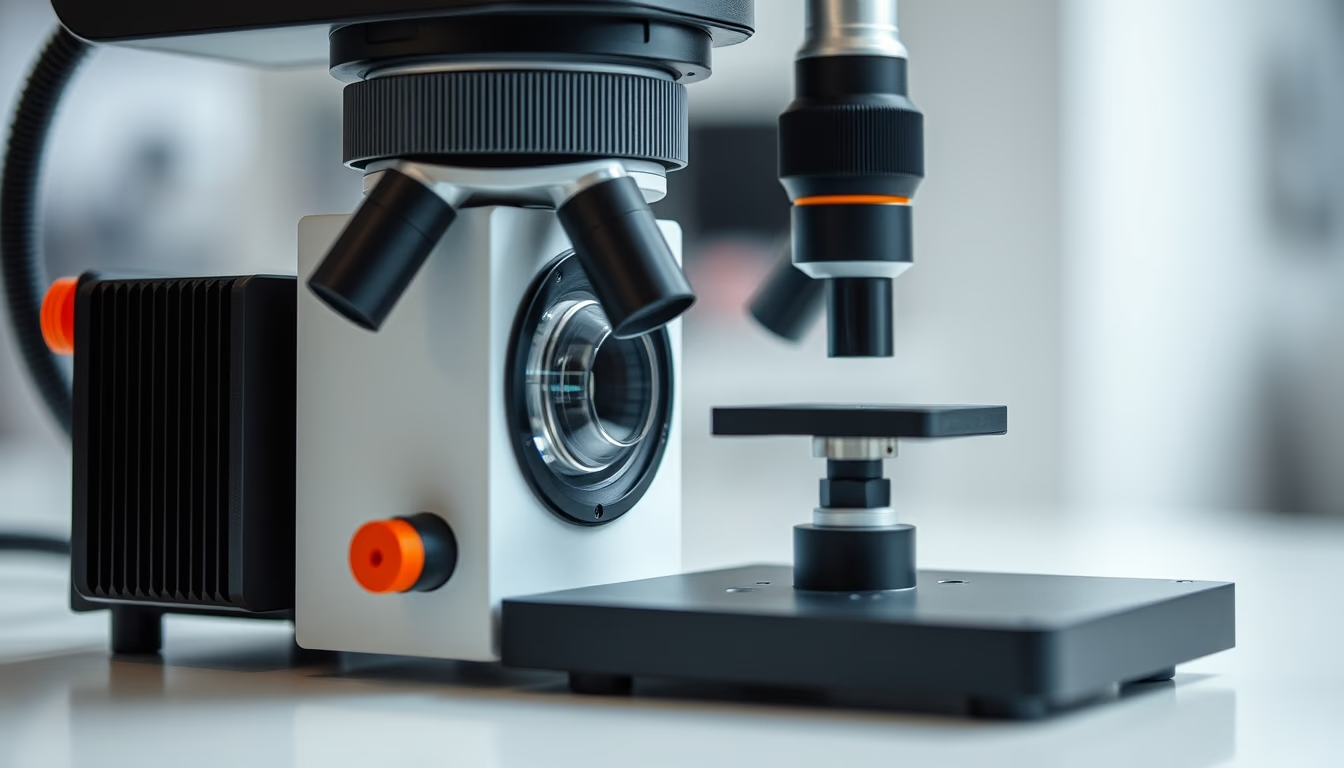
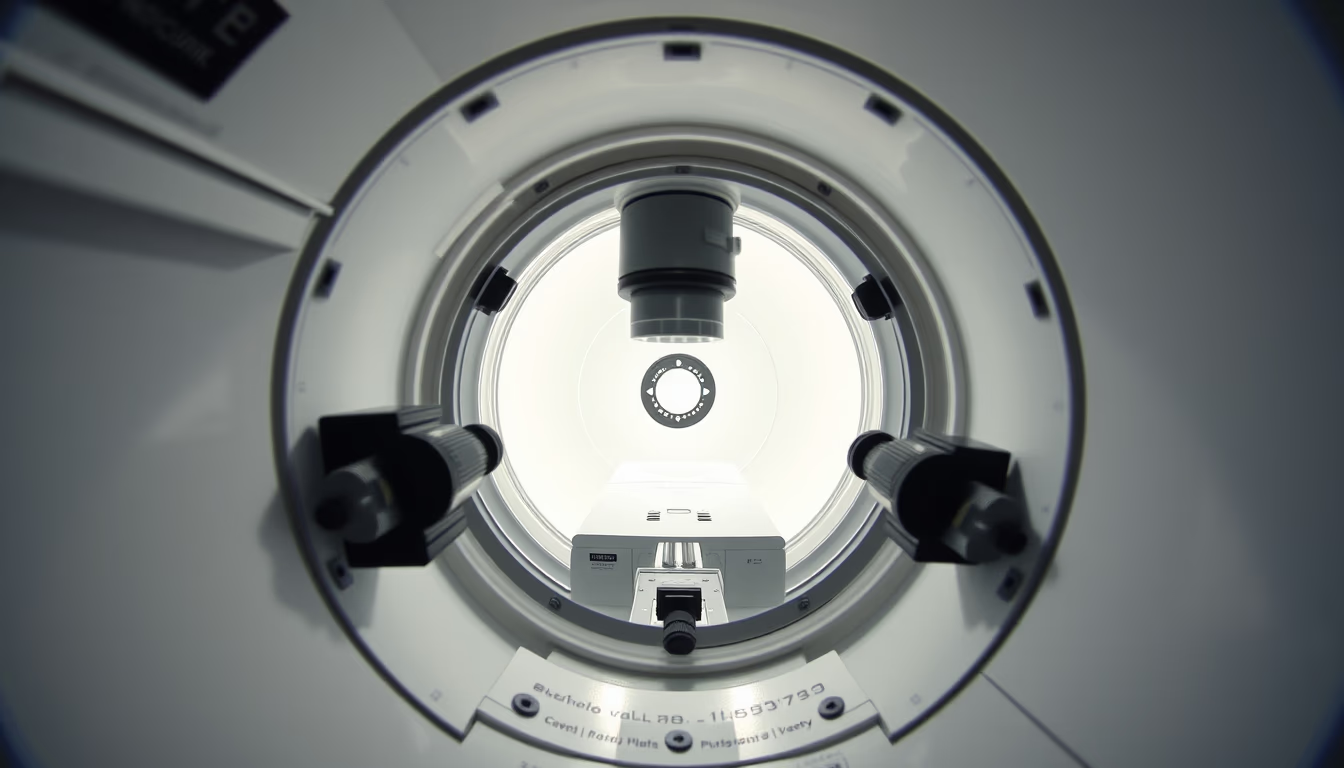
Gene sequencer machine
1344×768 · AVIF · CC BY 4.0
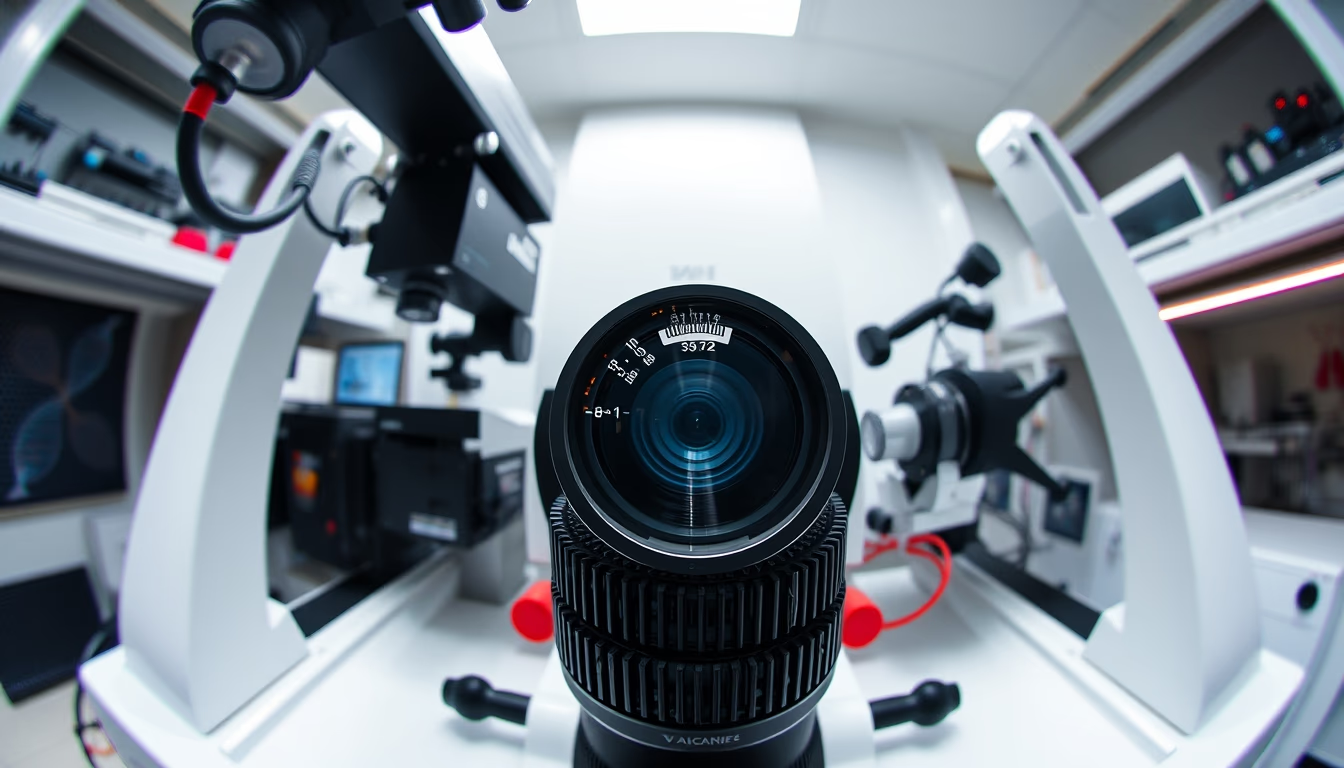
The gene sequencer machine is essential equipment for decoding DNA, revealing mutations, and advancing personalized medicine and biotechnology.
About this subject
A gene sequencer machine is a laboratory instrument that determines the exact order of nucleotides (adenine, cytosine, guanine, and thymine) in a DNA molecule. This technology has revolutionized molecular biology since the Sanger method developed in the 1970s, to modern next-generation sequencers (NGS) that process millions of fragments simultaneously.
Applications are vast. In medicine, sequencing enables diagnosis of rare genetic diseases, guides cancer therapies based on tumor profiles, and identifies outbreaks of pathogens like SARS-CoV-2. In agriculture, it accelerates crop improvement and the identification of resistance genes. In paleogenomics, it helped reconstruct the Neanderthal genome.
Technological advances have drastically reduced costs. Sequencing the first human genome (completed in 2003) cost around $3 billion. Today, companies like Illumina and MGI offer whole-genome sequencing for under $1,000. Third-generation devices, such as those from Pacific Biosciences and Oxford Nanopore, allow real-time reading of long fragments.
In Brazil, institutions like Fiocruz, Hospital Sírio-Libanês, and the University of São Paulo operate high-performance sequencers. They are used for monitoring viral variants, studying Amazon biodiversity, and diagnosing hereditary diseases. Despite progress, personnel training and equipment maintenance remain significant challenges for national genomics.
Frequently Asked Questions
How does a gene sequencer work?
The machine fragments DNA, adds fluorescent labels or detects ionic current variations, and reads the order of nucleotides. Methods vary, but the basic principle is to identify each base as the molecule passes through a sensor or is synthesized.
What is the difference between Sanger sequencing and NGS?
Sanger sequencing reads fragments up to 900 bases at a time, ideal for small samples. NGS (Next-Generation Sequencing) processes millions of fragments in parallel, allowing whole genomes to be sequenced quickly and at lower cost.
How much does it cost to sequence a human genome today?
As of 2024, the cost for a whole human genome ranges from US$600 to US$1,500 depending on technology and coverage depth. This represents a drop of over 99.9% compared to the original Human Genome Project cost.
Direct URL
https://pub-c7d6a6ea828543ac903a74a341ccb2e1.r2.dev/imagens/gene-sequencer-machine-fish-eye-wide-angle-fresh13.avifHow to credit
Include a visible link back to UtilizAí. Copy one of the snippets below:
<a href="https://xn--utiliza-eza.com/en/midia/imagens/gene-sequencer-machine-fish-eye-wide-angle-fresh13">Gene sequencer machine</a> by <a href="https://xn--utiliza-eza.com">UtilizAí</a>, licensed under <a href="https://creativecommons.org/licenses/by/4.0/">CC BY 4.0</a>.
[Gene sequencer machine](https://xn--utiliza-eza.com/en/midia/imagens/gene-sequencer-machine-fish-eye-wide-angle-fresh13) by [UtilizAí](https://xn--utiliza-eza.com), CC BY 4.0
License: CC-BY-4.0