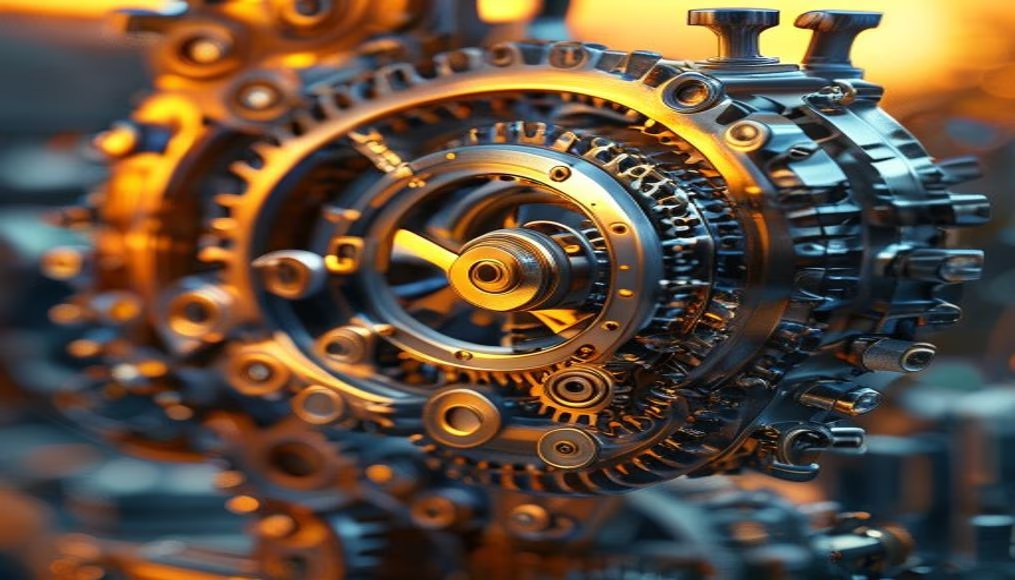
Gear mechanism mechanical
1344×768 · AVIF · CC BY 4.0
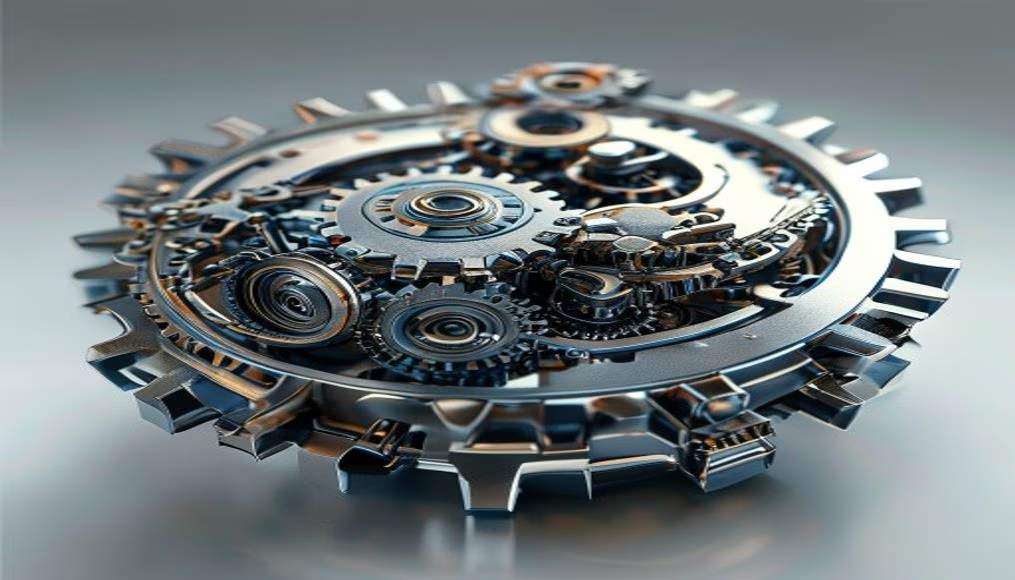
Explore the mechanics and history of gear mechanisms, essential components in power transmission across industries.
About this subject
Gears are toothed mechanical components that transmit torque and rotation between shafts. The basic principle involves meshing teeth that slide against each other, enabling changes in speed, torque, and direction of motion. There are several types: spur gears, helical gears, bevel gears, worm gears, and planetary gears. Each serves specific applications, from wristwatches to wind turbines.
The history of gears dates back to ancient Greece, with the Antikythera mechanism (circa 100 BC), an analog computer that calculated astronomical positions. Leonardo da Vinci designed numerous gear systems in the 15th century, many only built centuries later. In Brazil, rapid industrial development from the 1950s onward spurred local gear production for automotive, agricultural machinery, and mining equipment.
Gear manufacturing involves machining processes like milling, broaching, and grinding. Common materials include carbon steel, alloy steel, cast iron, and engineering plastics. Lubrication is critical to reduce friction and wear; specific oils and greases are used depending on the application. Gear transmission efficiency can exceed 98% under ideal conditions, surpassing belts or chains.
A curious fact: the most common tooth profile is the involute, which ensures smooth and constant contact between teeth. The gear ratio is determined by the number of teeth on meshing gears. Planetary gears are widely used in automotive transmissions for their compactness and torque-multiplying capability.
Frequently Asked Questions
What is the most common type of gear in industrial machinery?
Spur gears are the simplest and most common, but helical gears are preferred when lower noise and higher load capacity are required.
Why do gears fail?
Common failure causes include surface wear, contact fatigue (pitting), tooth breakage due to overload, and improper lubrication.
How are gears lubricated?
Typically, oil is used through splash or circulation systems, or grease for low-speed applications. Selection depends on temperature, speed, and load.
Direct URL
https://pub-c7d6a6ea828543ac903a74a341ccb2e1.r2.dev/imagens/gear-mechanism-mechanical-commercial-product-photography-v9.avifHow to credit
Include a visible link back to UtilizAí. Copy one of the snippets below:
<a href="https://xn--utiliza-eza.com/en/midia/imagens/gear-mechanism-mechanical-commercial-product-photography-v9">Gear mechanism mechanical</a> by <a href="https://xn--utiliza-eza.com">UtilizAí</a>, licensed under <a href="https://creativecommons.org/licenses/by/4.0/">CC BY 4.0</a>.
[Gear mechanism mechanical](https://xn--utiliza-eza.com/en/midia/imagens/gear-mechanism-mechanical-commercial-product-photography-v9) by [UtilizAí](https://xn--utiliza-eza.com), CC BY 4.0
License: CC-BY-4.0