Frog skin texture macro
1344×768 · AVIF · CC BY 4.0
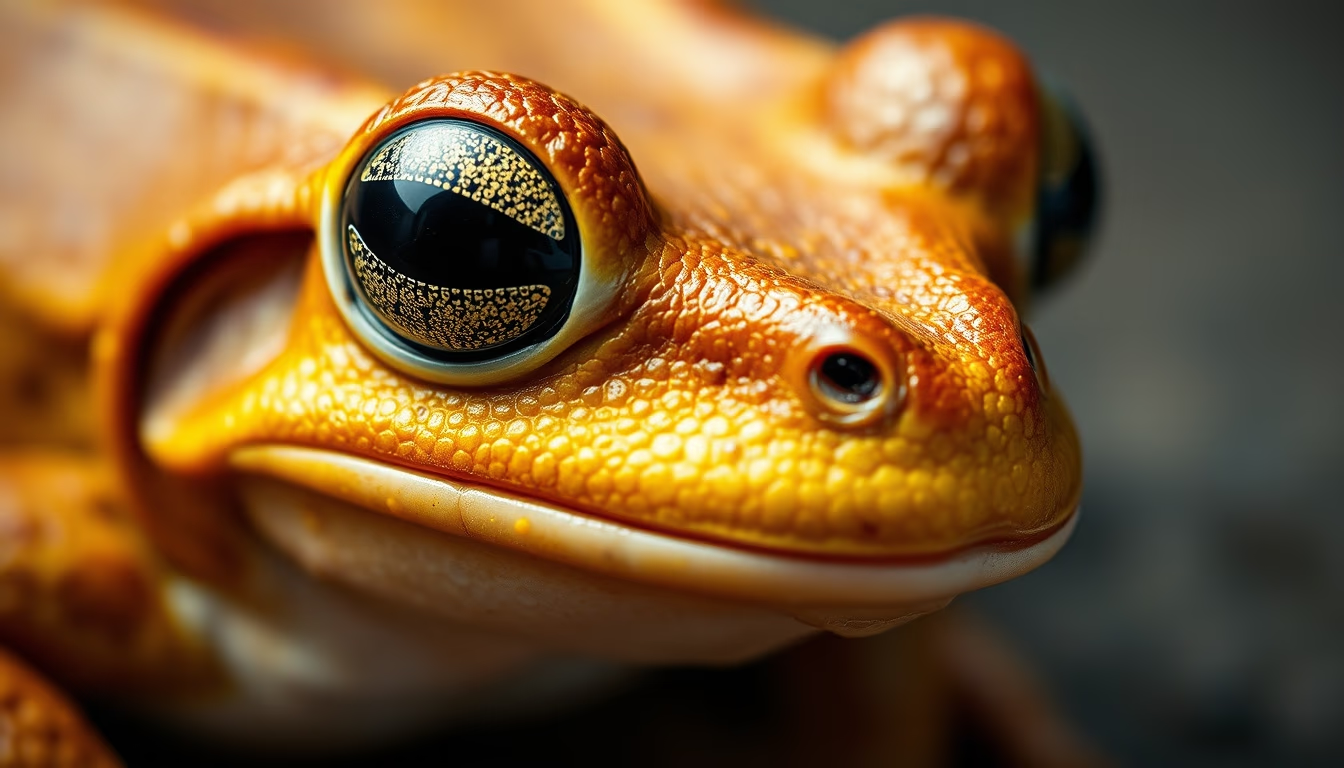
Frog skin texture is a multifunctional amphibian organ regulating respiration, hydration, and defense, with striking variations across species.
About this subject
Amphibian skin, especially of frogs, is a complex organ adapted to semi-aquatic life. Composed of epidermis and dermis, it houses mucous and granular glands that secrete substances vital for survival. The superficial layer often features patterns of warts, grooves, or ridges that vary according to the species' habitat and behavior.
One of the most notable functions is cutaneous respiration. About 50% to 80% of gas exchange in frogs occurs through the skin, which must remain moist to allow diffusion of oxygen and carbon dioxide. Mucous glands produce a layer of mucus that reduces water loss and facilitates cutaneous absorption. Granular glands secrete defensive toxins, as in poison dart frogs (Dendrobatidae), whose active compound can be lethal to predators.
Skin texture also plays a role in camouflage and thermoregulation. Arboreal frogs, such as those of the family Hylidae, tend to have smooth, adhesive skin, while terrestrial toads (Bufonidae) present warty, dry skin adapted to more arid environments. Skin color and pattern can change rapidly thanks to chromatophores, pigment cells that respond to environmental and hormonal stimuli.
Scientifically, frog skin inspires biomaterials. Antimicrobial peptides isolated from skin secretions, such as magainins, are studied to develop new antibiotics. Moreover, the selective permeability of amphibian skin serves as a model for artificial membranes used in filtration and sensors. Frog conservation is critical as they are bioindicators of environmental health, and their skin registers the impacts of pollutants and climate change.
Frequently Asked Questions
Why is frog skin always moist and slippery?
Moisture is essential for cutaneous respiration and water absorption. Mucous glands secrete mucus that keeps the skin hydrated and facilitates gas exchange.
How do frogs breathe through their skin?
Through the thin, vascularized epidermis, oxygen from air or water diffuses into blood capillaries, while carbon dioxide exits. This process requires the skin to remain moist.
Do all frogs have toxins in their skin?
No. Many frogs produce irritating or toxic secretions to varying degrees, but the most potent are found in poison dart frogs from Central and South America. Most Brazilian frogs have mild toxins.
Direct URL
https://pub-c7d6a6ea828543ac903a74a341ccb2e1.r2.dev/imagens/frog-skin-texture-macro-lo-fi-disposable-camera-p4.avifHow to credit
Include a visible link back to UtilizAí. Copy one of the snippets below:
<a href="https://xn--utiliza-eza.com/en/midia/imagens/frog-skin-texture-macro-lo-fi-disposable-camera-p4">Frog skin texture macro</a> by <a href="https://xn--utiliza-eza.com">UtilizAí</a>, licensed under <a href="https://creativecommons.org/licenses/by/4.0/">CC BY 4.0</a>.
[Frog skin texture macro](https://xn--utiliza-eza.com/en/midia/imagens/frog-skin-texture-macro-lo-fi-disposable-camera-p4) by [UtilizAí](https://xn--utiliza-eza.com), CC BY 4.0
License: CC-BY-4.0