Frog skin texture macro
1344×768 · AVIF · CC BY 4.0
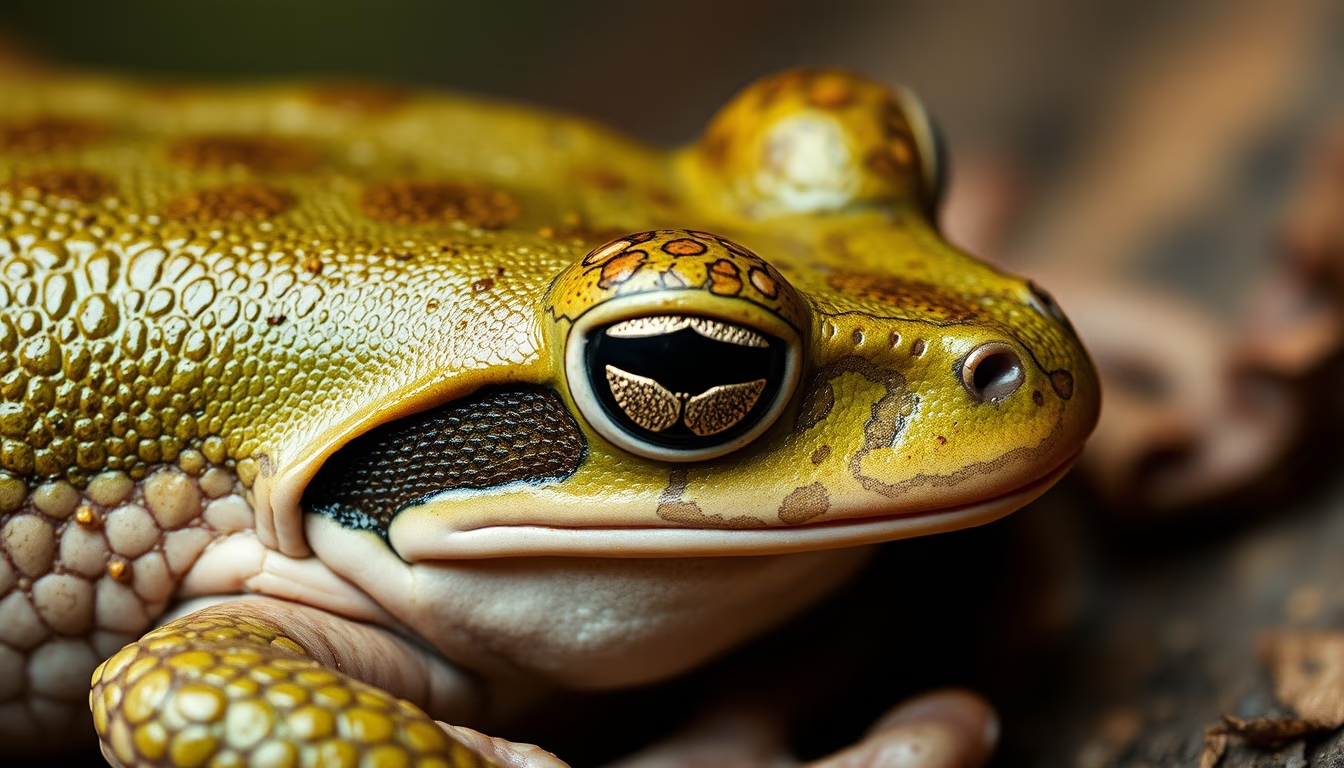
Macro reveals the rough, moist texture of an amphibian's skin, highlighting glands, pores, and patterns reflecting evolutionary adaptations for breathing and defense.
About this subject
The skin of amphibians, such as frogs, toads, and tree frogs, is a multifunctional organ essential for survival. Unlike mammals, it is thin, permeable, and rich in mucous glands that maintain moisture, enabling cutaneous respiration, a process that complements lung breathing and can account for up to 100% of gas exchange in some aquatic or resting species.
The texture observed in macro varies by species and habitat: terrestrial species tend to have rougher, warty skin with parotoid glands that secrete toxins for defense, such as the famous bufotoxin of true toads (Bufonidae). Arboreal frogs have smoother skin adapted for adhesion, with adhesive discs on their fingertips. Color and pattern result from pigment cells (chromatophores) that can change for camouflage or thermoregulation.
Interestingly, amphibian skin is an indicator of environmental health: due to high permeability, it quickly absorbs pollutants and pathogens, making these animals sensitive bioindicators of ecological changes. Globally, over 40% of amphibian species are threatened, partly due to fungal diseases like chytridiomycosis, which attacks skin keratin, impairing respiratory and osmotic function.
In evolutionary terms, the transition of amphibians to terrestrial life required complex cutaneous adaptations: besides mucus production, the skin contains keratin to prevent desiccation in dry environments, though it never fully loses the need for moisture. Studying skin texture in macro reveals details such as pores, grooves, and glands invisible to the naked eye, offering clues about each species' behavior and ecology.
Frequently Asked Questions
Why is amphibian skin so moist?
Moisture is maintained by mucous glands that secrete mucus, essential for cutaneous respiration (exchange of oxygen and CO₂ through the skin) and to prevent desiccation in terrestrial environments.
Do all frogs have warty skin?
No. Texture varies: toads (family Bufonidae) have rough, warty skin, while tree frogs (e.g., Hylidae) have smooth skin. Roughness is related to venom glands and habitat adaptations.
Can frog skin be poisonous?
Yes. Many amphibians have parotoid glands that secrete potent toxins, such as bufotoxin. The venom serves as defense against predators and can be dangerous to pets or humans if ingested or contacted with mucous membranes.
Direct URL
https://pub-c7d6a6ea828543ac903a74a341ccb2e1.r2.dev/imagens/frog-skin-texture-macro-film-grain-authentic-p3.avifHow to credit
Include a visible link back to UtilizAí. Copy one of the snippets below:
<a href="https://xn--utiliza-eza.com/en/midia/imagens/frog-skin-texture-macro-film-grain-authentic-p3">Frog skin texture macro</a> by <a href="https://xn--utiliza-eza.com">UtilizAí</a>, licensed under <a href="https://creativecommons.org/licenses/by/4.0/">CC BY 4.0</a>.
[Frog skin texture macro](https://xn--utiliza-eza.com/en/midia/imagens/frog-skin-texture-macro-film-grain-authentic-p3) by [UtilizAí](https://xn--utiliza-eza.com), CC BY 4.0
License: CC-BY-4.0