Fountain pen calligraphy
1344×768 · AVIF · CC BY 4.0
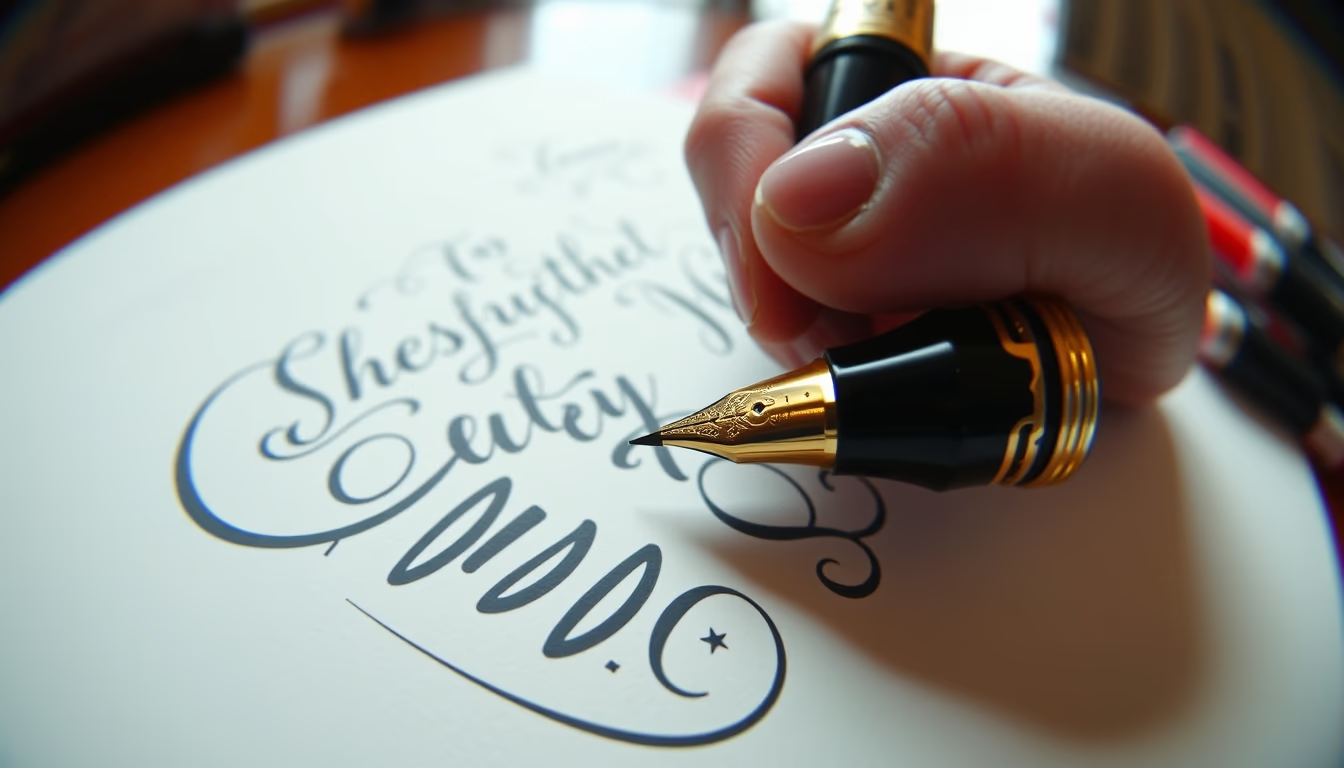
Fountain pen calligraphy combines technique and art, using different nib types and inks to create elegant letters.
About this subject
Fountain pen calligraphy is an art form dating back to the 19th century, when the first commercially viable fountain pens were patented by Lewis Waterman in 1884. Unlike early versions that leaked and had inconsistent ink flow, Waterman’s capillary feed system solved these issues. Since then, the fountain pen has become an essential tool for calligraphers, allowing varied strokes depending on pressure and angle.
Nib choice is crucial in calligraphy. Flexible nibs, such as those from the 'Spencerian' or 'Copperplate' styles, allow line width variation, essential for scripts like Copperplate or Spencerian. Rigid nibs are used for italic and more modern hands. Ink also plays a key role: historically, iron-gall inks darken over time, while pigmented or dye-based inks offer vibrant colors but require care to avoid clogging.
Fountain pen calligraphy is not limited to the West. In East Asia, fountain pens are adapted for Chinese and Japanese calligraphy, with special nibs for thick or thin strokes. The 'handwriting revival' movement in recent decades has brought renewed interest: workshops, limited-edition pens, and online communities teach from basics to advanced techniques. Practice requires patience and coordination, as every hand movement affects the final result, and a 45-degree angle between nib and paper is a golden rule for beginners.
Interestingly, the world’s most expensive fountain pen, the Montegrappa Invincible, is worth over a million dollars, but professional calligraphers value smoothness and comfort over price. Countries like Italy, Germany, and Japan are hubs for high-quality fountain pens, with brands like Aurora, Pelikan, and Pilot. Fountain pen calligraphy is not merely writing but an aesthetic expression that has survived the digital age, cherished in wedding invitations, diplomas, and artworks.
Frequently Asked Questions
What is the difference between a fountain pen and a calligraphy pen?
A fountain pen has a built-in ink reservoir and nib, while calligraphy pens often use a nib holder dipped in ink. Fountain pens allow continuous writing, but both are used for calligraphy. Flexible nibs on fountain pens are ideal for line variation.
How to clean a fountain pen used for calligraphy?
Empty the ink, rinse the nib and feed with lukewarm water until clean, then air dry. Avoid hot water and strong soaps. Pigmented inks may require specific cleaning solutions.
What is the best paper for fountain pen calligraphy?
Papers with a weight above 90 gsm and a coating that prevents bleeding are ideal. Brands like Rhodia, Clairefontaine, and Tomoe River are popular. Smooth paper allows smooth movement, while textured paper may hinder ink flow.
Direct URL
https://pub-c7d6a6ea828543ac903a74a341ccb2e1.r2.dev/imagens/fountain-pen-calligraphy-fish-eye-wide-angle-p4.avifHow to credit
Include a visible link back to UtilizAí. Copy one of the snippets below:
<a href="https://xn--utiliza-eza.com/en/midia/imagens/fountain-pen-calligraphy-fish-eye-wide-angle-p4">Fountain pen calligraphy</a> by <a href="https://xn--utiliza-eza.com">UtilizAí</a>, licensed under <a href="https://creativecommons.org/licenses/by/4.0/">CC BY 4.0</a>.
[Fountain pen calligraphy](https://xn--utiliza-eza.com/en/midia/imagens/fountain-pen-calligraphy-fish-eye-wide-angle-p4) by [UtilizAí](https://xn--utiliza-eza.com), CC BY 4.0
License: CC-BY-4.0