Fountain pen calligraphy
1344×768 · AVIF · CC BY 4.0
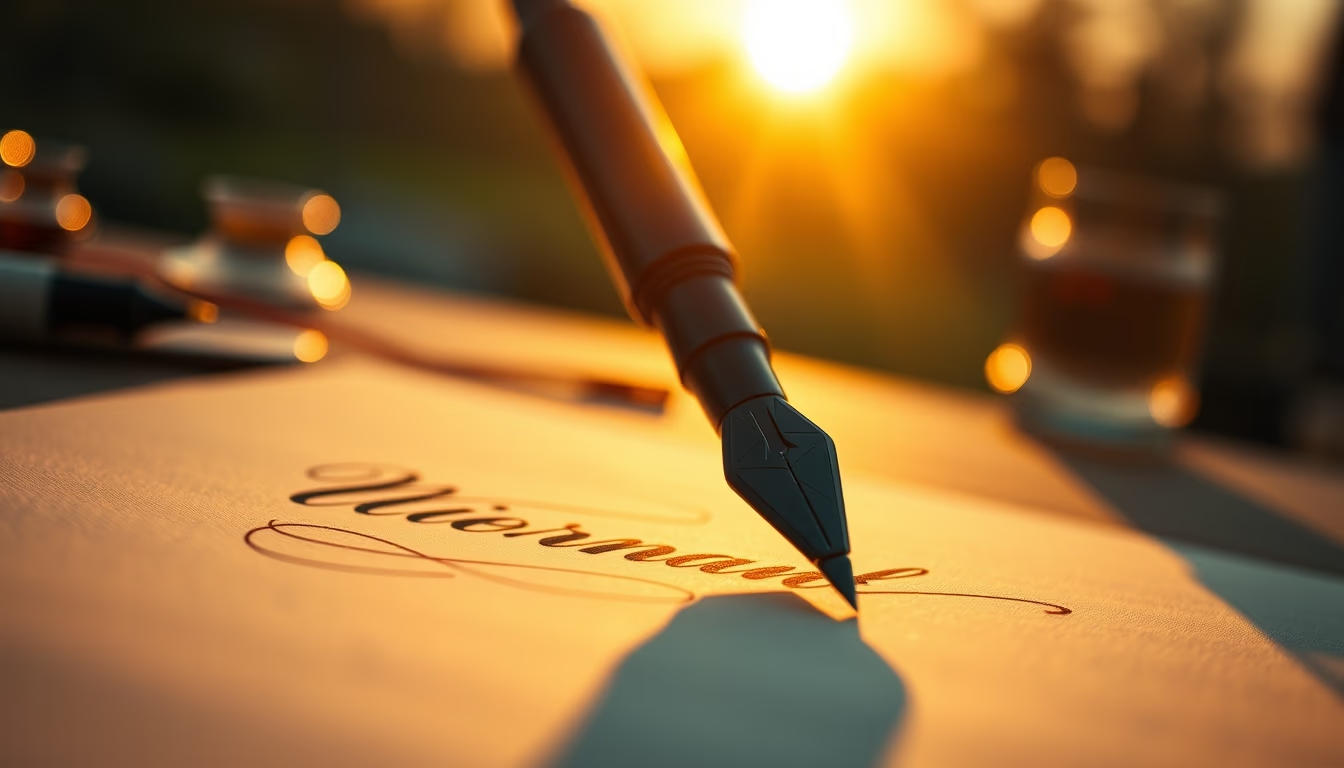
Fountain pen calligraphy is a centuries-old art form combining technique and aesthetics, valued for its elegance and precision.
About this subject
Fountain pen calligraphy traces back to the 19th century, when the fountain pen was patented in 1884 by Lewis Waterman. Unlike dip pens, fountain pens have an internal ink reservoir, enabling continuous writing. This innovation revolutionized handwriting, making it more practical and accessible. In calligraphy, the nib choice is critical: flexible nibs allow line variation essential for styles like Copperplate and Spencerian, while stiff nibs favor uniform scripts such as italic calligraphy. Ink also plays a key role, with options like India ink, iron-gall ink, and specialty colored inks. Technique requires control of pressure, angle, and rhythm, turning letters into artistic forms.
Culturally, fountain pen calligraphy has been associated with official documents, wedding invitations, and diplomas for centuries. In Brazil, the practice was widespread in schools until the mid-20th century, when cursive writing was taught with fountain pens. Today, there is a revival of interest in this art, driven by online communities and workshops. The required precision fosters patience and fine motor skills, while offering a unique tactile and visual experience. Many enthusiasts collect vintage pens from brands like Pelikan, Montblanc, and Parker, each with design histories and innovations.
A curiosity: flexible nib calligraphy was popular in the 19th century but declined with the rise of ballpoint pens. However, modern flexible nibs now recreate that experience. Iron-gall ink, used since the Middle Ages, is still produced by specialty brands, as it produces sepia tones that darken over time. Fountain pen calligraphy is not just a skill but a form of expression that connects the writer to the history of writing.
Frequently Asked Questions
What is the difference between a fountain pen and a dip pen?
A fountain pen has an internal ink reservoir that allows continuous writing without dipping, while a dip pen requires repeated dipping into an inkwell. Fountain pens are more convenient for extended writing sessions.
How do I choose the right nib for calligraphy?
For beginners, a medium or fine nib (F or M) is recommended. For line variation, choose a flex nib. For everyday cursive, stiff nibs are easier. Brands like Pilot and Lamy offer good entry-level options.
Which inks are safe for fountain pen calligraphy?
Water-based fountain pen inks from brands like Pelikan, Waterman, or Diamine are safe. Avoid India ink or acrylic inks, as they can clog the feed. Iron-gall inks are safe for gold nibs and produce historic sepia tones.
Direct URL
https://pub-c7d6a6ea828543ac903a74a341ccb2e1.r2.dev/imagens/fountain-pen-calligraphy-cinematic-wide-shot-p7.avifHow to credit
Include a visible link back to UtilizAí. Copy one of the snippets below:
<a href="https://xn--utiliza-eza.com/en/midia/imagens/fountain-pen-calligraphy-cinematic-wide-shot-p7">Fountain pen calligraphy</a> by <a href="https://xn--utiliza-eza.com">UtilizAí</a>, licensed under <a href="https://creativecommons.org/licenses/by/4.0/">CC BY 4.0</a>.
[Fountain pen calligraphy](https://xn--utiliza-eza.com/en/midia/imagens/fountain-pen-calligraphy-cinematic-wide-shot-p7) by [UtilizAí](https://xn--utiliza-eza.com), CC BY 4.0
License: CC-BY-4.0