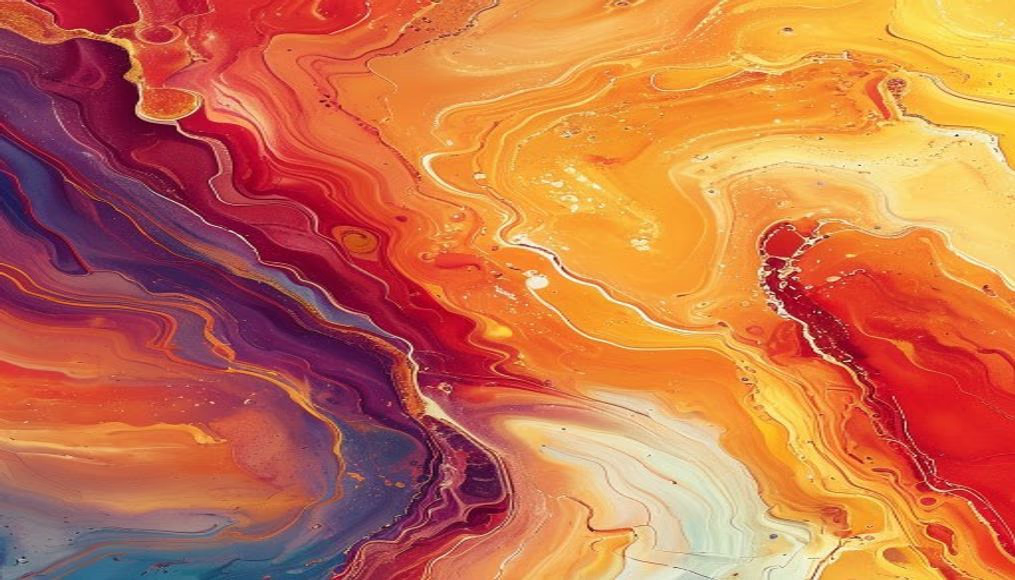
Fluid art swirling marble
1344×768 · AVIF · CC BY 4.0
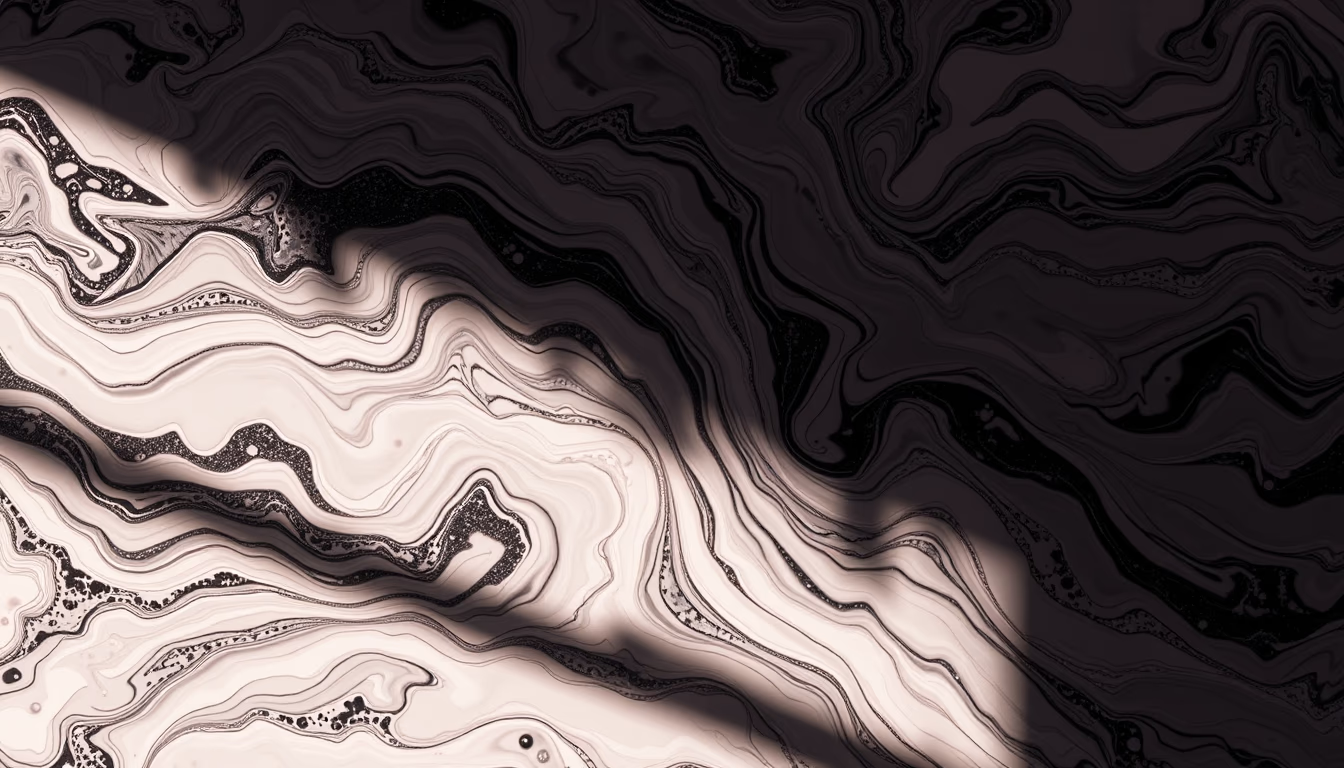
Fluid art with swirling marble effect: a technique mixing acrylic paints and fluids to create patterns that mimic natural marble.
About this subject
Fluid art, also known as acrylic pouring or fluid painting, is a contemporary technique that gained global popularity in the 2010s. The swirling marble effect, one of its most sought-after variations, involves layering diluted acrylic paint on a canvas and then tilting or blowing to form swirls that mimic natural marble veins. The technique relies on differences in paint density and viscosity, often combined with silicone oil or other additives to create cells and textures. Pioneers like Ann Upton and Rick Cheadle popularized pouring through tutorials, making it accessible to a wide audience.
The artificial marble produced by fluid art is not stable like natural stone, but offers an organic and hypnotic aesthetic. Each piece is unique, as paint flow depends on factors like temperature, humidity, and canvas angle. The swirling marble effect is especially valued in contemporary decor, used in paintings, custom furniture, and even accessories like ashtrays and trays. In Brazil, the movement gained traction with influencers such as Carol Mello and the collective Arte Fluida Brasil, who organize exhibitions and workshops.
Interestingly, the technique has roots in older practices like paper marbling (suminagashi, from 12th-century Japan) and Turkish marbling (ebru). Modern fluid art, however, emerged from experimentation with commercial acrylic paints and affordable materials like disposable cups and palette knives. Swirling marble is often confused with the dirty pour technique but differs in its controlled circular motion. In 2024, the #fluidart hashtag surpassed 5 billion views on TikTok, cementing the technique as a global cultural phenomenon.
The versatility of swirling marble allows application on various surfaces, from traditional canvases to 3D objects like vases and sculptures. Professional artists also combine it with epoxy resin for gloss and depth, creating pieces suitable for floors and countertops. Despite its complex look, the technique is relatively beginner-friendly, requiring only paints, pouring medium, and a prepared surface. However, mastering marble patterns demands practice and an understanding of material chemistry.
Frequently Asked Questions
What is the difference between fluid art and pouring?
Fluid art is the general term for techniques using liquid paints and fluidity, while pouring is a subcategory involving pouring paint onto the canvas. The swirling marble effect is a variation of pouring.
What materials are needed for swirling marble?
You need acrylic paints, pouring medium (to dilute and control viscosity), disposable cups, palette knives, a prepared canvas or surface, and optionally silicone oil to create cells.
Can swirling marble be applied to furniture?
Yes, after full drying, epoxy resin can be applied to protect the surface, allowing use on tables, countertops, and other furniture.
Direct URL
https://pub-c7d6a6ea828543ac903a74a341ccb2e1.r2.dev/imagens/fluid-art-swirling-marble-magazine-editorial-p5.avifHow to credit
Include a visible link back to UtilizAí. Copy one of the snippets below:
<a href="https://xn--utiliza-eza.com/en/midia/imagens/fluid-art-swirling-marble-magazine-editorial-p5">Fluid art swirling marble</a> by <a href="https://xn--utiliza-eza.com">UtilizAí</a>, licensed under <a href="https://creativecommons.org/licenses/by/4.0/">CC BY 4.0</a>.
[Fluid art swirling marble](https://xn--utiliza-eza.com/en/midia/imagens/fluid-art-swirling-marble-magazine-editorial-p5) by [UtilizAí](https://xn--utiliza-eza.com), CC BY 4.0
License: CC-BY-4.0