Fluid art swirling marble
1344×768 · AVIF · CC BY 4.0
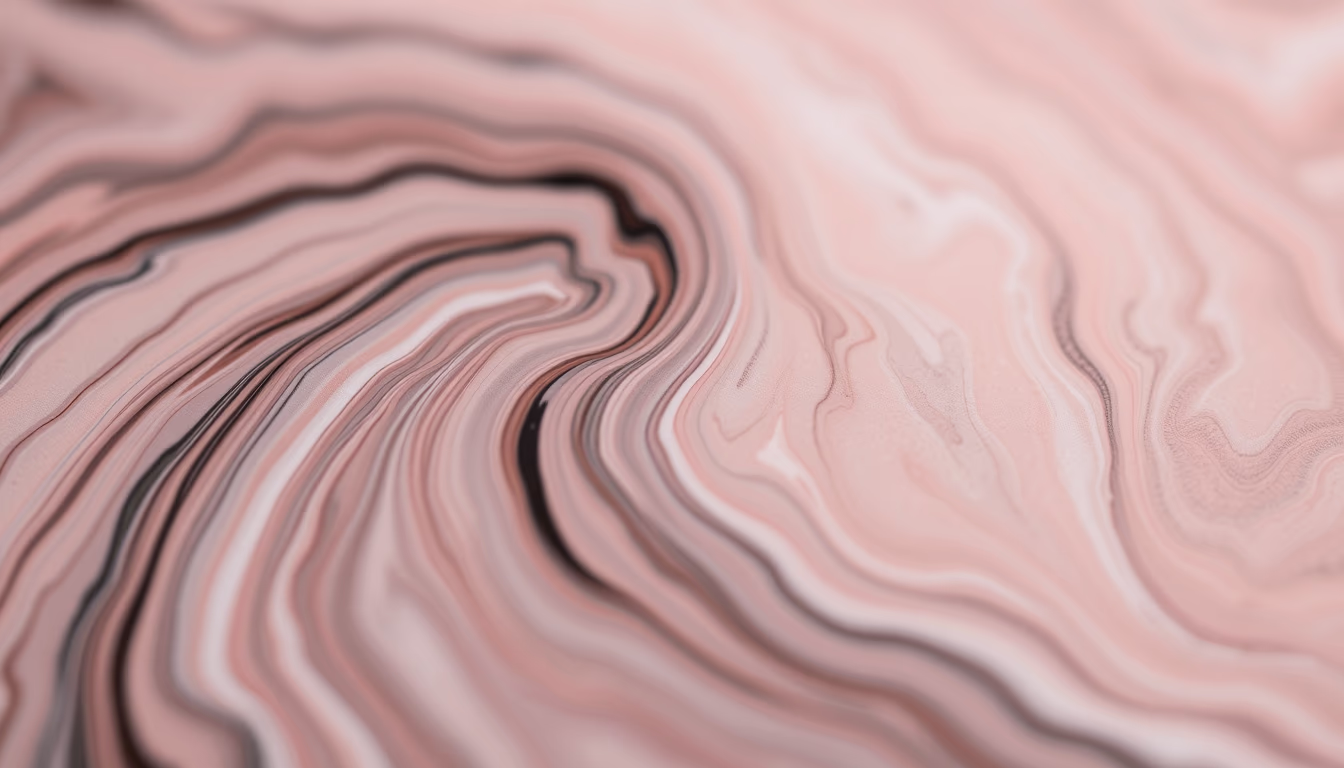
Fluid art, also known as acrylic pouring, creates swirling marble-like patterns by combining paint chemistry and creative techniques.
About this subject
Fluid art, also known as acrylic pouring, is an abstract painting technique that has surged in popularity worldwide. It involves pouring fluid acrylic paints onto a canvas or surface, allowing them to blend and form organic patterns often resembling marble veins or dramatic waves. The chemistry behind it is key: paint is mixed with a pouring medium and sometimes silicone oil, which creates the famous cells, bubbles that open into colorful rings.
Unlike natural marble, a metamorphic rock formed over millions of years, fluid art creations are instantaneous and fully controlled by the artist. The paint's movement can be directed by tilting the canvas, using blowtorches, or compressed air. Each piece is unique because factors like temperature, humidity, and paint consistency affect the final outcome. The technique allows infinite color combinations, from soft pastels to vibrant contrasts.
Historically, fluid art emerged in the early 2010s, driven by artists like Ann Upton and the sharing of videos on YouTube and Instagram. It quickly became a global phenomenon, with communities of practitioners on every continent. In Brazil, the technique gained many followers, taught in workshops and adapted with tropical colors and local inspirations. Beyond decorative paintings, fluid art is applied to furniture, vases, and design objects.
A fun fact: the term "swirling" describes the characteristic spiraling motion, achieved through techniques like "dirty pour" (paints layered in a cup then poured) or "flip cup" (cup inverted on the canvas). The macro close-up reveals details invisible to the naked eye, such as the texture of cells and the depth of paint layers, making each piece a miniature abstract landscape.
Frequently Asked Questions
What is fluid art or acrylic pouring?
It is an abstract painting technique where fluid acrylic paints are poured onto a canvas, creating organic, swirling patterns that resemble marble or waves.
How are cells formed in fluid art?
Cells are created by adding silicone or oil to the paint. When poured and heated (with a torch), the silicone rises, forming bubbles that burst and leave colored rings.
What materials are needed to start fluid art?
You need acrylic paints, pouring medium (or white glue and water), silicone, disposable cups, canvases or smooth surfaces, and a torch to pop bubbles.
Direct URL
https://pub-c7d6a6ea828543ac903a74a341ccb2e1.r2.dev/imagens/fluid-art-swirling-marble-macro-closeup-p2.avifHow to credit
Include a visible link back to UtilizAí. Copy one of the snippets below:
<a href="https://xn--utiliza-eza.com/en/midia/imagens/fluid-art-swirling-marble-macro-closeup-p2">Fluid art swirling marble</a> by <a href="https://xn--utiliza-eza.com">UtilizAí</a>, licensed under <a href="https://creativecommons.org/licenses/by/4.0/">CC BY 4.0</a>.
[Fluid art swirling marble](https://xn--utiliza-eza.com/en/midia/imagens/fluid-art-swirling-marble-macro-closeup-p2) by [UtilizAí](https://xn--utiliza-eza.com), CC BY 4.0
License: CC-BY-4.0