Flower stamen pollen macro
1344×768 · AVIF · CC BY 4.0
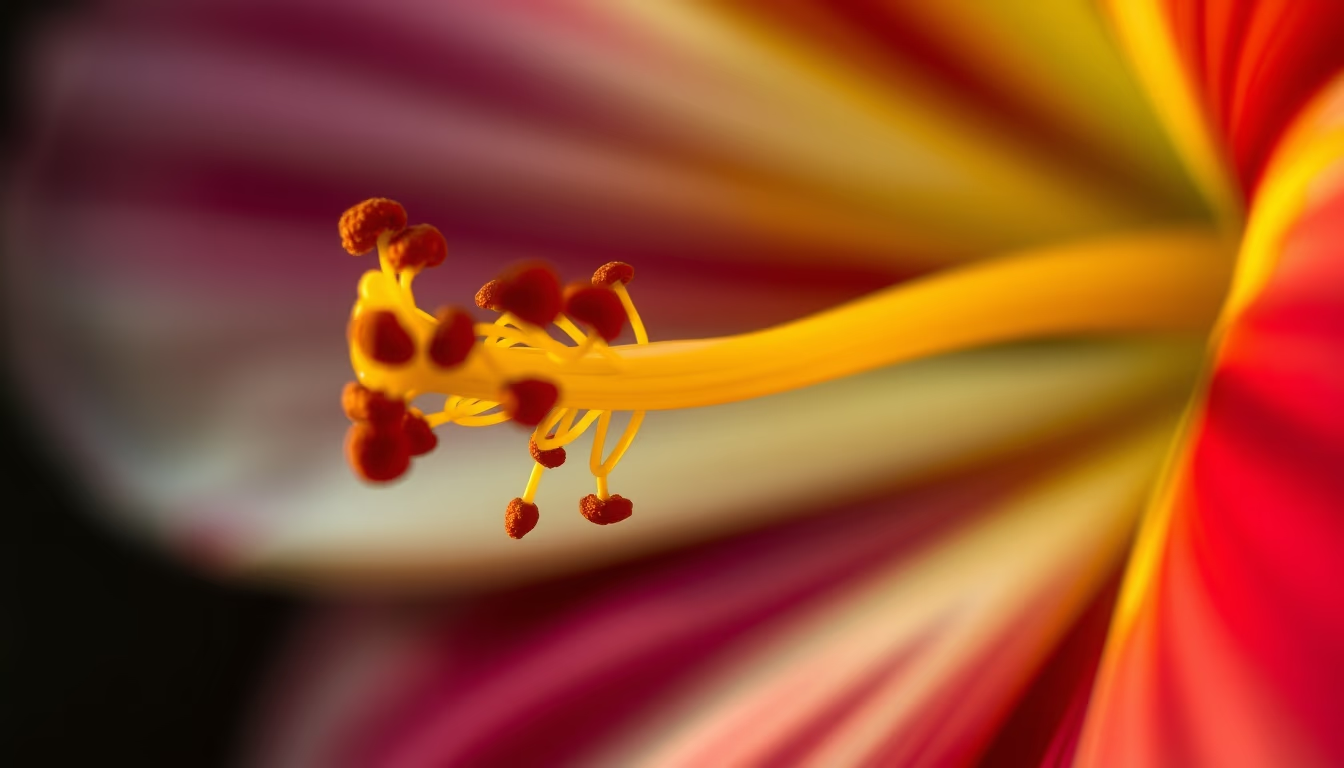
Detailed macro photograph of flower stamens and pollen grains, revealing the complex reproductive structure of plants.
About this subject
Stamens are the male reproductive organs of flowers, responsible for producing pollen grains. Each stamen consists of an anther (where pollen is produced) and a filament that supports it. The morphology of anthers varies greatly among species: some have poricidal anthers (releasing pollen through pores), others have longitudinal dehiscence (splitting along the length). This diversity is directly linked to the pollination mechanisms of each plant.
Pollen grains are microgametophytes, tiny structures containing male reproductive cells. Their size ranges from a few micrometers to over 100 micrometers, and their surface can be smooth, reticulate, spiny, or warty, depending on the species. The exine (outer layer) is composed of sporopollenin, one of the most resistant biological materials known, capable of fossilizing and enabling paleopalynological studies.
In Brazil, floral diversity is immense, with species such as orchids, bromeliads, and ipê trees exhibiting specialized stamen structures. For example, orchids of the genus Cattleya have fused stamens forming a column, and their pollen grains are grouped into pollinia, adapted for pollination by bees and hummingbirds. Ipê trees (Tabebuia spp.) produce large amounts of showy yellow pollen, attracting native bees.
The study of stamens and pollen is fundamental to botany, agriculture, and conservation. In beekeeping, the quality of pollen collected by bees determines hive health. Additionally, pollen analysis is used in honey production to certify floral origin. Pollen morphology also aids in identifying fossil plants and reconstructing paleoenvironments.
Frequently Asked Questions
What is the main function of stamens in a flower?
Stamens are the male organs of a flower, responsible for producing and releasing pollen grains, which contain the male gametes for fertilization.
What determines the shape and size of pollen grains?
The shape, size, and surface ornamentation of pollen are genetically determined and vary by species, adapting to pollination mechanisms (wind, insects, birds, etc.).
Can pollen be used to identify plants?
Yes, palynology studies pollen morphology to identify plant species, useful in archaeology, geology, and even honey analysis for origin certification.
Direct URL
https://pub-c7d6a6ea828543ac903a74a341ccb2e1.r2.dev/imagens/flower-stamen-pollen-macro-fine-art-photography-p0.avifHow to credit
Include a visible link back to UtilizAí. Copy one of the snippets below:
<a href="https://xn--utiliza-eza.com/en/midia/imagens/flower-stamen-pollen-macro-fine-art-photography-p0">Flower stamen pollen macro</a> by <a href="https://xn--utiliza-eza.com">UtilizAí</a>, licensed under <a href="https://creativecommons.org/licenses/by/4.0/">CC BY 4.0</a>.
[Flower stamen pollen macro](https://xn--utiliza-eza.com/en/midia/imagens/flower-stamen-pollen-macro-fine-art-photography-p0) by [UtilizAí](https://xn--utiliza-eza.com), CC BY 4.0
License: CC-BY-4.0