Feather quill ink
1344×768 · AVIF · CC BY 4.0
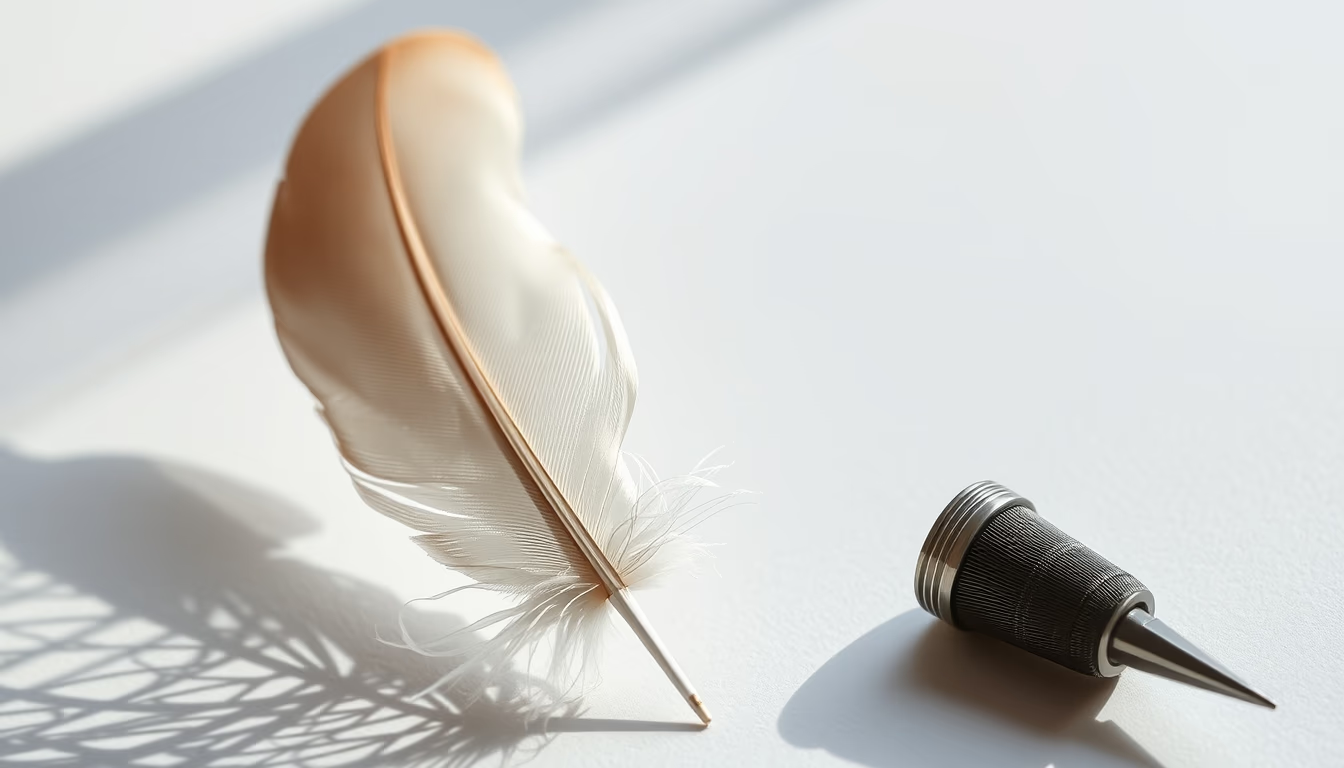
Feather quills were essential writing instruments for centuries, from the Middle Ages to the 19th century, used with iron-gall or India ink.
About this subject
Feather quills, typically from goose, swan, or crow, were the primary writing instruments in the Western world from the 6th to the 19th century. The tip was cut at an angle with a penknife (hence the name) and slit to hold ink. Outer wing feathers were preferred for their natural curve fitting the hand. Preparation included drying and heat treatment to harden the shaft.
Common ink was iron-gall ink, made from oak galls (rich in tannins), ferrous sulfate, and gum arabic. This ink darkened over time and was durable, used in historical documents like the U.S. Declaration of Independence. Another option was India ink, based on soot and animal glue, popular in Asia. The quill and ink combination required careful calligraphy, as blots were common.
With the Industrial Revolution, metal nibs replaced bird feathers from the 1820s onward. Mass-produced steel nibs made writing cheaper, but natural quills continued to be used by calligraphers and artists. Today, quills are collectibles or tools for historical calligraphy. The cut of the tip influences line width, allowing artistic variations.
In Brazil, during the Empire, official documents were written with imported goose quills or from native birds like the rhea. The transition to metal nibs was gradual, with the first fountain pen factories in the late 19th century. The image of a quill with ink evokes not just a historical object but an entire system of communication and bureaucracy that shaped Western culture.
Frequently Asked Questions
Which bird species provided the best quills for writing?
Geese and swans were most common, but crow, turkey, and even Brazilian rhea quills were used. Outer wing feathers were preferred for their curve and durability.
How was a quill prepared for writing?
The shaft was dried and heat-treated to harden. The tip was cut at an angle with a penknife and slit to create an ink reservoir. The cutting angle determined line thickness.
What is the difference between iron-gall ink and India ink?
Iron-gall ink, made from oak galls and ferrous sulfate, was permanent and darkened over time. India ink, made from soot and animal glue, was more opaque and water-resistant. Both were used in different eras and regions.
Direct URL
https://pub-c7d6a6ea828543ac903a74a341ccb2e1.r2.dev/imagens/feather-quill-ink-minimalist-composition-p8.avifHow to credit
Include a visible link back to UtilizAí. Copy one of the snippets below:
<a href="https://xn--utiliza-eza.com/en/midia/imagens/feather-quill-ink-minimalist-composition-p8">Feather quill ink</a> by <a href="https://xn--utiliza-eza.com">UtilizAí</a>, licensed under <a href="https://creativecommons.org/licenses/by/4.0/">CC BY 4.0</a>.
[Feather quill ink](https://xn--utiliza-eza.com/en/midia/imagens/feather-quill-ink-minimalist-composition-p8) by [UtilizAí](https://xn--utiliza-eza.com), CC BY 4.0
License: CC-BY-4.0