Feather quill ink
1344×768 · AVIF · CC BY 4.0
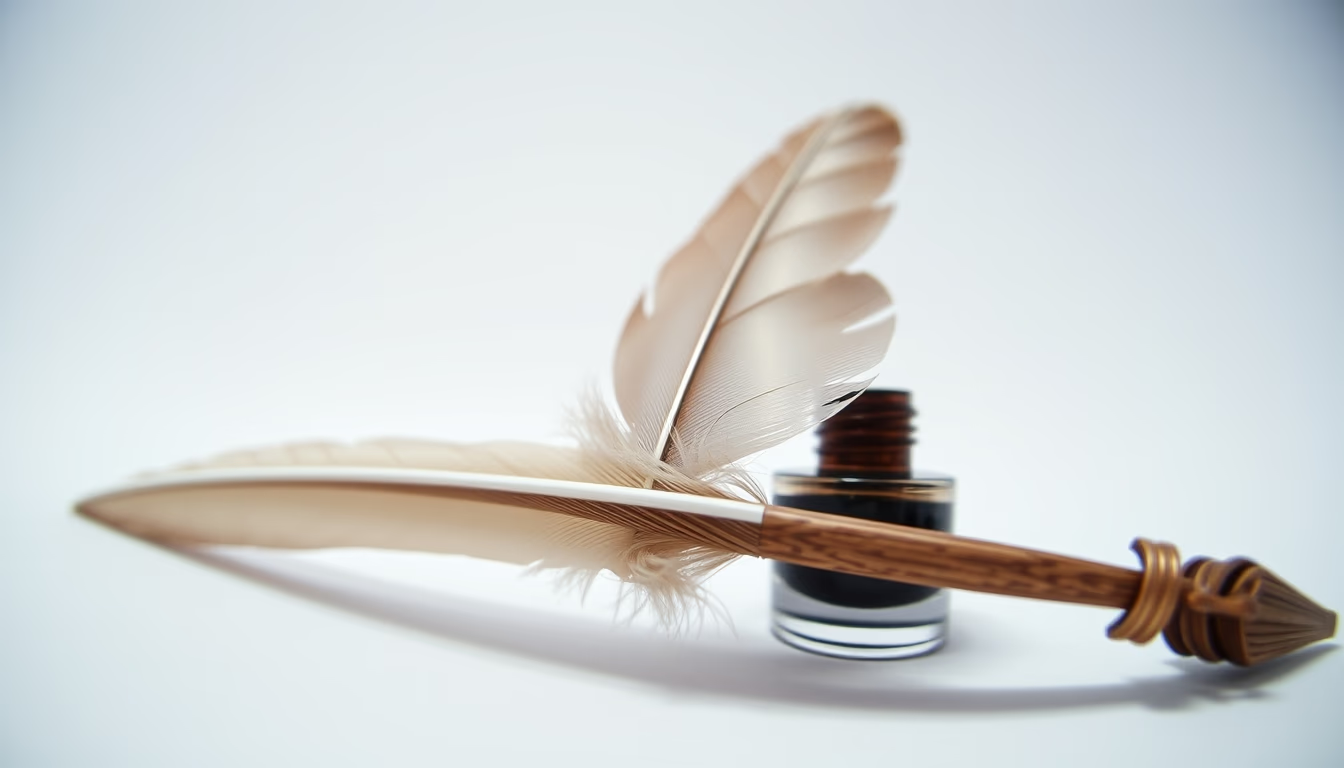
Feather quills and ink were the primary writing tools for centuries, predating fountain pens and ballpoint pens.
About this subject
The writing quill, typically taken from birds such as geese, swans, or crows, was prepared by cutting the shaft at a specific angle and creating a small slit to allow controlled ink flow. Goose feathers were most prized for their durability and flexibility, especially those from the left wing, which naturally curved for right-handed writers. The manufacturing process involved drying, hardening in hot sand, and sharpening with a penknife.
The ink used was often made from oak galls, rich in tannin, mixed with iron sulfate (vitriol) and a binder like gum arabic. This iron-gall ink, bluish-black and darkening over time, was water-resistant and lightfast, used in historical documents such as the United States Constitution and the manuscripts of Johann Sebastian Bach. Alternatively, carbon-based inks (lampblack) or sepia (from squid) were employed.
The quill and ink dominated writing from the Middle Ages through the 19th century, when mass production of metal nibs and later fountain pens began to replace it. Despite obsolescence, the technique survives in artistic calligraphy and formal ceremonies, such as the signing of laws with goose quills in some parliaments. The decline accelerated with Lewis Waterman's fountain pen in 1884 and later László Bíró's ballpoint pen in 1938.
Interestingly, the term 'pen' for writing instrument transferred to metal nibs, and the phrase 'pen nib' is still used. Writing with a quill required constant practice, as incorrect pressure or angle could splatter ink or tear the paper. Each writing session was unique: the quill needed frequent trimming and dipping into the inkwell.
Frequently Asked Questions
How was a bird feather prepared for writing?
The feather was cut diagonally to form a nib, with a slit in the center to channel ink. The shaft was hardened in hot sand and then sharpened with a special penknife.
What was traditional ink made of for quills?
Iron-gall ink was most common, made from oak galls (rich in tannin), iron sulfate, and gum arabic. Carbon-based (lampblack) and sepia inks were also used.
Why were goose feathers preferred for writing?
Goose feathers combined durability with ideal flexibility. Left-wing feathers were especially valued as they curved naturally for right-handed writers, aiding calligraphy.
Direct URL
https://pub-c7d6a6ea828543ac903a74a341ccb2e1.r2.dev/imagens/feather-quill-ink-fish-eye-wide-angle-p1.avifHow to credit
Include a visible link back to UtilizAí. Copy one of the snippets below:
<a href="https://xn--utiliza-eza.com/en/midia/imagens/feather-quill-ink-fish-eye-wide-angle-p1">Feather quill ink</a> by <a href="https://xn--utiliza-eza.com">UtilizAí</a>, licensed under <a href="https://creativecommons.org/licenses/by/4.0/">CC BY 4.0</a>.
[Feather quill ink](https://xn--utiliza-eza.com/en/midia/imagens/feather-quill-ink-fish-eye-wide-angle-p1) by [UtilizAí](https://xn--utiliza-eza.com), CC BY 4.0
License: CC-BY-4.0