Feather barbs closeup
1344×768 · AVIF · CC BY 4.0
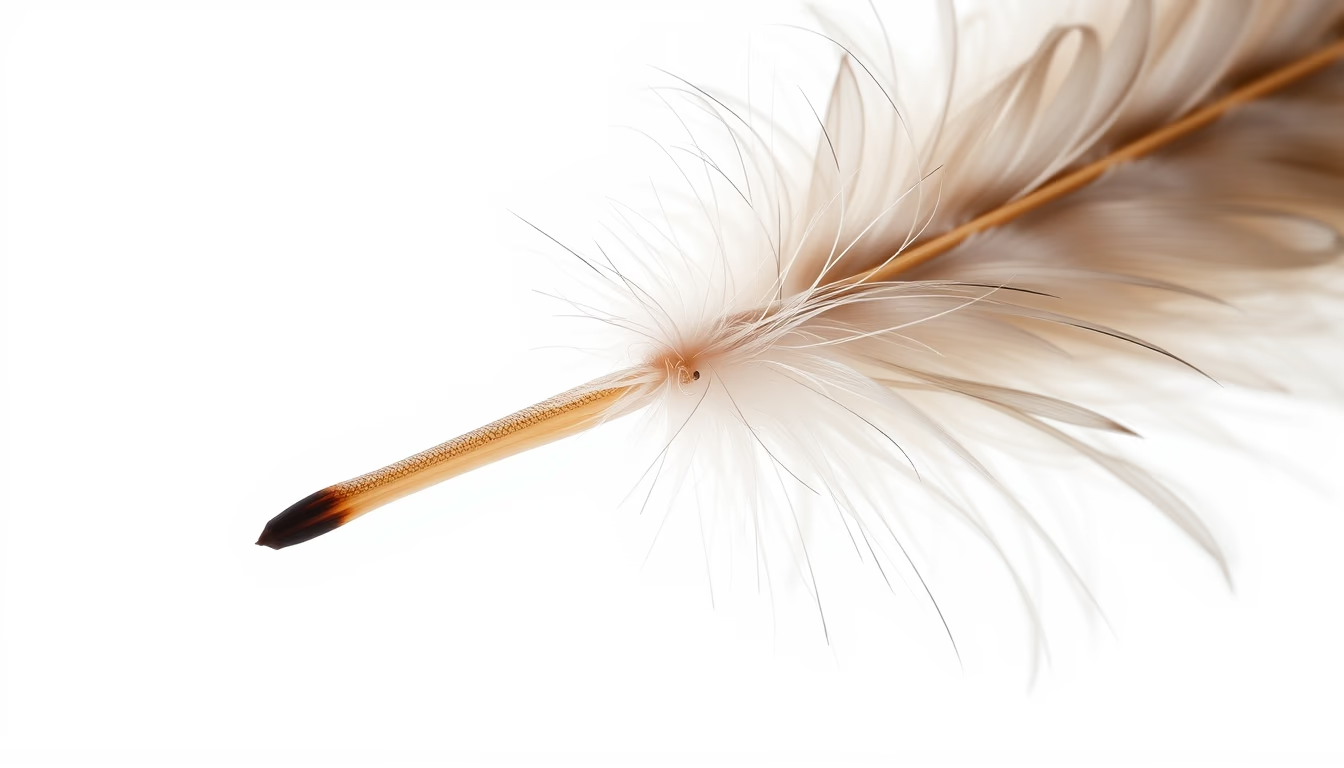
Bird feathers consist of a central shaft (rachis) and lateral branches called barbs, which further subdivide into barbules with tiny hooks to create a waterproof and aerodynamic structure.
About this subject
Feathers are keratinous structures unique to birds, serving critical roles in flight, thermal insulation, and waterproofing. A typical contour feather consists of a hollow quill (calamus) that extends into a central shaft (rachis), from which dozens of barbs branch laterally. On contour feathers, the barbs are divided into barbules, which bear tiny hooks (hamuli) that interlock with adjacent barbules. This interlocking system forms a continuous, flexible vane that can zip back together after being separated, a mechanism essential for wing integrity during flight.
The microstructure of barbs varies by feather type and species. Flight feathers have stiffer, asymmetrical barbs for lift and propulsion, while down feathers possess long, flexible barbs without hooks, creating an insulating air layer. Feather coloration arises from pigments (melanins, carotenoids) or from nanoscale structures that interfere with light, producing iridescent blues and greens. Macrophotography of feather barbs reveals engineering-like details, often inspiring biomimetic materials such as self-cleaning fabrics and reversible adhesives.
In commercial photography, close-ups of feather barbs are popular on stock photo platforms to illustrate concepts like delicacy, lightness, nature, precision, and design. The geometric patterns obtained at high magnification are used in magazine covers, product packaging, and campaigns aiming to associate technical quality with natural aesthetics. Additionally, well-defined barb images serve educational purposes in biology textbooks, museum displays, and scientific manuals to demonstrate the complexity of biological structures.
Interestingly, the study of feather barbs contributed indirectly to the invention of Velcro: George de Mestral was inspired by burdock barbs, not bird feathers, but the mechanical interlocking principle is analogous. Biomimetics using feathers has advanced efficient drone wings and water-repellent surfaces. Thus, macro photography of feather barbs is not merely visually appealing but carries deep scientific and technical significance.
Frequently Asked Questions
What are feather barbs and what is their function?
Feather barbs are the lateral branches extending from the central shaft (rachis). They provide shape and support to the feather; in contour feathers, barbs subdivide into barbules with hooks that interlock, forming a continuous vane essential for flight and waterproofing.
How is macrophotography of feather barbs used commercially?
Close-up images of feather barbs are used in stock photography, magazine covers, packaging, and advertising to convey delicacy, precision, and naturalness. They also appear in educational and scientific materials.
What is the relationship between feather barbs and biomimetics?
The interlocking structure of barbules inspired reversible adhesives and self-cleaning fabrics. Studies of feathers have also contributed to the design of more efficient drone wings and hydrophobic surfaces.
Direct URL
https://pub-c7d6a6ea828543ac903a74a341ccb2e1.r2.dev/imagens/feather-barbs-closeup-commercial-product-photography-p1.avifHow to credit
Include a visible link back to UtilizAí. Copy one of the snippets below:
<a href="https://xn--utiliza-eza.com/en/midia/imagens/feather-barbs-closeup-commercial-product-photography-p1">Feather barbs closeup</a> by <a href="https://xn--utiliza-eza.com">UtilizAí</a>, licensed under <a href="https://creativecommons.org/licenses/by/4.0/">CC BY 4.0</a>.
[Feather barbs closeup](https://xn--utiliza-eza.com/en/midia/imagens/feather-barbs-closeup-commercial-product-photography-p1) by [UtilizAí](https://xn--utiliza-eza.com), CC BY 4.0
License: CC-BY-4.0