Fanuc robot orange
1344×768 · AVIF · CC BY 4.0
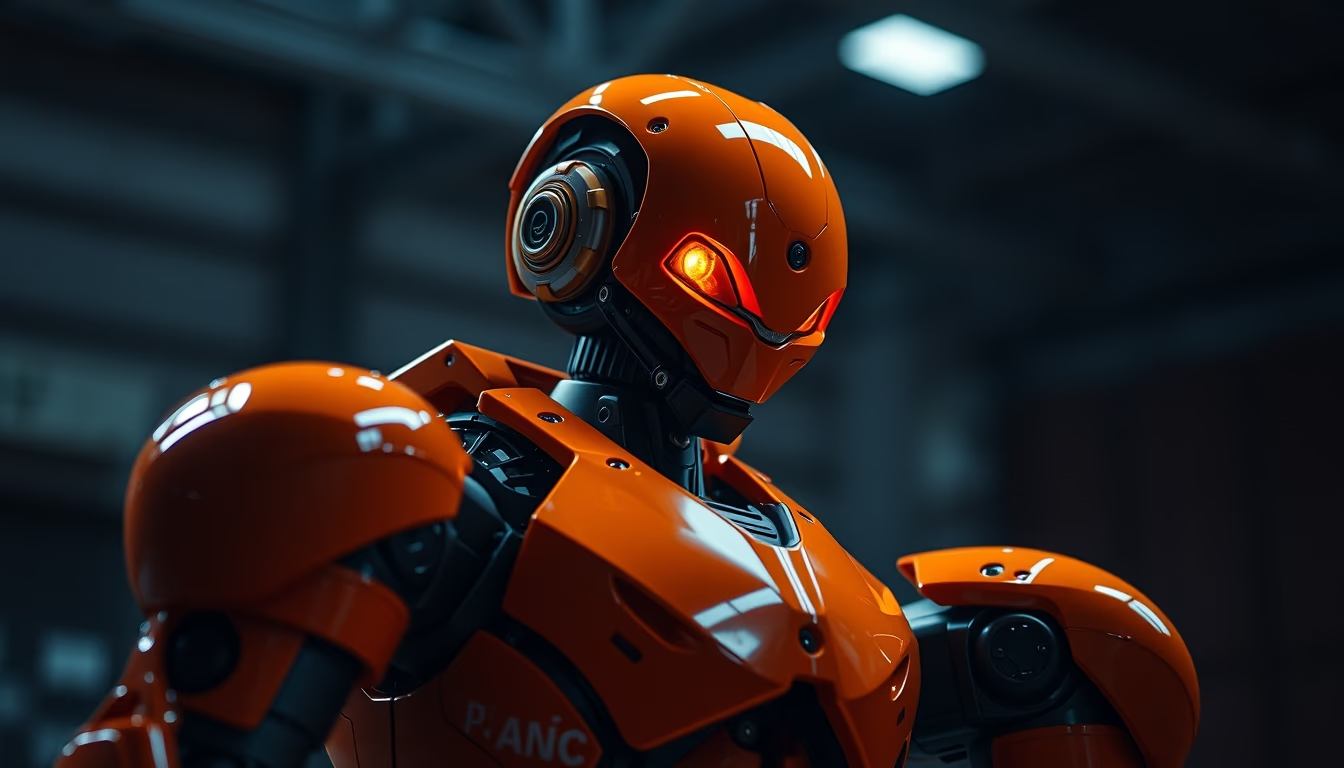
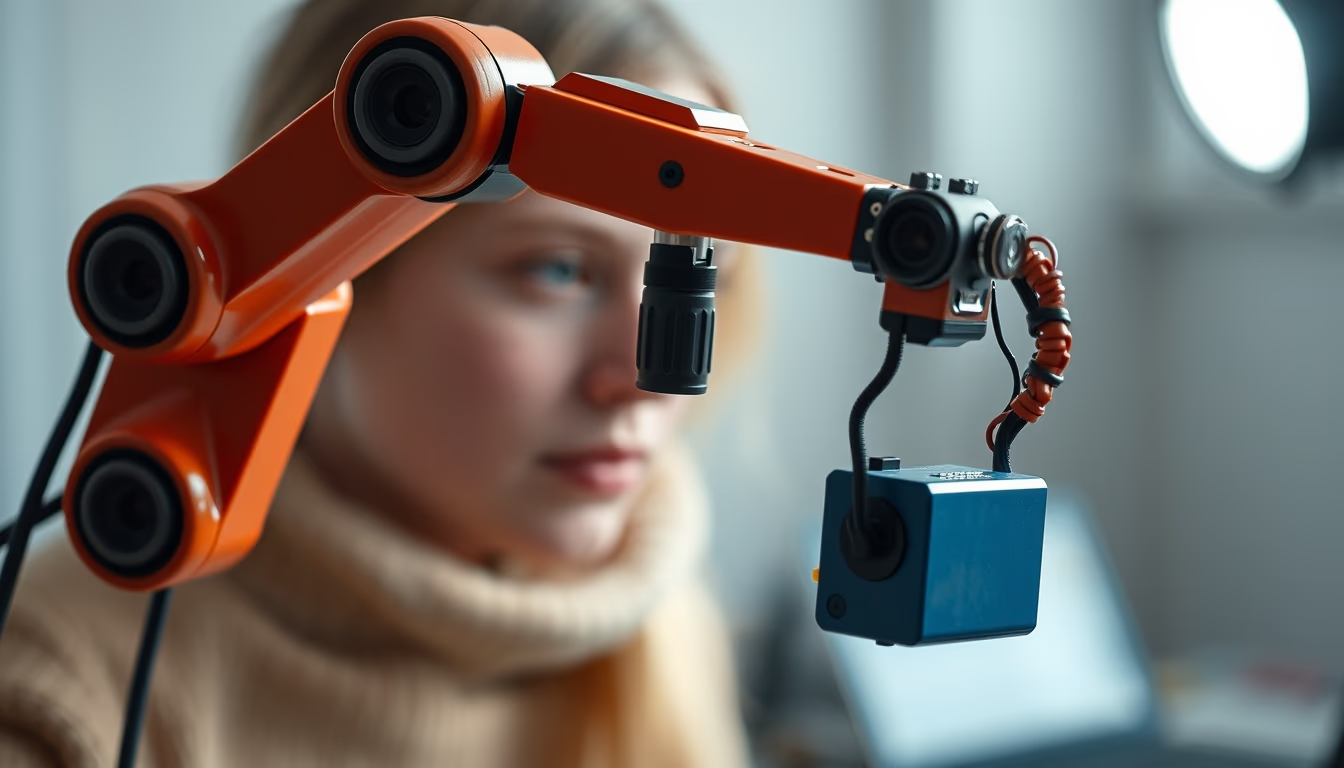
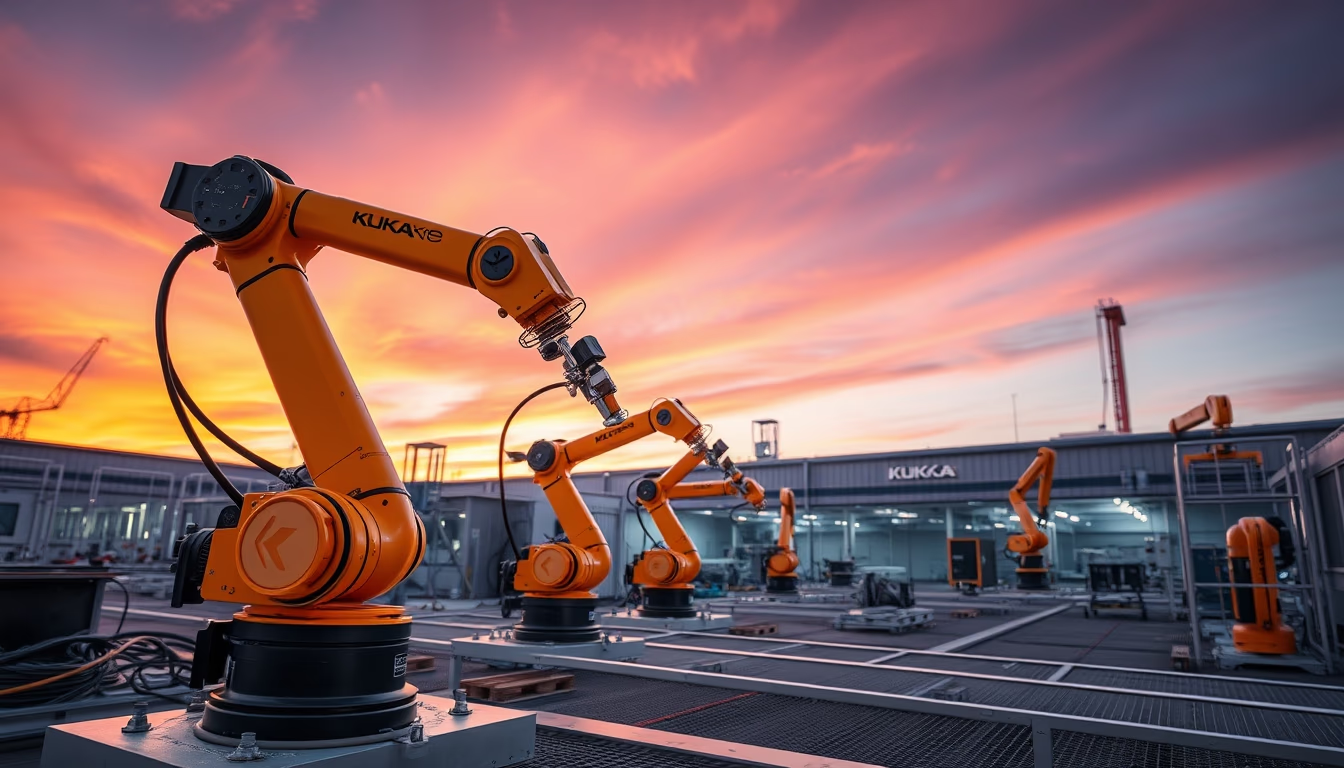
Orange Fanuc industrial robots are icons of factory automation, globally recognized for their precision and durability on production lines.
About this subject
Fanuc Corporation, founded in 1956 in Japan, is one of the world's largest manufacturers of industrial robots and computer numerical control (CNC) systems. Its robots, often painted in the distinctive orange color, are widely used in automotive, electronics, food, and pharmaceutical industries. The orange color was chosen for high visibility in factory environments, enhancing operator safety. Additionally, Fanuc uses a paint standard that resists oils and solvents common on the factory floor.
Fanuc robots cover a vast range of applications, from welding and painting to assembly and material handling. Models like the M-20 series, with a payload capacity of up to 20 kg, and the R-2000, for heavier loads up to 200 kg, are common. The company also develops collaborative robots, such as the CRX series, that work alongside humans without safety cages. The repeatability precision of these robots can reach ±0.02 mm, essential for high-accuracy processes.
Historically, Fanuc played a crucial role in automating postwar Japanese industry, aligning with Lean manufacturing philosophy. In 2023, the company surpassed 1 million robots installed globally, a milestone reflecting its dominance. Orange robots are so iconic that they have become symbols of innovation and efficiency, appearing in art exhibitions and photography as representatives of the modern industrial era. Maintenance is simplified by their modular design, and Fanuc offers extensive training for programmers and technicians.
Interestingly, the exact shade of orange used by Fanuc follows the corporate standard RAL 2004 (pure orange). This standardization ensures robots are easily identifiable even on production lines with multiple manufacturers. Moreover, the company has one of the lowest failure rates in the industry, with mean time between failures (MTBF) exceeding 100,000 hours. The combination of robustness, precision, and safety makes Fanuc robots a reliable choice for smart factories (Industry 4.0), where integration with IoT systems and artificial intelligence is increasingly common.
Frequently Asked Questions
Why are Fanuc robots painted orange?
The orange color was chosen for high visibility in industrial environments, improving worker safety. The shade follows the RAL 2004 (pure orange) standard and resists oils and solvents.
Which industries use Fanuc robots the most?
Fanuc robots are predominant in automotive, electronics, food, pharmaceutical, and logistics industries. They perform tasks such as welding, painting, assembly, and material handling.
What is the payload capacity of Fanuc robots?
Capacity varies by model, from collaborative robots with a 4 kg payload to heavy-duty robots capable of lifting 2,300 kg. Common models like the M-20 support 20 kg, while the R-2000 handles up to 200 kg.
Direct URL
https://pub-c7d6a6ea828543ac903a74a341ccb2e1.r2.dev/imagens/fanuc-robot-orange-fine-art-photography-p1.avifHow to credit
Include a visible link back to UtilizAí. Copy one of the snippets below:
<a href="https://xn--utiliza-eza.com/en/midia/imagens/fanuc-robot-orange-fine-art-photography-p1">Fanuc robot orange</a> by <a href="https://xn--utiliza-eza.com">UtilizAí</a>, licensed under <a href="https://creativecommons.org/licenses/by/4.0/">CC BY 4.0</a>.
[Fanuc robot orange](https://xn--utiliza-eza.com/en/midia/imagens/fanuc-robot-orange-fine-art-photography-p1) by [UtilizAí](https://xn--utiliza-eza.com), CC BY 4.0
License: CC-BY-4.0