Fabric weave closeup
1344×768 · AVIF · CC BY 4.0
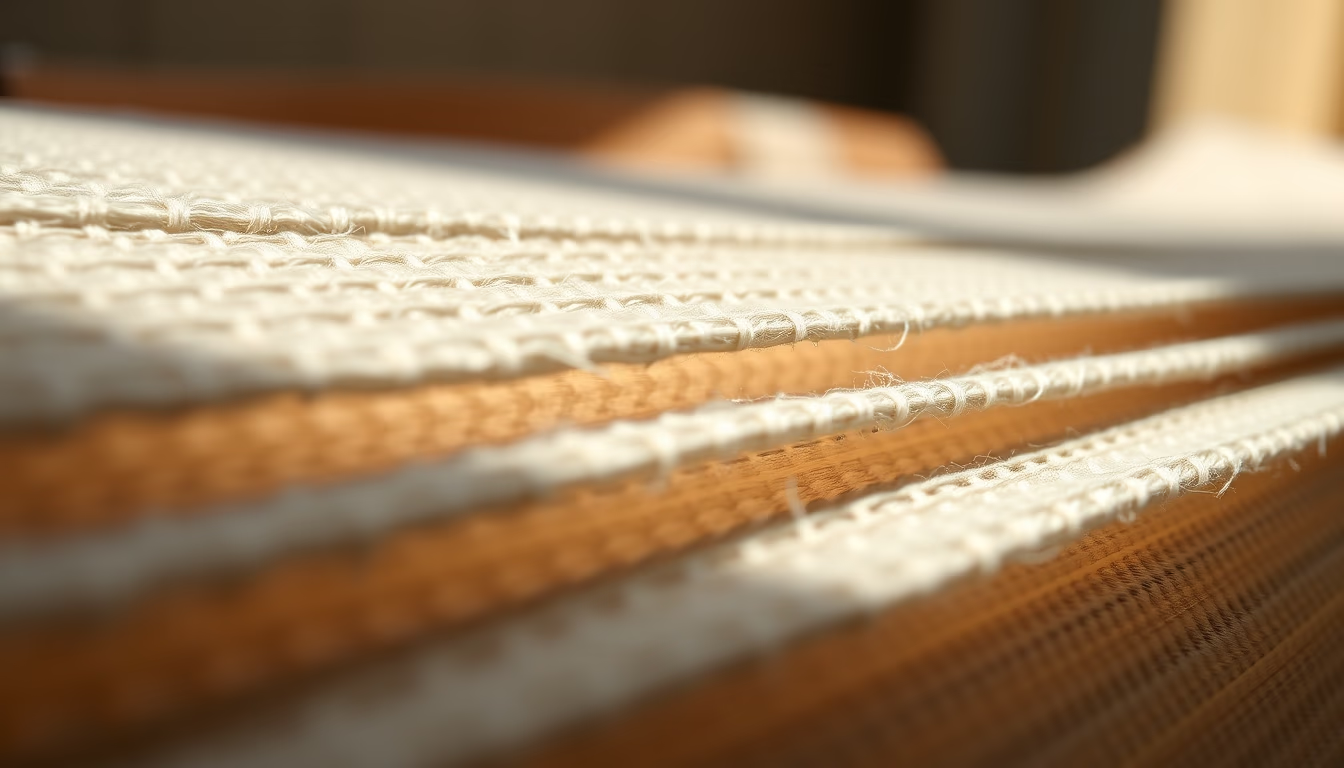
The interlacing of threads creates patterns on fabric surfaces. Learn about main weave types and their textile importance.
About this subject
Fabric weave is defined by how warp and weft threads intersect. This determines not only appearance but also properties like strength, texture, and drape. The three basic weaves are plain, twill, and satin. Plain weave, the simplest, alternates threads one over one, forming a regular checkerboard pattern. Twill creates diagonal lines and is used in denim, while satin has long floating threads that provide shine and softness.
The choice of weave directly impacts the fabric's end use. For instance, twill fabrics are more durable and wrinkle-resistant, ideal for workwear. Satin weave, with fewer interlacings, is more delicate and common in formal wear and lingerie. Beyond these, there are variants like jacquard, which allows complex patterns, and velvet, made with extra cut threads.
Culturally, certain weaves are associated with regions or eras. Denim's blue twill became a symbol of the American West and later global casual wear. Panama cloth, a plain weave variation, evokes light summer fabrics. The modern textile industry has developed technical weaves for sports and medical applications, offering elasticity or UV protection.
In macro photography, like this image, the close-up reveals minute details of the fabric's structure. Each fiber and interlacing becomes sharp, turning an everyday item into an abstract composition. This minimalist approach highlights the inherent geometry of textile production, showing the hidden beauty in simple objects.
Frequently Asked Questions
What is the difference between warp and weft?
Warp refers to the longitudinal threads stretched on the loom, while weft are the transverse threads woven between them. Their interlacing forms the fabric.
Why is twill used for denim?
Twill provides greater strength and durability, plus the characteristic diagonal ribbing. This makes denim suitable for heavy use.
How can I identify the weave type in a fabric?
Examine the surface under light. Plain weave shows a regular checkerboard pattern. Twill reveals diagonal lines. Satin has a smooth, shiny surface with no clear pattern.
Direct URL
https://pub-c7d6a6ea828543ac903a74a341ccb2e1.r2.dev/imagens/fabric-weave-closeup-minimalist-composition-p4.avifHow to credit
Include a visible link back to UtilizAí. Copy one of the snippets below:
<a href="https://xn--utiliza-eza.com/en/midia/imagens/fabric-weave-closeup-minimalist-composition-p4">Fabric weave closeup</a> by <a href="https://xn--utiliza-eza.com">UtilizAí</a>, licensed under <a href="https://creativecommons.org/licenses/by/4.0/">CC BY 4.0</a>.
[Fabric weave closeup](https://xn--utiliza-eza.com/en/midia/imagens/fabric-weave-closeup-minimalist-composition-p4) by [UtilizAí](https://xn--utiliza-eza.com), CC BY 4.0
License: CC-BY-4.0