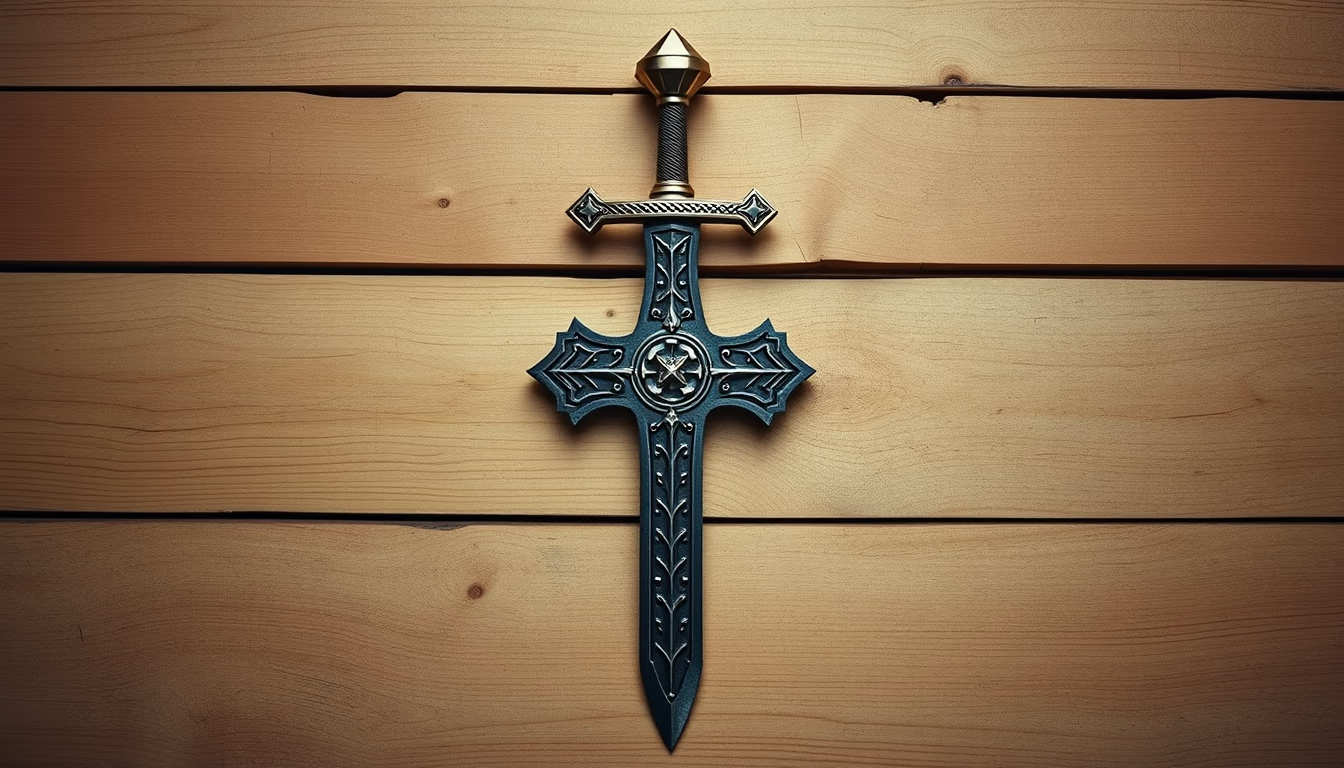
Crusader sword cross
1344×768 · AVIF · CC BY 4.0
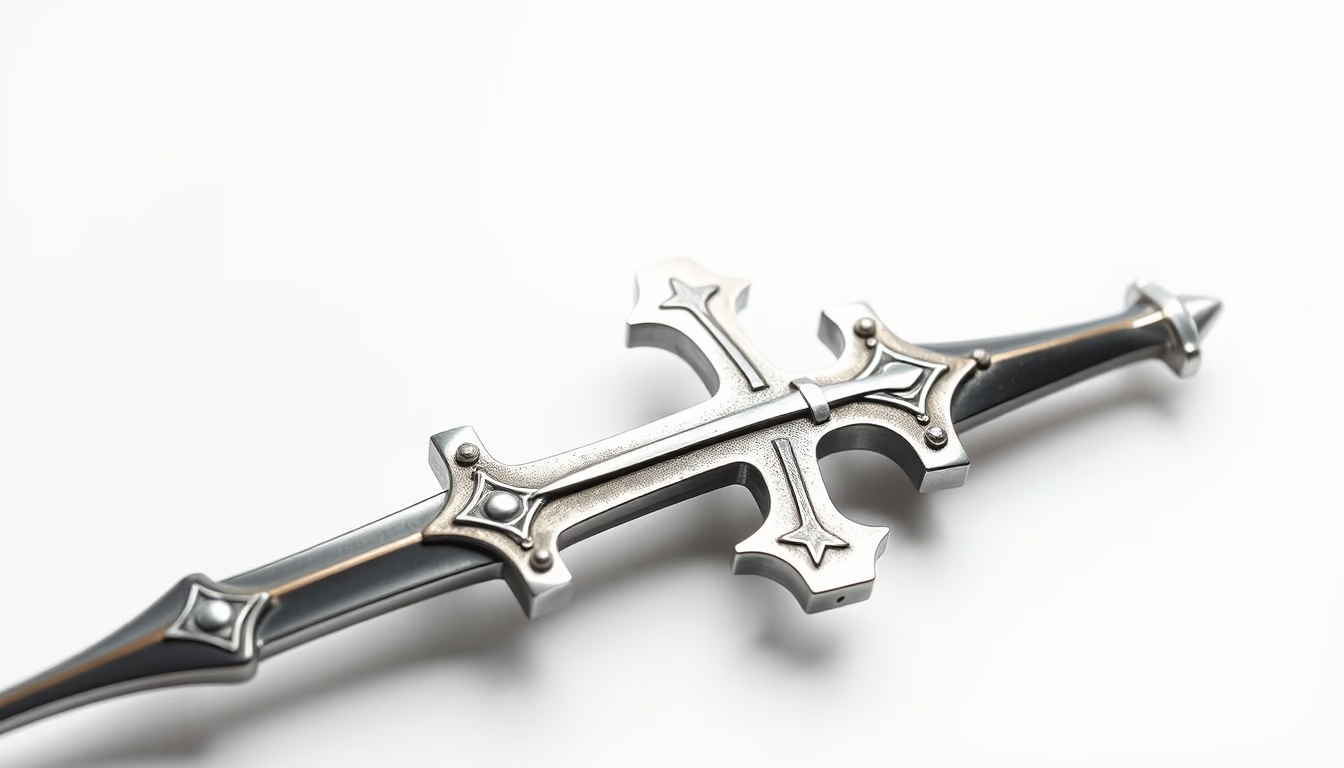
The crusader sword, distinguished by its cross-shaped hilt, merged military utility with religious symbolism during the Crusades.
About this subject
The crusader sword, also called cross sword or Templar sword, was the signature weapon of Christian knights who fought in the Crusades from the 11th to the 13th centuries. Its distinctive design featured a hilt shaped like a Latin cross, with horizontal quillons serving as a handguard and a vertical pommel as a counterweight. This shape was not merely aesthetic but functional: the cross provided extra hand protection and allowed more precise thrusts, while the pommel balanced the long, double-edged blade.
Historically, these swords evolved from Viking and Norman blades, becoming thinner and sharper to pierce the mail armor used by Islamic armies. Blade length averaged 70 to 90 centimeters, made of carbon steel with differential tempering. The total weight ranged from 1.2 to 1.5 kilograms, surprisingly light by modern standards, enabling agility in close combat.
Religious symbolism was central: the cross on the hilt reminded the wearer of his divine duty and served as a protective talisman. Many knights engraved biblical verses on the blade, such as 'In Hoc Signo Vinces' (By this sign you shall conquer). During the Crusades, the cross sword became a status symbol and a sign of faith, frequently appearing on seals, tapestries, and coats of arms of military orders like the Templars, Hospitallers, and Teutonic Knights.
Production centered on hubs like Toledo, Damascus, and Milan, where smiths mastered forging and tempering techniques. The cost of a quality sword equaled months of a peasant's wages, making them valuable heirlooms passed down generations. Today, modern replicas are used in historical reenactments, while original specimens are museum pieces that reveal insights into medieval metallurgy and Christian iconography.
Frequently Asked Questions
What was the average weight of a medieval crusader sword?
The average weight ranged from 1.2 to 1.5 kg, making it surprisingly lightweight and agile for combat.
Why did crusader swords have a cross-shaped hilt?
The cross shape served a dual purpose: it acted as a handguard to protect the hand and symbolized Christian faith, reminding the knight of his religious duty.
Where were the best crusader swords made?
Major production centers were Toledo (Spain), Damascus (Syria), and Milan (Italy), renowned for their advanced forging and tempering techniques.
Direct URL
https://pub-c7d6a6ea828543ac903a74a341ccb2e1.r2.dev/imagens/crusader-sword-cross-commercial-product-photography-p2.avifHow to credit
Include a visible link back to UtilizAí. Copy one of the snippets below:
<a href="https://xn--utiliza-eza.com/en/midia/imagens/crusader-sword-cross-commercial-product-photography-p2">Crusader sword cross</a> by <a href="https://xn--utiliza-eza.com">UtilizAí</a>, licensed under <a href="https://creativecommons.org/licenses/by/4.0/">CC BY 4.0</a>.
[Crusader sword cross](https://xn--utiliza-eza.com/en/midia/imagens/crusader-sword-cross-commercial-product-photography-p2) by [UtilizAí](https://xn--utiliza-eza.com), CC BY 4.0
License: CC-BY-4.0