Concrete texture macro
1344×768 · AVIF · CC BY 4.0
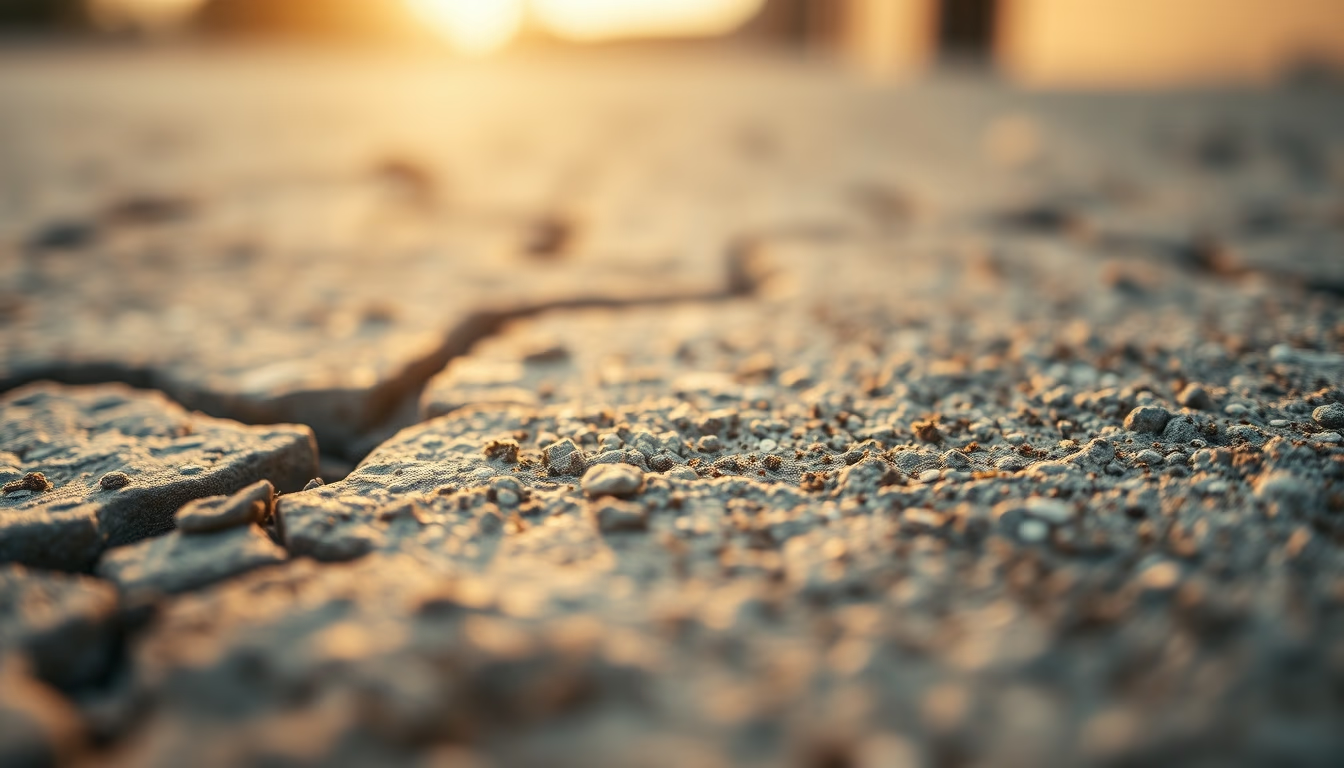
Macro concrete texture reveals granulometric details and cracking patterns, essential for civil engineering and design.
About this subject
Concrete is the most consumed construction material worldwide, with an annual production exceeding 10 billion tons. When observed in macro, its texture reveals a complex landscape of aggregates (crushed stone, sand), hydrated cement paste, and capillary voids. The granulometric distribution of these aggregates directly influences mechanical strength and structural durability. Cracks, for instance, may indicate drying shrinkage or overload, and are a focus of study in building pathology.
In civil engineering, texture analysis aids in assessing concrete quality. Techniques such as scanning electron microscopy allow identification of the water/cement ratio and the presence of alkali-aggregate reactions, which compromise the longevity of bridges and dams. In tropical countries like Brazil, high humidity accelerates carbonation processes, making textural study even more critical for building maintenance.
Beyond structural function, textured concrete has gained space in interior design and contemporary architecture. Exposed surfaces with wood grain or geometric patterns are valued for their raw, industrial character. However, the natural texture of concrete, with its imperfections and chromatic variations, remains preferred for projects seeking authenticity and low finishing costs.
Fun fact: Roman concrete, used in the Pantheon and Colosseum, has a distinct texture due to the use of pozzolana (volcanic ash) as a binder, granting it greater chemical resistance and self-healing crack capability over centuries.
Frequently Asked Questions
What causes cracks in concrete texture?
Cracks can be caused by drying shrinkage, thermal variations, structural overload, or chemical reactions like alkali-aggregate. Texture analysis helps identify the cause.
How does concrete texture affect coating adhesion?
Rough surfaces increase mechanical adhesion of paints, mortars, and tiles. The ideal roughness depends on the coating type and exposure conditions.
Is textured concrete more expensive than smooth?
It depends on the method. Textured forms or shotcreting may add cost, but natural exposed concrete eliminates finishing expenses, potentially being more economical.
Direct URL
https://pub-c7d6a6ea828543ac903a74a341ccb2e1.r2.dev/imagens/concrete-texture-macro-travel-photography.avifHow to credit
Include a visible link back to UtilizAí. Copy one of the snippets below:
<a href="https://xn--utiliza-eza.com/en/midia/imagens/concrete-texture-macro-travel-photography">Concrete texture macro</a> by <a href="https://xn--utiliza-eza.com">UtilizAí</a>, licensed under <a href="https://creativecommons.org/licenses/by/4.0/">CC BY 4.0</a>.
[Concrete texture macro](https://xn--utiliza-eza.com/en/midia/imagens/concrete-texture-macro-travel-photography) by [UtilizAí](https://xn--utiliza-eza.com), CC BY 4.0
License: CC-BY-4.0