Concrete texture macro
1344×768 · AVIF · CC BY 4.0
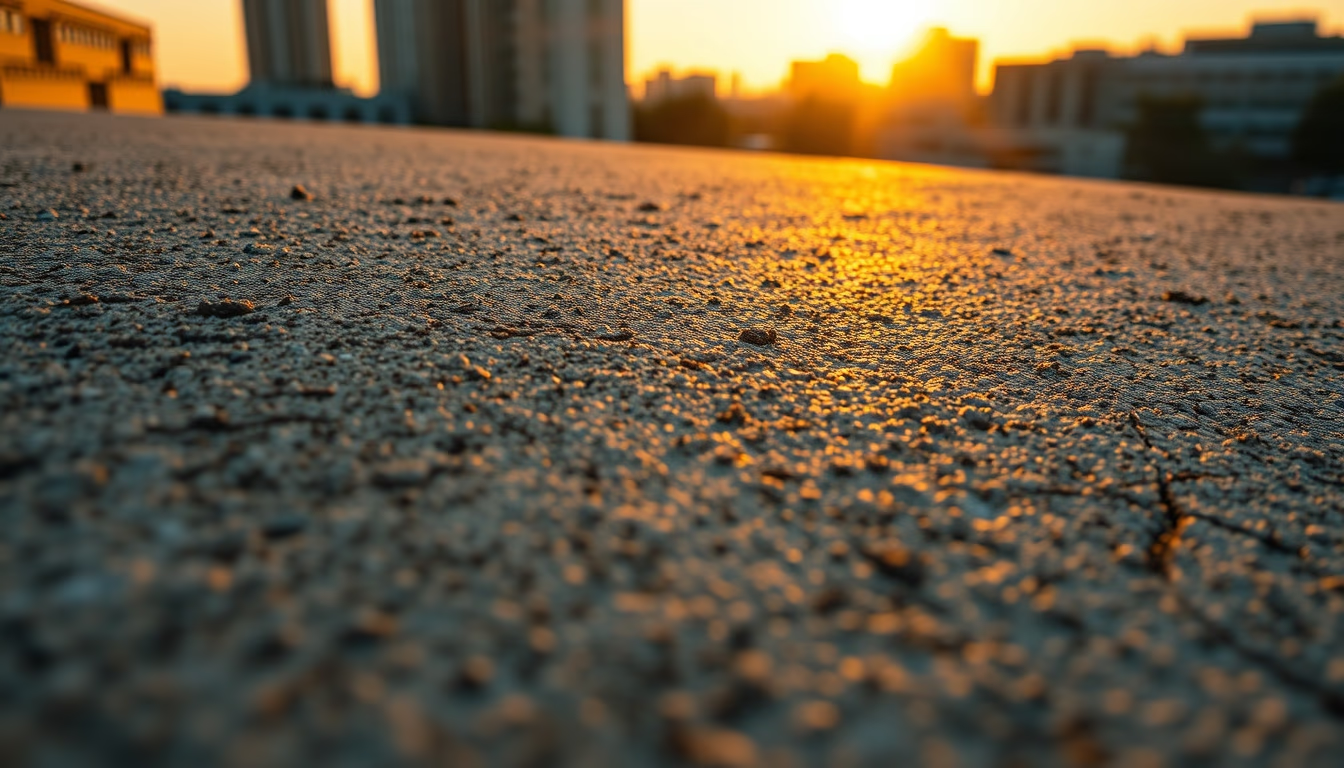
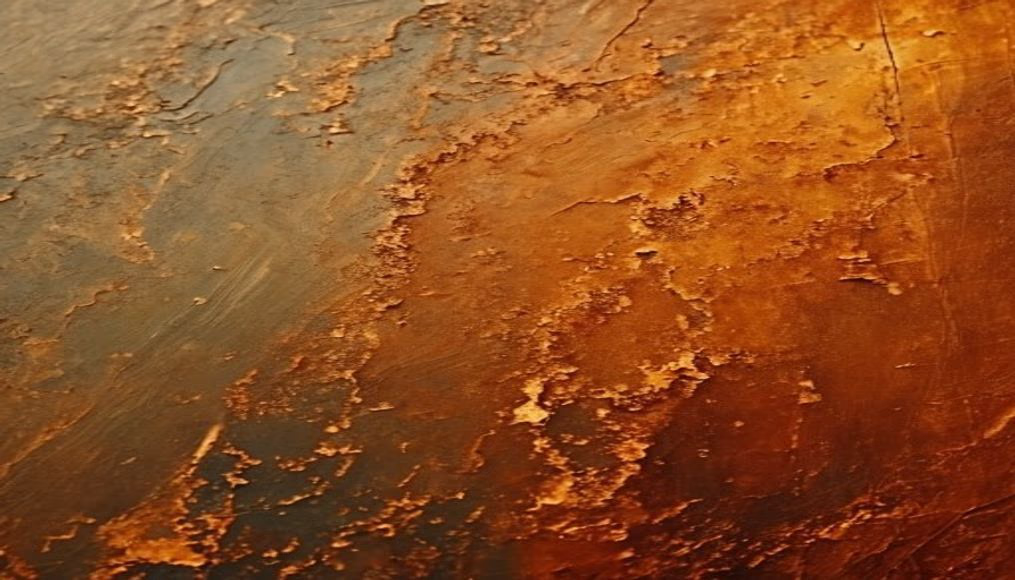
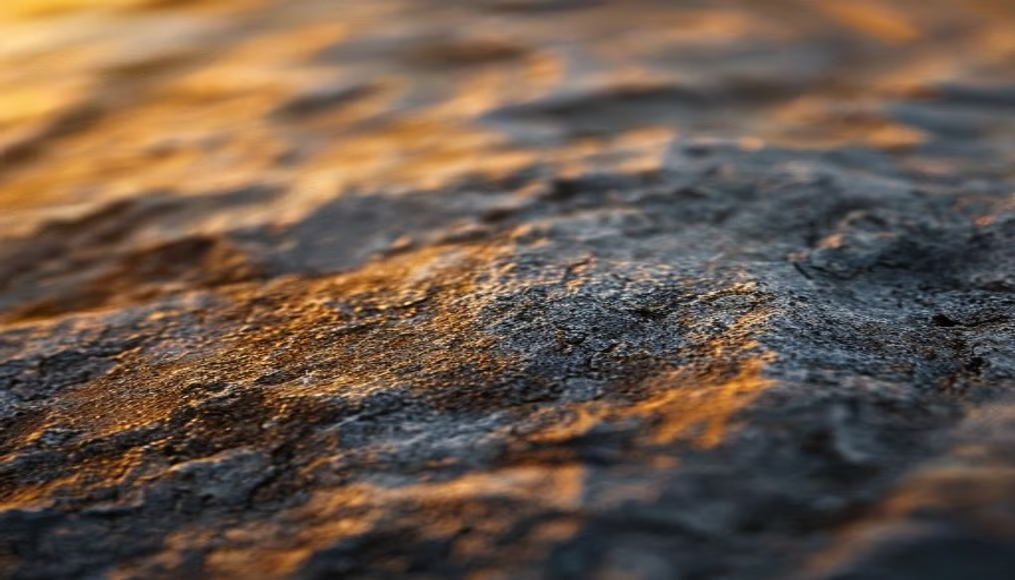
Macro concrete texture reveals surface details, with aggregates and cracks telling the story of the most used material in construction.
About this subject
Concrete is the most consumed construction material in the world, surpassing the sum of all other artificial materials. Its macro texture, when observed in close-up, exposes the heterogeneity of its composition: cement, coarse aggregates (gravel), fine aggregates (sand), water, and often chemical admixtures. Each component contributes to the final appearance, from the roughness of grains to the porosity that can influence durability.
The concrete surface is not homogeneous. Capillary cracks, pores, and marks from wooden or metal forms are common, especially in structures exposed to weathering. The alkali-aggregate reaction, for example, can generate stains and microcracks that compromise long-term integrity. Construction professionals use texture and porosimetry tests to assess the quality of hardened concrete.
Historically, reinforced concrete revolutionized architecture in the 20th century, allowing curved shapes and free spans. Works such as the Copan Building (São Paulo) and the Brasília Cathedral explore the material's plasticity. Macro texture is a visual record of this legacy, reflecting execution techniques and curing conditions.
Curiously, concrete is also a sustainable material when considering its lifecycle: it absorbs CO2 through carbonation over years. Macro texture can indicate the stage of this process, as carbonation alters the porosity and color of the surface.
Frequently Asked Questions
What causes cracks in concrete?
Cracks in concrete can be caused by drying shrinkage, thermal variations, structural overload, or chemical reactions like alkali-aggregate reaction. Not all compromise the structure, but larger cracks should be evaluated by an engineer.
How does concrete texture affect its durability?
A very porous texture allows greater penetration of water and aggressive agents, accelerating carbonation and reinforcement corrosion. Denser surfaces with fewer pores are more durable.
Can concrete be recycled?
Yes. Concrete can be crushed and used as recycled aggregate in new mixtures, reducing extraction of natural resources. Recycling is common in demolitions and renovations.
Direct URL
https://pub-c7d6a6ea828543ac903a74a341ccb2e1.r2.dev/imagens/concrete-texture-macro-cinematic-wide-shot-v2.avifHow to credit
Include a visible link back to UtilizAí. Copy one of the snippets below:
<a href="https://xn--utiliza-eza.com/en/midia/imagens/concrete-texture-macro-cinematic-wide-shot-v2">Concrete texture macro</a> by <a href="https://xn--utiliza-eza.com">UtilizAí</a>, licensed under <a href="https://creativecommons.org/licenses/by/4.0/">CC BY 4.0</a>.
[Concrete texture macro](https://xn--utiliza-eza.com/en/midia/imagens/concrete-texture-macro-cinematic-wide-shot-v2) by [UtilizAí](https://xn--utiliza-eza.com), CC BY 4.0
License: CC-BY-4.0