Compass brass nautical
1344×768 · AVIF · CC BY 4.0
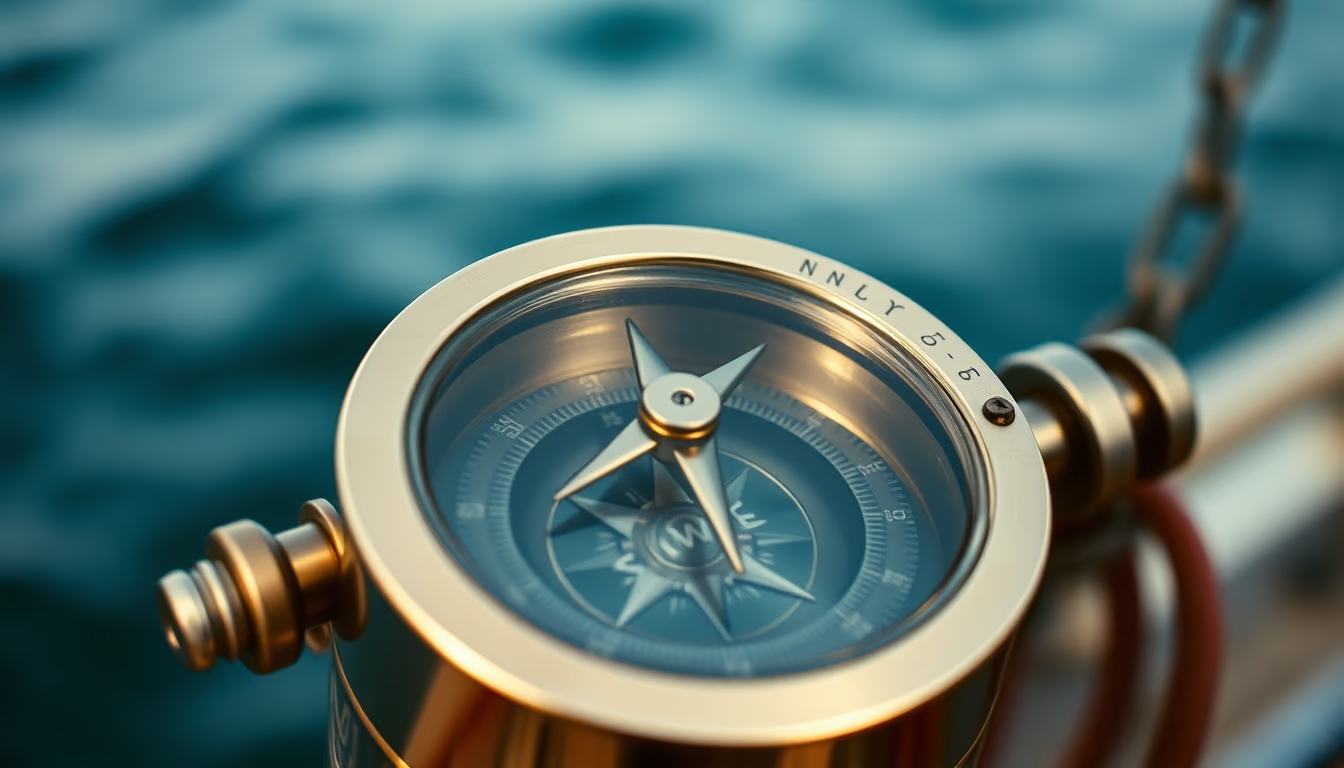
Brass nautical compass, a historical navigation instrument that guided explorers for centuries with mechanical precision.
About this subject
The brass nautical compass is a navigation instrument that uses a magnetized needle to indicate magnetic north, enabling orientation at sea. Made of brass, a metal resistant to salt corrosion, it was essential for sailors since the 12th century, when the technology reached Europe from China. The typical model features a engraved compass rose with 32 cardinal, intercardinal, and secondary points, and a protective glass over the dial. Accuracy depended on the quality of the needle and the absence of nearby metallic interference.
Historically, the brass nautical compass replaced methods like star observation and lead lines, enabling long-distance voyages such as the Portuguese and Spanish Age of Discovery. Brass was preferred for its durability and ease of maintenance, common on wooden vessels. Many antique examples show a characteristic green patina from copper oxidation in the alloy.
Today, these compasses are collector's items and decorative pieces in vintage or nautical-themed settings. Maritime museums, such as the National Maritime Museum in London and the Museu Nacional do Mar in Brazil, display historical specimens. The value of a brass compass can range from hundreds to thousands of dollars, depending on condition, rarity, and provenance.
Interestingly, the modern 32-point compass rose was standardized by Italian navigators in the 14th century, but regional variations exist, such as the 16-point rose used by Vikings. The brass nautical compass represents not only a navigation tool but a symbol of human exploration and pre-digital engineering.
Frequently Asked Questions
How does a brass nautical compass work?
It uses a magnetized needle that aligns with Earth's magnetic field, pointing to magnetic north. The compass rose dial allows the navigator to determine relative directions.
What is the historical significance of the brass compass?
It was crucial for the Age of Discovery, enabling open-sea navigation independent of visual references. It replaced older methods and facilitated global exploration and trade.
How to preserve a brass nautical compass?
Avoid excessive humidity and abrasive cleaners. Clean with a dry or lightly oiled cloth. Do not remove green patina, as it protects the metal and adds historical value.
Direct URL
https://pub-c7d6a6ea828543ac903a74a341ccb2e1.r2.dev/imagens/compass-brass-nautical-film-grain-authentic-p4.avifHow to credit
Include a visible link back to UtilizAí. Copy one of the snippets below:
<a href="https://xn--utiliza-eza.com/en/midia/imagens/compass-brass-nautical-film-grain-authentic-p4">Compass brass nautical</a> by <a href="https://xn--utiliza-eza.com">UtilizAí</a>, licensed under <a href="https://creativecommons.org/licenses/by/4.0/">CC BY 4.0</a>.
[Compass brass nautical](https://xn--utiliza-eza.com/en/midia/imagens/compass-brass-nautical-film-grain-authentic-p4) by [UtilizAí](https://xn--utiliza-eza.com), CC BY 4.0
License: CC-BY-4.0