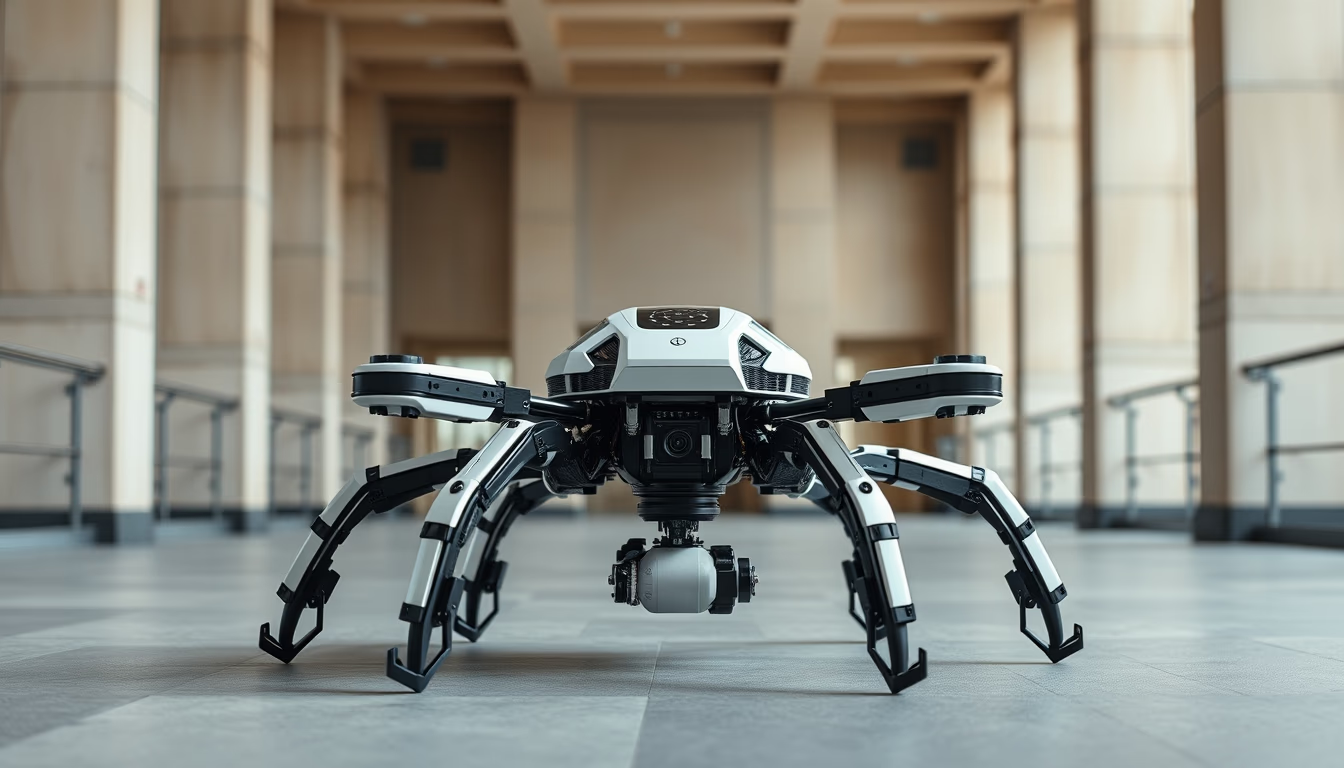
Collaborative robot cobot
1344×768 · AVIF · CC BY 4.0

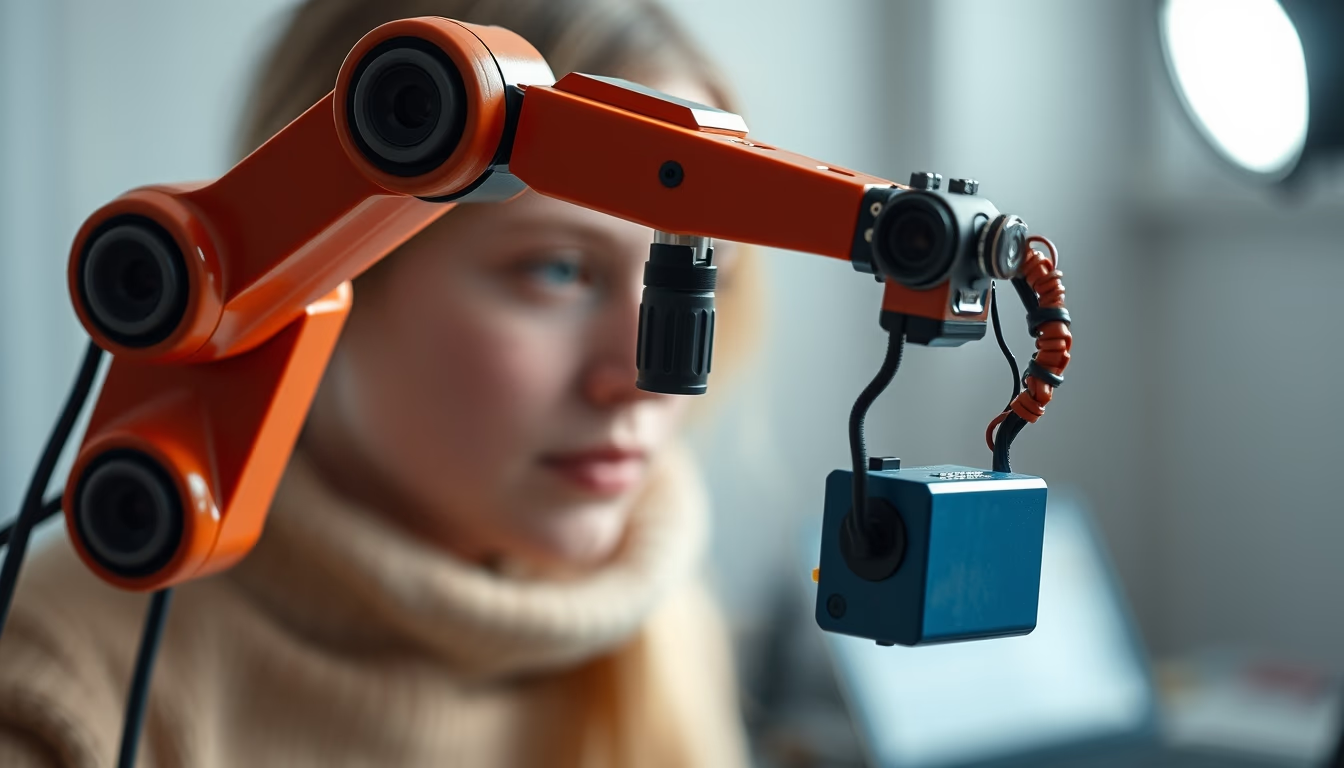
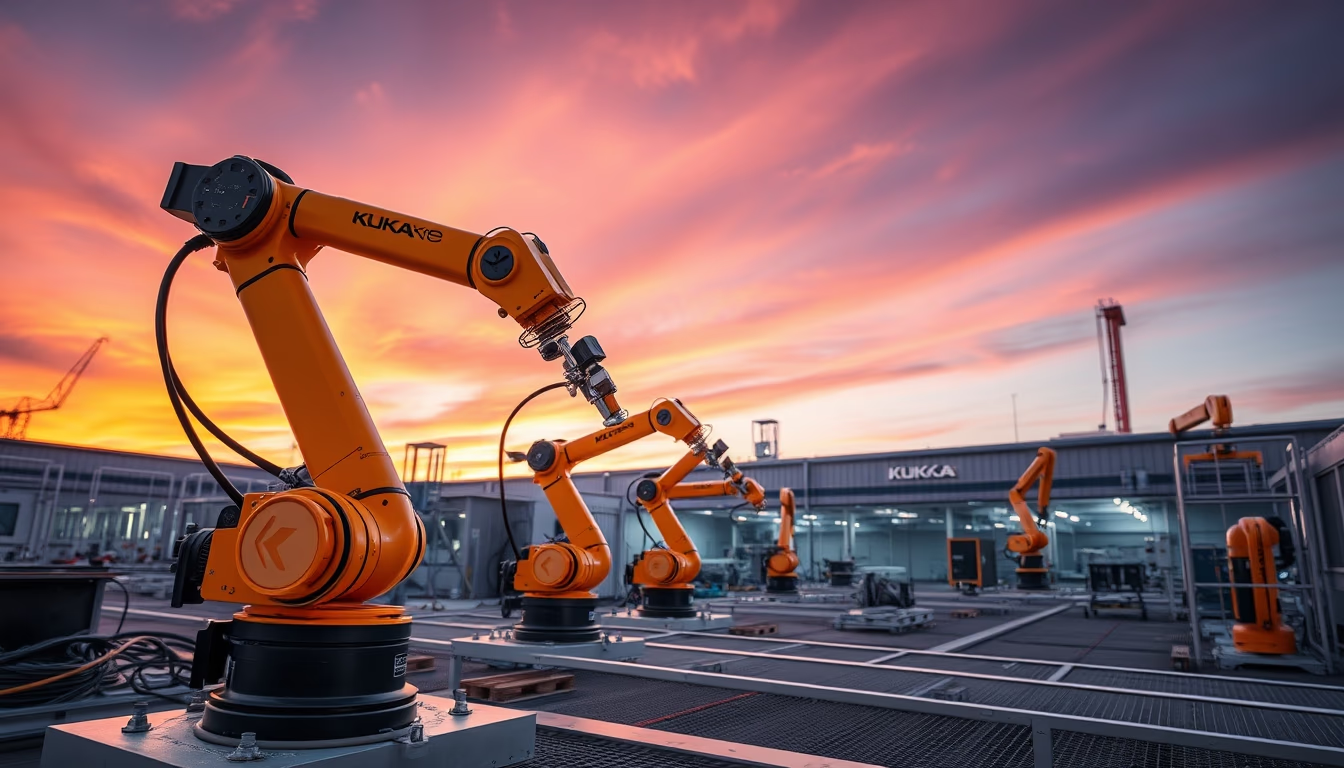
Collaborative robots, or cobots, are designed to work alongside humans in factories, hospitals, and even airports, combining safety and efficiency.
About this subject
Collaborative robots, known as cobots, represent a significant evolution in industrial automation. Unlike traditional robots, which operate isolated in safety cages, cobots are designed to interact directly with humans in a shared workspace. They are equipped with force and vision sensors that detect human presence and automatically reduce speed or stop upon contact, ensuring safety according to ISO 10218 and 15066 standards.
Cobots are widely used in sectors such as manufacturing, logistics, healthcare, and even tourism. In factories, they perform repetitive tasks like assembly, packaging, and quality inspection. In airports, they may assist with baggage handling or cleaning. In healthcare, they aid in minimally invasive surgeries and patient rehabilitation. Their ease of programming, often through physical demonstration or intuitive graphical interfaces, allows workers without specialized technical training to configure them quickly.
The cobot market has grown exponentially. According to the International Federation of Robotics, worldwide cobot sales increased by more than 50% per year between 2017 and 2022. This growth is driven by demand for flexible automation, especially among small and medium enterprises, which can integrate cobots without major factory overhauls. The COVID-19 pandemic further accelerated adoption of collaborative robots to reduce human contact on production lines and in services.
An interesting fact is that the term 'cobot' was coined in 1996 by professors Michael Peshkin and J. Edward Colgate at Northwestern University. Early models were mechanical and passive, but evolved into active systems with artificial intelligence. Today, cobots like the Universal Robots UR5 or Fanuc CRX can learn trajectories and adapt to environmental changes, becoming versatile allies in Industry 4.0.
Frequently Asked Questions
What is the difference between a traditional robot and a cobot?
Traditional robots are large, fast, and operate isolated in safety cages to prevent accidents. Cobots are smaller, slower, and designed to interact with humans, with sensors that ensure safety without physical barriers.
Are cobots safe to work near people?
Yes, provided they comply with ISO 10218 and 15066 standards. They have torque and vision sensors that limit force and speed, and stop upon detecting unexpected contact or approach.
How are cobots programmed?
Programming can be done through manual guidance (leading the robot arm), graphical interfaces with function blocks, or scripting languages. Many models allow operators without advanced knowledge to create tasks quickly.
Direct URL
https://pub-c7d6a6ea828543ac903a74a341ccb2e1.r2.dev/imagens/collaborative-robot-cobot-travel-photography-p0.avifHow to credit
Include a visible link back to UtilizAí. Copy one of the snippets below:
<a href="https://xn--utiliza-eza.com/en/midia/imagens/collaborative-robot-cobot-travel-photography-p0">Collaborative robot cobot</a> by <a href="https://xn--utiliza-eza.com">UtilizAí</a>, licensed under <a href="https://creativecommons.org/licenses/by/4.0/">CC BY 4.0</a>.
[Collaborative robot cobot](https://xn--utiliza-eza.com/en/midia/imagens/collaborative-robot-cobot-travel-photography-p0) by [UtilizAí](https://xn--utiliza-eza.com), CC BY 4.0
License: CC-BY-4.0