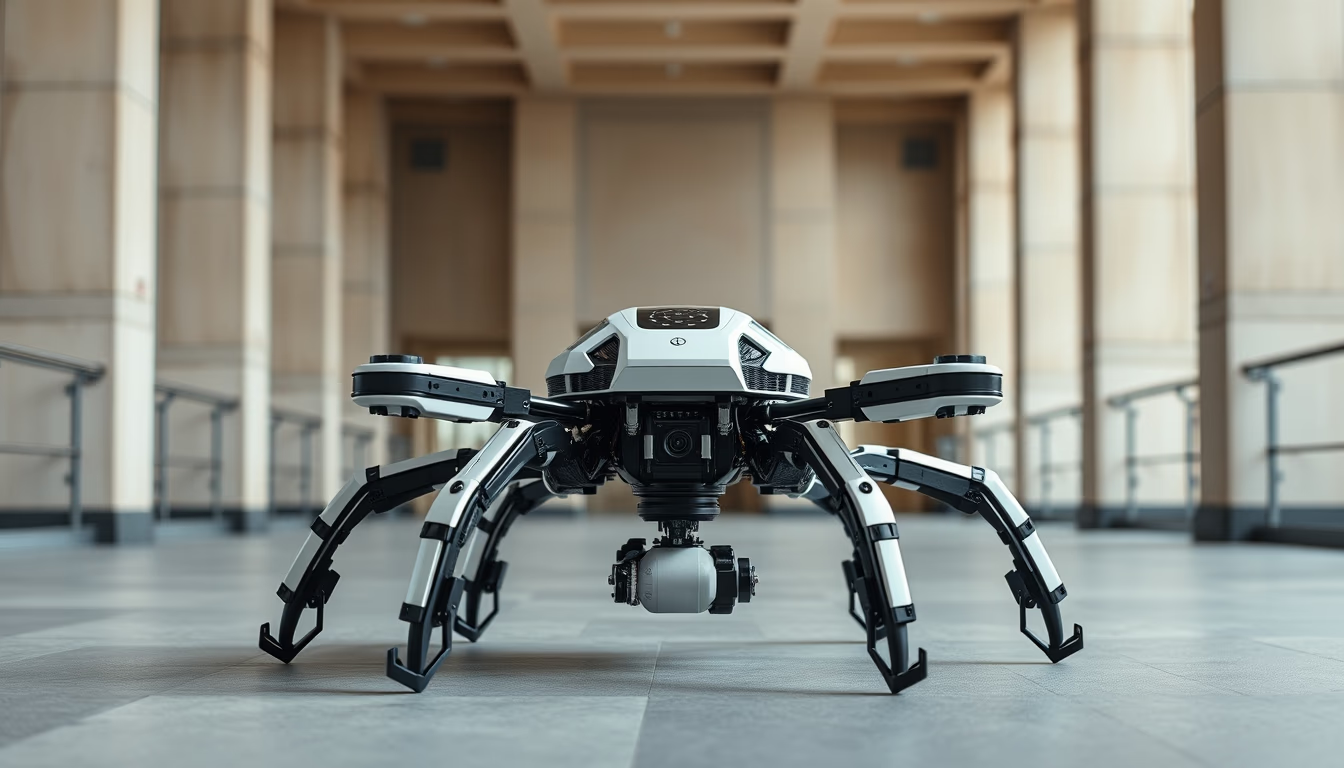
Collaborative robot cobot
1344×768 · AVIF · CC BY 4.0

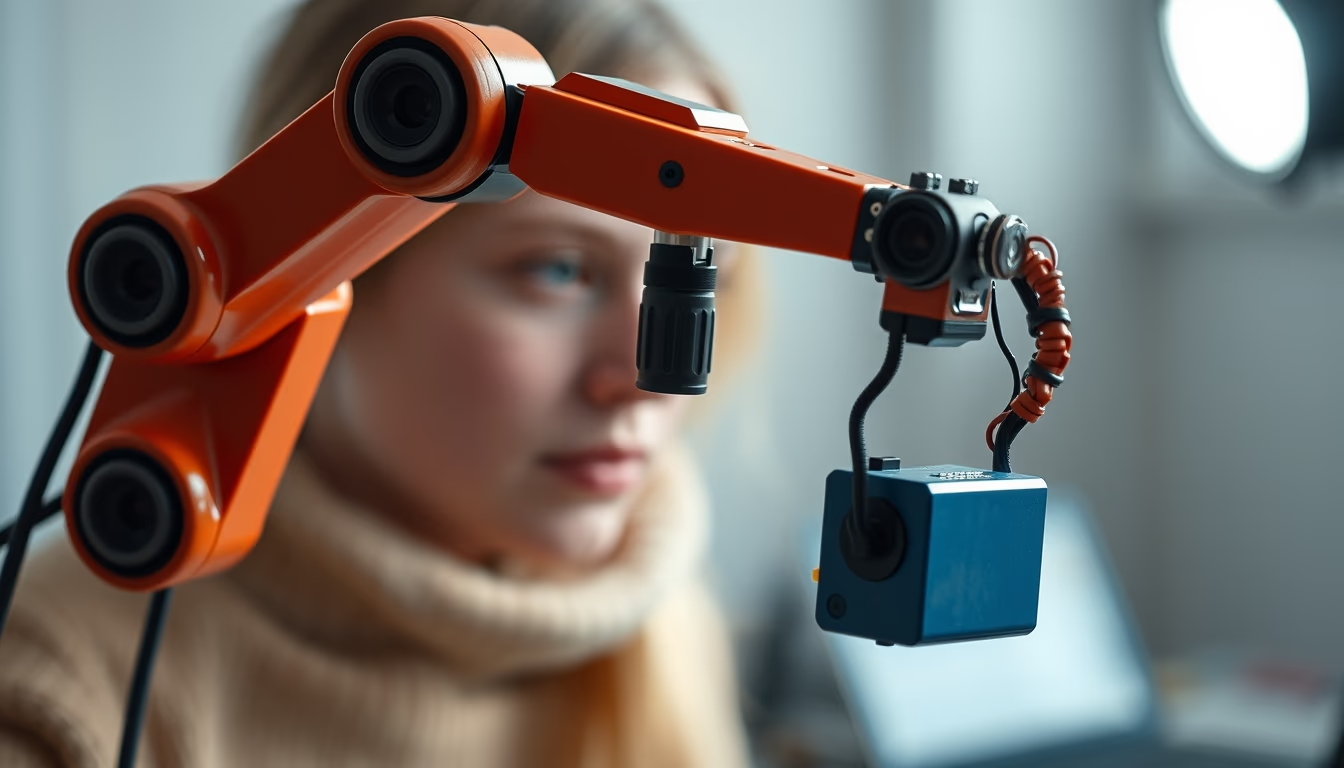
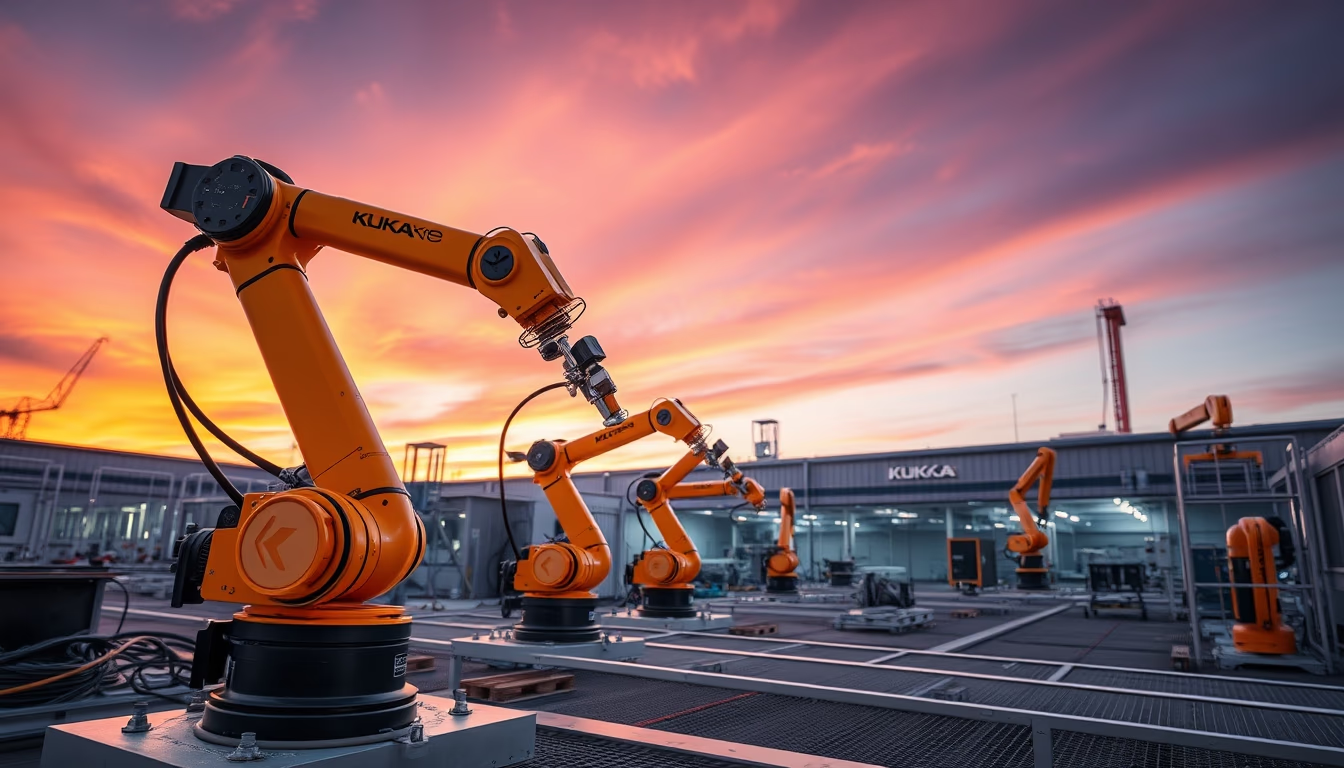
Collaborative robots, or cobots, are machines designed to work alongside humans, combining safety and efficiency in modern industry.
About this subject
Collaborative robots, commonly known as cobots, represent a significant evolution in industrial automation. Unlike traditional robots that operate in isolated cells with safety fences, cobots are designed to directly interact with human workers in the same workspace. This capability is enabled by advanced sensors, predefined force and speed limits, and automatic stop systems when unexpected contact is detected. The concept of human-robot collaboration was formalized by researcher Y. B. Z. (Yaser) in 2005, but gained commercial traction with the launch of the UR5 by Universal Robots in 2008.
Cobots excel in repetitive but adaptable tasks such as electronic component assembly, packaging, quality inspection, and material handling. Small and medium-sized enterprises (SMEs) are the primary beneficiaries, as cobots are more affordable (starting at around $20,000), easy to program, and do not require major factory overhauls. Data from the International Federation of Robotics (IFR) indicates that the cobot market grew more than 30% annually between 2018 and 2022, driven by the need for production line flexibility.
A notable example is the collaboration between BMW and Universal Robots, where cobots assist in assembling doors and interior panels. Ergonomic studies show that cobots reduce repetitive strain injuries (RSI) by up to 60% in lifting and twisting tasks. Additionally, they operate 24/7 with micrometer precision, increasing productivity by 20 to 40% in hybrid work cells. However, challenges remain, such as the need for intuitive interfaces (often via smartphones) and cultural adaptation of employees, who must trust the robot as a partner, not a threat.
The future of cobots points to greater autonomy using artificial intelligence, computer vision, and learning from demonstration. Companies like Rethink Robotics (now discontinued) and FANUC invest in autonomous mobile cobots (AMRs with robotic arms). Safety standards ISO 10218-2 and ISO/TS 15066 establish requirements for collaborative systems, including force limits and maximum speed of 250 mm/s. In summary, cobots do not replace workers but amplify their capabilities, creating a safer and more productive industrial environment.
Frequently Asked Questions
What is the difference between a traditional industrial robot and a cobot?
Traditional industrial robots are large, fast, and operate in isolated areas with safety fences to prevent accidents. Cobots are smaller, slower (limited top speed), have force sensors, and can work without physical barriers, collaborating directly with humans.
Which industries currently use cobots the most?
The main industries are automotive (part assembly), electronics (component insertion), logistics (packaging and palletizing), pharmaceuticals (vial handling), and food (portioning and packaging). Small and medium-sized manufacturing enterprises are the largest adopters due to low cost and ease of programming.
Do cobots replace human jobs?
Not necessarily. Cobots are designed to perform repetitive, dangerous, or heavy tasks, freeing workers for roles requiring creativity and decision-making. Studies show that companies adopting cobots tend to maintain or even increase their workforce, reallocating employees to higher-value activities.
Direct URL
https://pub-c7d6a6ea828543ac903a74a341ccb2e1.r2.dev/imagens/collaborative-robot-cobot-tilt-shift-miniature-p10.avifHow to credit
Include a visible link back to UtilizAí. Copy one of the snippets below:
<a href="https://xn--utiliza-eza.com/en/midia/imagens/collaborative-robot-cobot-tilt-shift-miniature-p10">Collaborative robot cobot</a> by <a href="https://xn--utiliza-eza.com">UtilizAí</a>, licensed under <a href="https://creativecommons.org/licenses/by/4.0/">CC BY 4.0</a>.
[Collaborative robot cobot](https://xn--utiliza-eza.com/en/midia/imagens/collaborative-robot-cobot-tilt-shift-miniature-p10) by [UtilizAí](https://xn--utiliza-eza.com), CC BY 4.0
License: CC-BY-4.0