Collaborative robot cobot
1344×768 · AVIF · CC BY 4.0

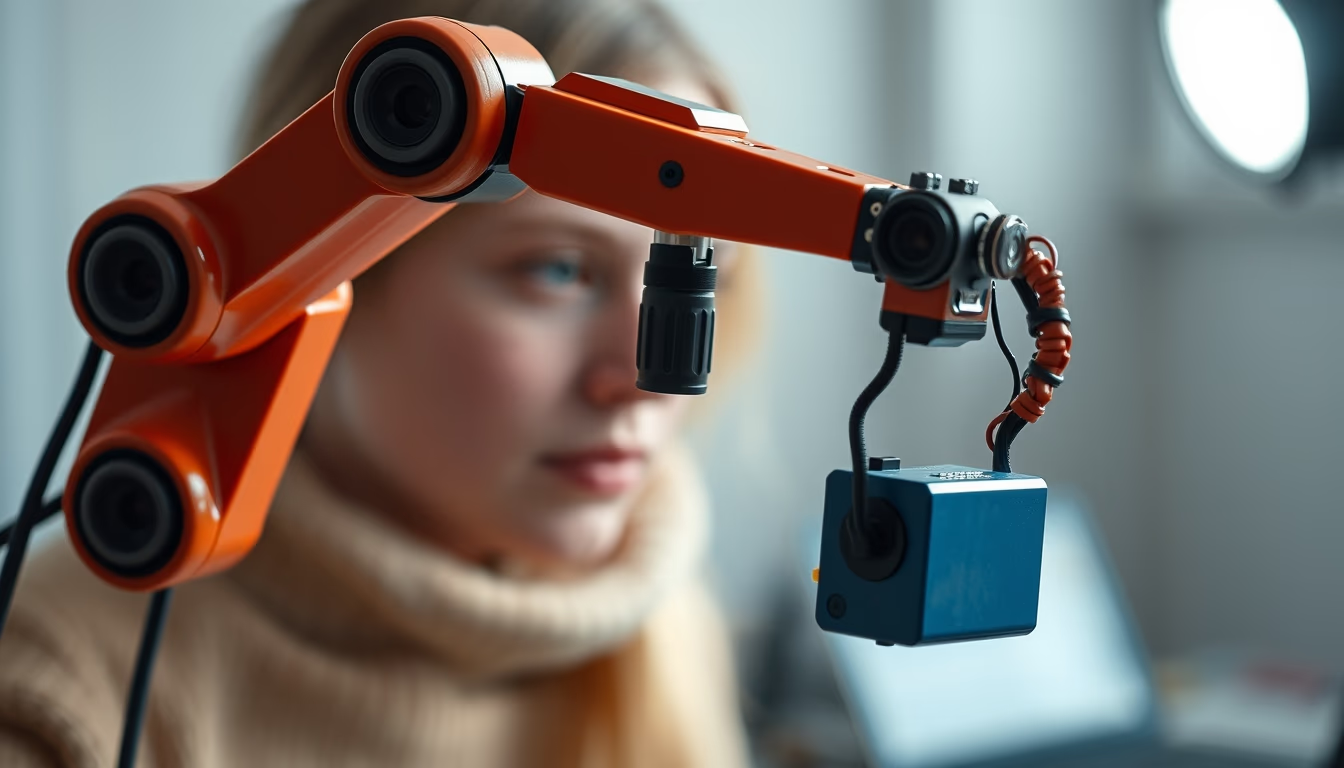
Collaborative robots, or cobots, are transforming industrial automation by working alongside humans without the need for safety barriers.
About this subject
Collaborative robots, or cobots, represent a significant evolution in industrial automation. Unlike traditional industrial robots that operate isolated in safety cages, cobots are designed to interact directly with human workers in a shared workspace. This capability is possible thanks to force and torque sensors, computer vision systems, and algorithms that limit the robot's speed and force, ensuring operator safety.
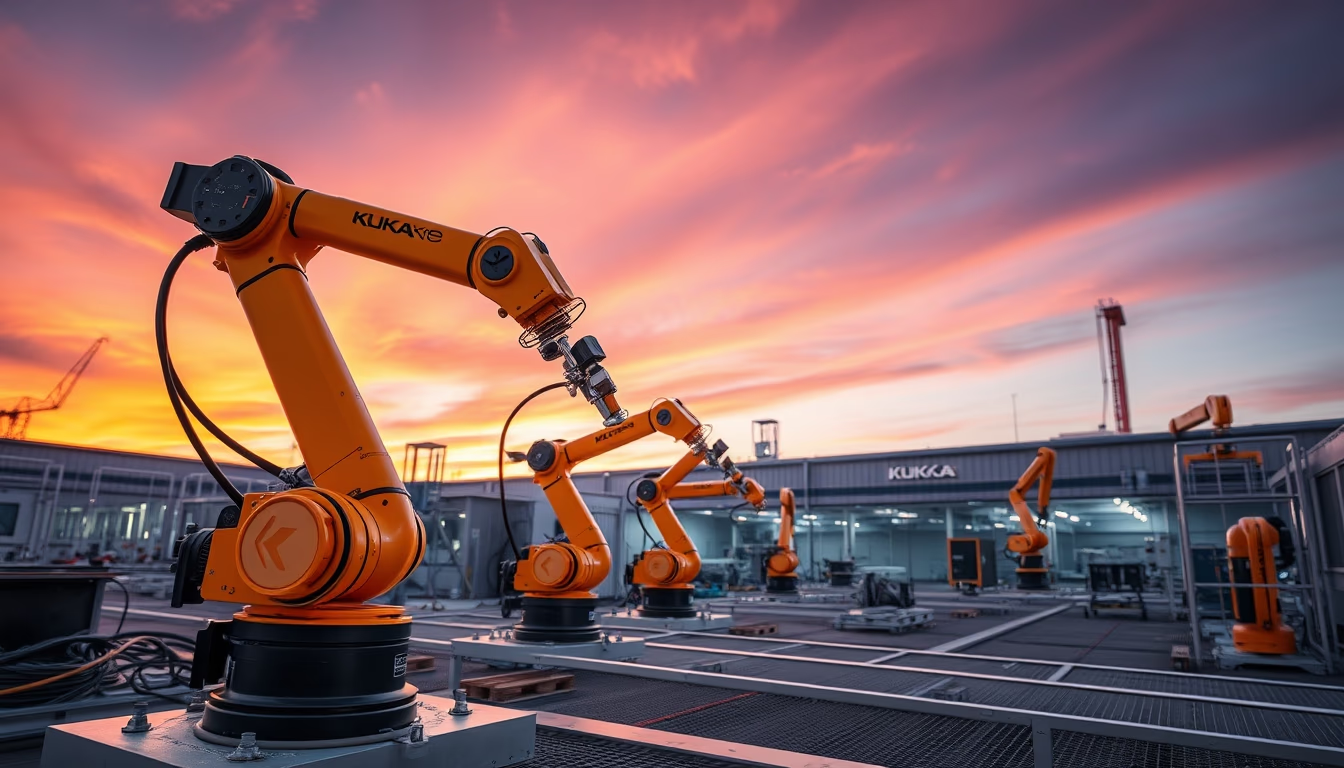
The cobot market is growing rapidly, driven by the demand for manufacturing flexibility. Companies of all sizes, especially small and medium enterprises, adopt cobots for repetitive tasks such as pick and place, assembly, quality inspection, and packaging. Data from the International Federation of Robotics (IFR) indicate that in 2022, cobot installations increased by 40% compared to the previous year, with highlights in the automotive, electronics, and consumer goods sectors.
A relevant curiosity is that the first cobot was patented in 1996 by researchers J. Edward Colgate and Michael Peshkin from Northwestern University in the United States. Initially, the concept was a passive device that guided human movement, but it evolved into active and intelligent robots. Today, brands such as Universal Robots (Danish), Fanuc (Japanese), and ABB (Swiss-Swedish) dominate the market, offering models with payload capacities ranging from 3 kg to 16 kg.
The application of cobots goes beyond industry. In healthcare, they are used to assist in minimally invasive surgeries and patient rehabilitation. In logistics, they move goods in warehouses. Despite the benefits, challenges such as the initial implementation cost and the need for specialized programming still limit mass adoption. However, with advances in artificial intelligence and the Internet of Things (IoT), cobots are expected to become increasingly autonomous and integrated into production systems.
Frequently Asked Questions
What differentiates a collaborative robot from a traditional industrial robot?
The main difference is the ability to work safely alongside humans without safety cages. Cobots have sensors that limit force and speed, while traditional robots require physical barriers to prevent accidents.
What are the main applications of cobots in industry?
They are used for repetitive and precision tasks such as pick and place, assembly, welding, painting, quality inspection, and packaging. They are also gaining ground in logistics and healthcare.
Will cobots replace human workers?
No, the purpose is to collaborate, not replace. Cobots take over monotonous or dangerous tasks, freeing humans for more creative and supervisory activities, increasing productivity and safety.
Direct URL
https://pub-c7d6a6ea828543ac903a74a341ccb2e1.r2.dev/imagens/collaborative-robot-cobot-long-exposure-p7.avifHow to credit
Include a visible link back to UtilizAí. Copy one of the snippets below:
<a href="https://xn--utiliza-eza.com/en/midia/imagens/collaborative-robot-cobot-long-exposure-p7">Collaborative robot cobot</a> by <a href="https://xn--utiliza-eza.com">UtilizAí</a>, licensed under <a href="https://creativecommons.org/licenses/by/4.0/">CC BY 4.0</a>.
[Collaborative robot cobot](https://xn--utiliza-eza.com/en/midia/imagens/collaborative-robot-cobot-long-exposure-p7) by [UtilizAí](https://xn--utiliza-eza.com), CC BY 4.0
License: CC-BY-4.0