Collaborative robot cobot
1344×768 · AVIF · CC BY 4.0

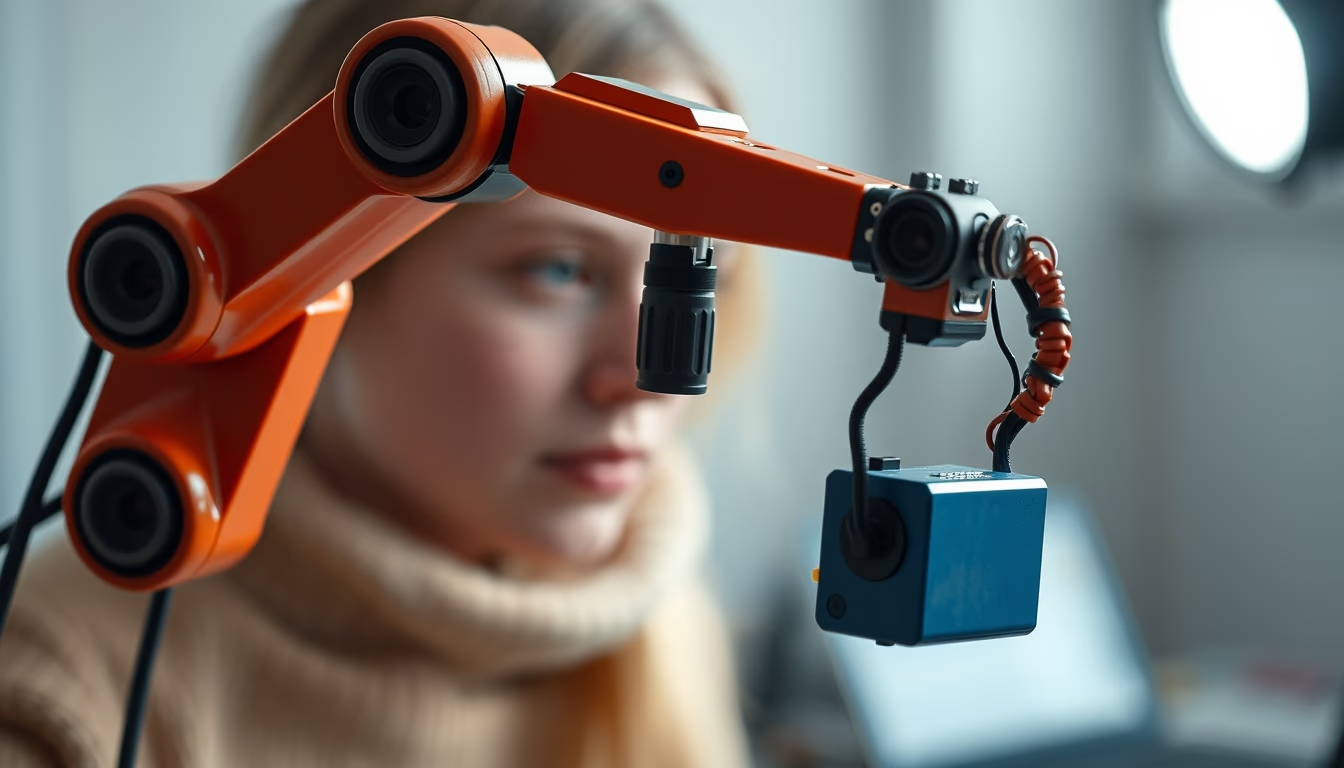
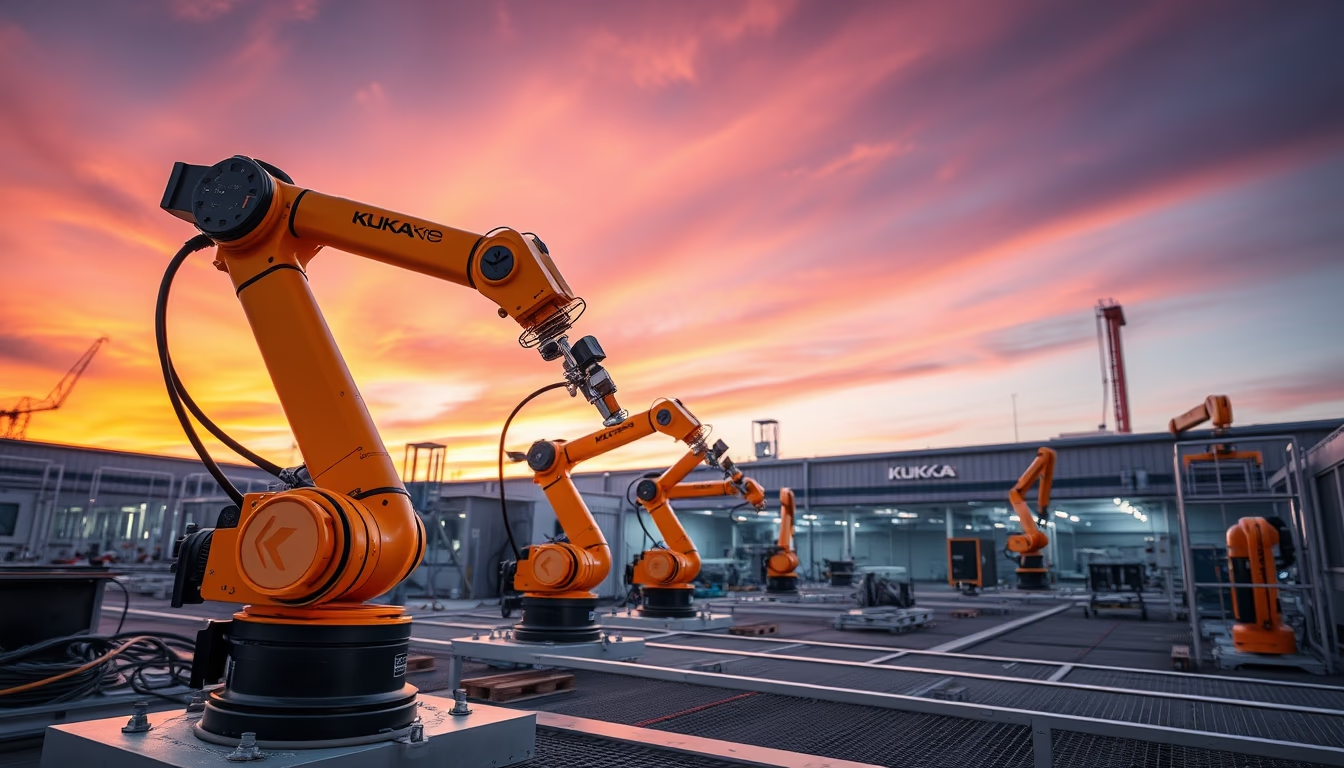
Cobots are collaborative robots designed to work alongside humans, boosting productivity and safety in Industry 4.0.
About this subject
Collaborative robots, or cobots, represent a major leap in industrial automation. Unlike traditional industrial robots that operate inside safety cages, cobots are designed to share workspace with humans safely. Equipped with advanced sensors such as torque and proximity detectors, they can instantly slow down or stop upon detecting a human presence, reducing accident risks. This technology streamlines repetitive tasks like assembly, packaging, and quality inspection, allowing workers to focus on higher-value activities.
The concept of cobots dates back to the 1990s, but gained momentum with Industry 4.0 and the need for flexible production lines. Companies like Universal Robots and Fanuc have popularized lightweight, easy-to-program models that can be deployed without major factory modifications. A prominent example is the UR5, with a 5 kg payload and 85 cm reach, widely used in small and medium enterprises. According to the International Federation of Robotics, the cobot market grew over 50% annually from 2018 to 2022, driven by post-pandemic efficiency demands.
Beyond manufacturing, cobots are penetrating healthcare, logistics, and agriculture. In hospitals, they assist with disinfection or medicine delivery; in agriculture, they perform selective harvesting using computer vision. A curiosity: the first academically developed cobot was simply called 'Cobot', created by researchers at Northwestern University in 1996, initially to aid precise movements in automotive assembly. Safety standards such as ISO 10218 and ISO/TS 15066 now define force and speed limits to prevent injuries.
The adoption of cobots also raises workforce skill questions. While automating tasks, they require programmers and technicians specialized in collaborative robotics. In countries like Brazil, adoption grows in automotive and metalworking sectors but lags behind Europe, where Germany and Italy lead. The trend points to more accessible cobots with intuitive interfaces enabling programming by demonstration, easing adoption for businesses of all sizes.
Frequently Asked Questions
What is the difference between a collaborative robot and a traditional industrial robot?
The key difference is safety: traditional robots operate inside safety cages, while cobots are designed to interact with humans using sensors that reduce accident risks.
Which sectors are currently using cobots?
Cobots are used in manufacturing, healthcare, logistics, and agriculture. For example, in automotive assembly, hospital disinfection, and selective harvesting in farms.
Will cobots replace human workers?
No, they tend to complement human labor by automating repetitive tasks. They require skilled workers for programming and maintenance, creating new opportunities and improving safety.
Direct URL
https://pub-c7d6a6ea828543ac903a74a341ccb2e1.r2.dev/imagens/collaborative-robot-cobot-isometric-flat-lay-p8.avifHow to credit
Include a visible link back to UtilizAí. Copy one of the snippets below:
<a href="https://xn--utiliza-eza.com/en/midia/imagens/collaborative-robot-cobot-isometric-flat-lay-p8">Collaborative robot cobot</a> by <a href="https://xn--utiliza-eza.com">UtilizAí</a>, licensed under <a href="https://creativecommons.org/licenses/by/4.0/">CC BY 4.0</a>.
[Collaborative robot cobot](https://xn--utiliza-eza.com/en/midia/imagens/collaborative-robot-cobot-isometric-flat-lay-p8) by [UtilizAí](https://xn--utiliza-eza.com), CC BY 4.0
License: CC-BY-4.0