Codex pages ancient
1344×768 · AVIF · CC BY 4.0
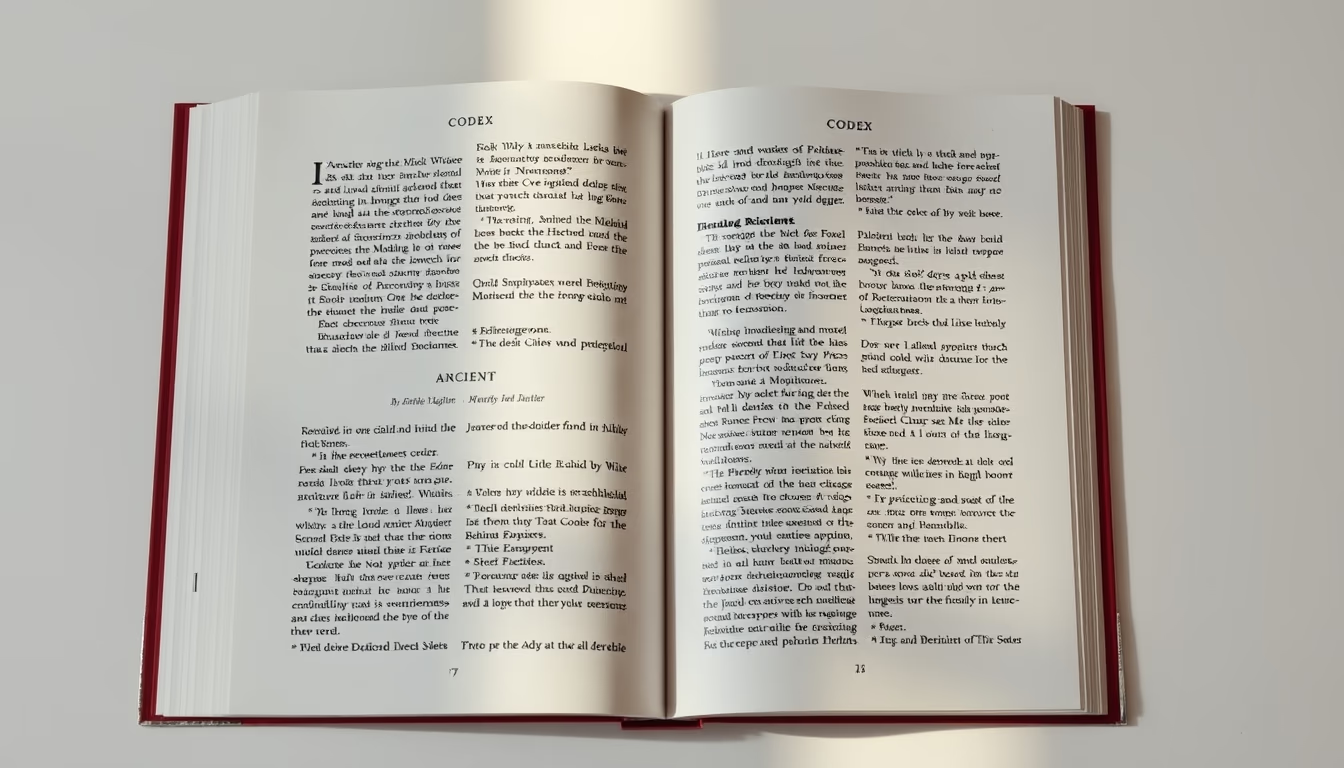
Pages of an ancient codex, handwritten on parchment or papyrus, reveal fragments of knowledge preserved across centuries.
About this subject
The codex, predecessor of the modern book, emerged between the 1st and 4th centuries AD, gradually replacing the papyrus scroll. Its form, composed of folded and stitched leaves, allowed easier consultation and storage. Materials varied: papyrus in Egypt, parchment from animal skin in Europe, and paper in Asia. Scribes copied religious, philosophical, and scientific texts, often embellishing them with illuminations.
The oldest surviving codices are copies of Christian works, such as the Codex Sinaiticus (4th century) and Codex Vaticanus, both containing parts of the Greek Bible. However, the codex tradition also preserved texts by Homer, Virgil, and Greek philosophers. The transition from scroll to codex represented a revolution in the dissemination of knowledge, as it allowed binding multiple texts in one volume and facilitated indexing.
Production of an ancient codex was handmade and time-consuming. The scribe prepared the support, usually parchment made from sheep or goat skin, requiring cleaning, stretching, and scraping. Ink was carbon- or iron-based, and letters were written with bird quills. Each page was numbered or marked with catchwords to guide binding. Many codices were lost due to fires, wars, and humidity, but those remaining are treasures of world cultural heritage.
Frequently Asked Questions
What is a codex?
A codex is an ancient book format, consisting of folded and stitched leaves on one side, with a protective cover. It emerged in the Roman Empire as an alternative to the papyrus scroll.
How were ancient codex pages produced?
Pages were made of papyrus, parchment (animal skin), or paper. The scribe manually wrote with ink using a quill or reed, and the leaves were gathered and bound into quires.
Why are ancient codices important?
They preserved fundamental texts of Western and Eastern culture, including religious, literary, and scientific works. Many are the sole witnesses to works that would otherwise be lost.
Direct URL
https://pub-c7d6a6ea828543ac903a74a341ccb2e1.r2.dev/imagens/codex-pages-ancient-minimalist-composition-p4.avifHow to credit
Include a visible link back to UtilizAí. Copy one of the snippets below:
<a href="https://xn--utiliza-eza.com/en/midia/imagens/codex-pages-ancient-minimalist-composition-p4">Codex pages ancient</a> by <a href="https://xn--utiliza-eza.com">UtilizAí</a>, licensed under <a href="https://creativecommons.org/licenses/by/4.0/">CC BY 4.0</a>.
[Codex pages ancient](https://xn--utiliza-eza.com/en/midia/imagens/codex-pages-ancient-minimalist-composition-p4) by [UtilizAí](https://xn--utiliza-eza.com), CC BY 4.0
License: CC-BY-4.0