Codex pages ancient
1344×768 · AVIF · CC BY 4.0
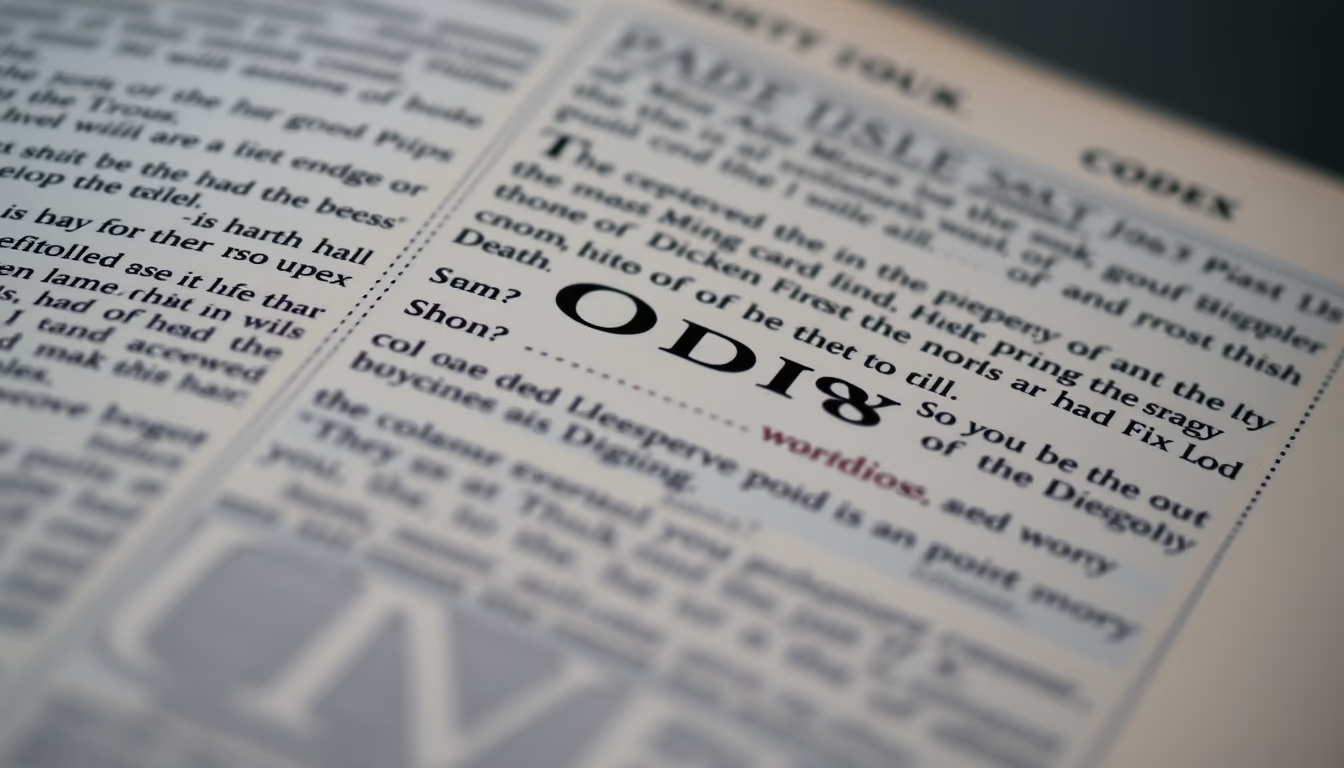
Ancient codices are bound manuscripts that preceded the modern book, crucial for preserving classical and medieval knowledge.
About this subject
Codices emerged around the 1st century AD, evolving from papyrus rolls. They consisted of sheets of papyrus, parchment, or vellum, folded and sewn into a format similar to modern books. This innovation allowed easier consultation and storage, as well as writing on both sides of the leaf. Their spread is linked to the Roman Empire and later medieval monasteries, where scribes preserved philosophical, scientific, and religious works.
Famous examples include the 4th-century Codex Sinaiticus, containing the Greek Bible, and Codex Vaticanus, also biblical. The 16th-century Codex Mendoza documents Aztec history. Producing a codex involved artisanal techniques: preparing animal skins, making inks, writing with reeds or quills, and illuminating with precious pigments. Many codices were lost, but survivors are invaluable primary sources for historians.
The transition from codex to printed book in the 15th century did not diminish its importance. Today, institutions like the Vatican Apostolic Library and the British Library digitize these documents for global access. Codicology studies materials, bindings, and marginal annotations, revealing reading practices and knowledge transmission over centuries.
Frequently Asked Questions
What is the difference between a codex and a papyrus scroll?
A codex consists of folded and sewn sheets, allowing writing on both sides and easier handling. A papyrus scroll was a long cylinder that had to be unrolled for reading, less efficient for consulting specific passages.
How were medieval codices made?
They used parchment or vellum (treated animal skin), cut into sheets and folded. The sheets were sewn into quires and attached to wooden boards covered with leather. Scribes wrote by hand with iron-gall ink and often decorated with illuminations.
Why are ancient codices so important to history?
They preserve classical, religious, and scientific texts that would otherwise have been lost. They are direct testimonies of the culture, language, and knowledge of ancient and medieval civilizations, serving as a basis for philological, historical, and theological studies.
Direct URL
https://pub-c7d6a6ea828543ac903a74a341ccb2e1.r2.dev/imagens/codex-pages-ancient-macro-closeup-p3.avifHow to credit
Include a visible link back to UtilizAí. Copy one of the snippets below:
<a href="https://xn--utiliza-eza.com/en/midia/imagens/codex-pages-ancient-macro-closeup-p3">Codex pages ancient</a> by <a href="https://xn--utiliza-eza.com">UtilizAí</a>, licensed under <a href="https://creativecommons.org/licenses/by/4.0/">CC BY 4.0</a>.
[Codex pages ancient](https://xn--utiliza-eza.com/en/midia/imagens/codex-pages-ancient-macro-closeup-p3) by [UtilizAí](https://xn--utiliza-eza.com), CC BY 4.0
License: CC-BY-4.0