Codex pages ancient
1344×768 · AVIF · CC BY 4.0
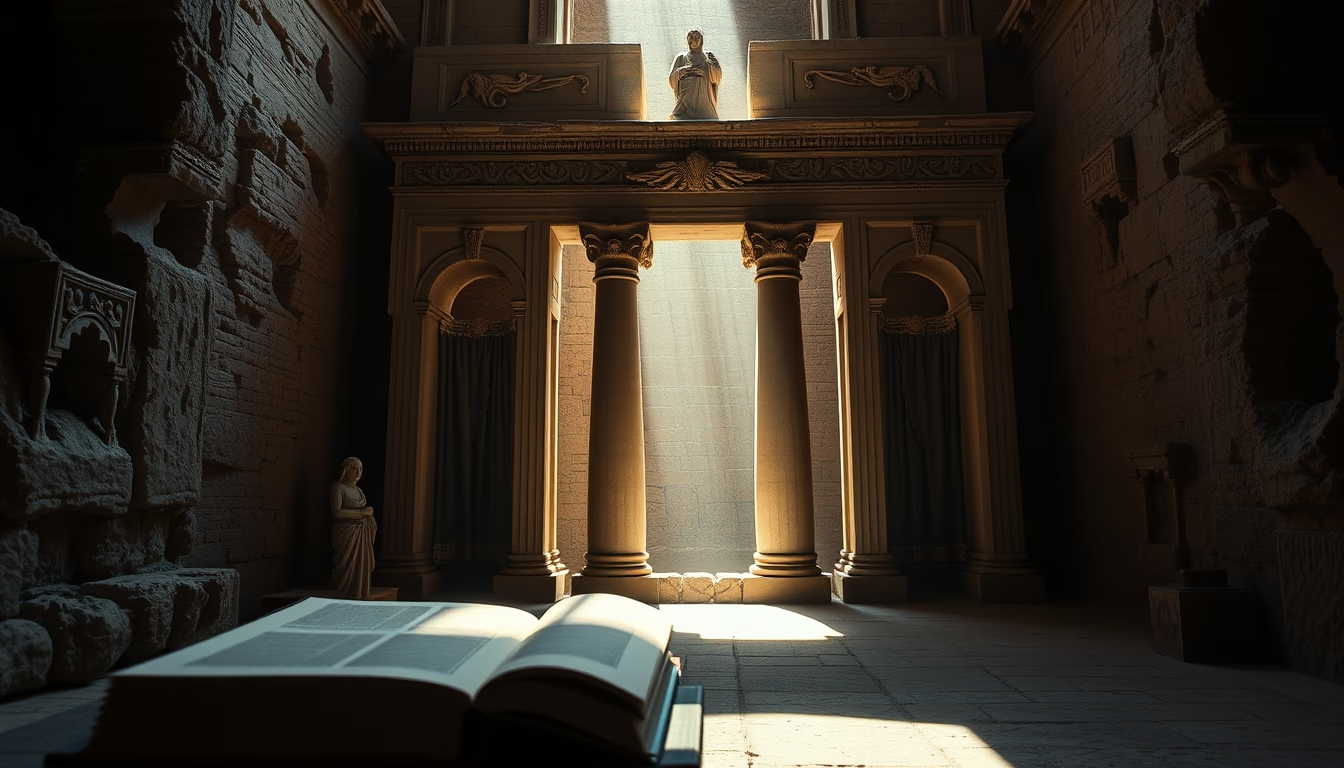
Pages of an ancient codex reveal the transition from papyrus scroll to bound book, a milestone in the history of knowledge preservation.
About this subject
The codex, a format that replaced the scroll (volumen) around the 1st century AD, revolutionized how knowledge was stored and consulted. The pages of these ancient codices, usually made of papyrus or parchment, allowed writing on both sides (opisthograph), increasing storage capacity and making it easier to refer to specific passages by flipping through the pages. Among the most notable examples are the Codex Sinaiticus and Codex Vaticanus, from the 4th century, which contain complete versions of the Bible in Greek. Producing a codex involved specialized craftsmen: scribes, illuminators, and bookbinders. Early bindings were simple, but later evolved into wooden boards covered with leather, often decorated with precious metals and gems. The spread of the codex is linked to the rise of Christianity, which favored this format for assembling sacred texts into a single portable volume. Today, fragments of these codices are preserved in libraries and museums, and their study (codicology) helps understand writing practices, materials, and the transmission of classical and religious works.
Frequently Asked Questions
What is a codex and how does it differ from a papyrus scroll?
A codex is a book with bound pages, the precursor to the modern book, which replaced the papyrus scroll (volumen) around the 1st century AD. While the scroll was read by unrolling horizontally, the codex allowed flipping through pages, making it easier to consult specific passages.
What is the oldest known codex?
The oldest surviving examples are papyrus fragments from the 2nd century AD, but the first complete codices date from the 4th century AD, such as the Codex Vaticanus and the Codex Sinaiticus.
Why is the codex important for the preservation of knowledge?
The codex format allowed long texts to be gathered in a single volume, protecting the pages within a binding. Moreover, the ability to write on both sides of the page reduced the amount of material needed and facilitated the dissemination of religious, philosophical, and scientific works.
Direct URL
https://pub-c7d6a6ea828543ac903a74a341ccb2e1.r2.dev/imagens/codex-pages-ancient-fine-art-photography-p5.avifHow to credit
Include a visible link back to UtilizAí. Copy one of the snippets below:
<a href="https://xn--utiliza-eza.com/en/midia/imagens/codex-pages-ancient-fine-art-photography-p5">Codex pages ancient</a> by <a href="https://xn--utiliza-eza.com">UtilizAí</a>, licensed under <a href="https://creativecommons.org/licenses/by/4.0/">CC BY 4.0</a>.
[Codex pages ancient](https://xn--utiliza-eza.com/en/midia/imagens/codex-pages-ancient-fine-art-photography-p5) by [UtilizAí](https://xn--utiliza-eza.com), CC BY 4.0
License: CC-BY-4.0