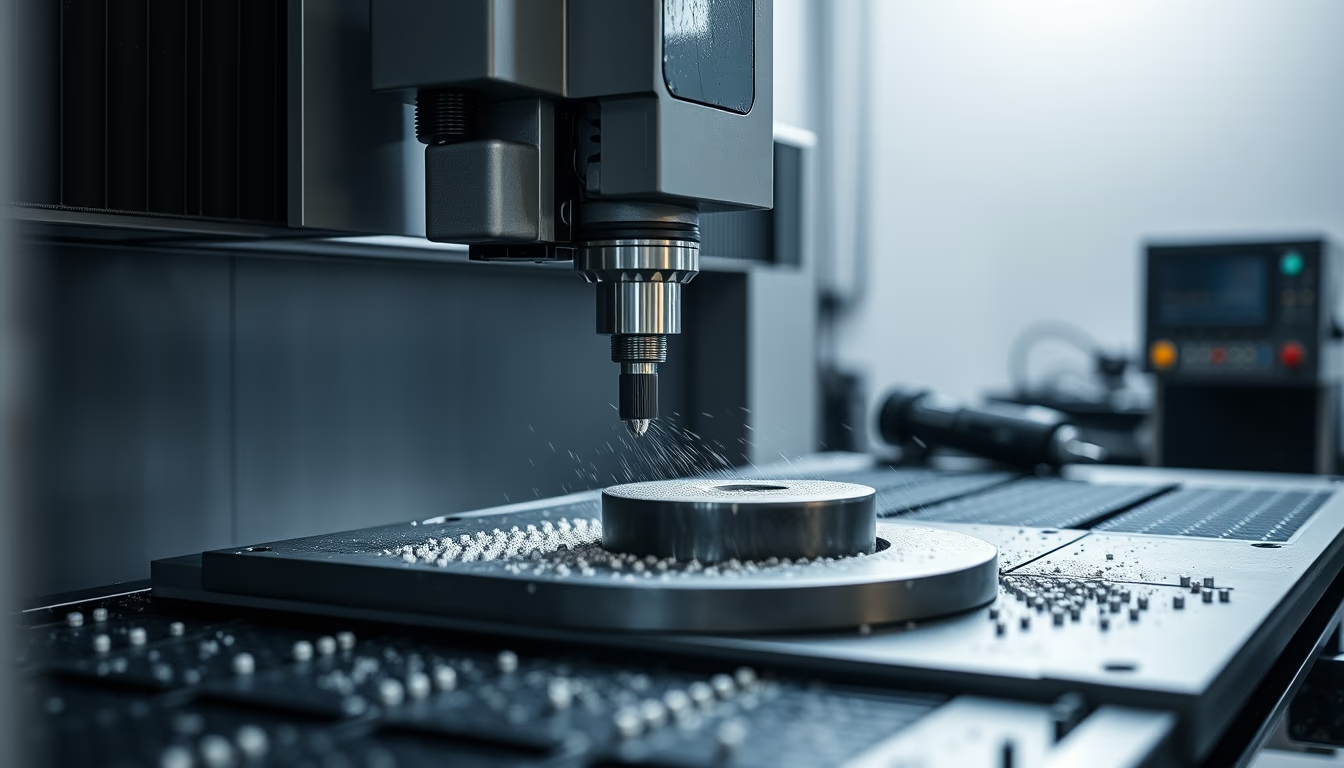
Cnc machine cutting
1344×768 · AVIF · CC BY 4.0
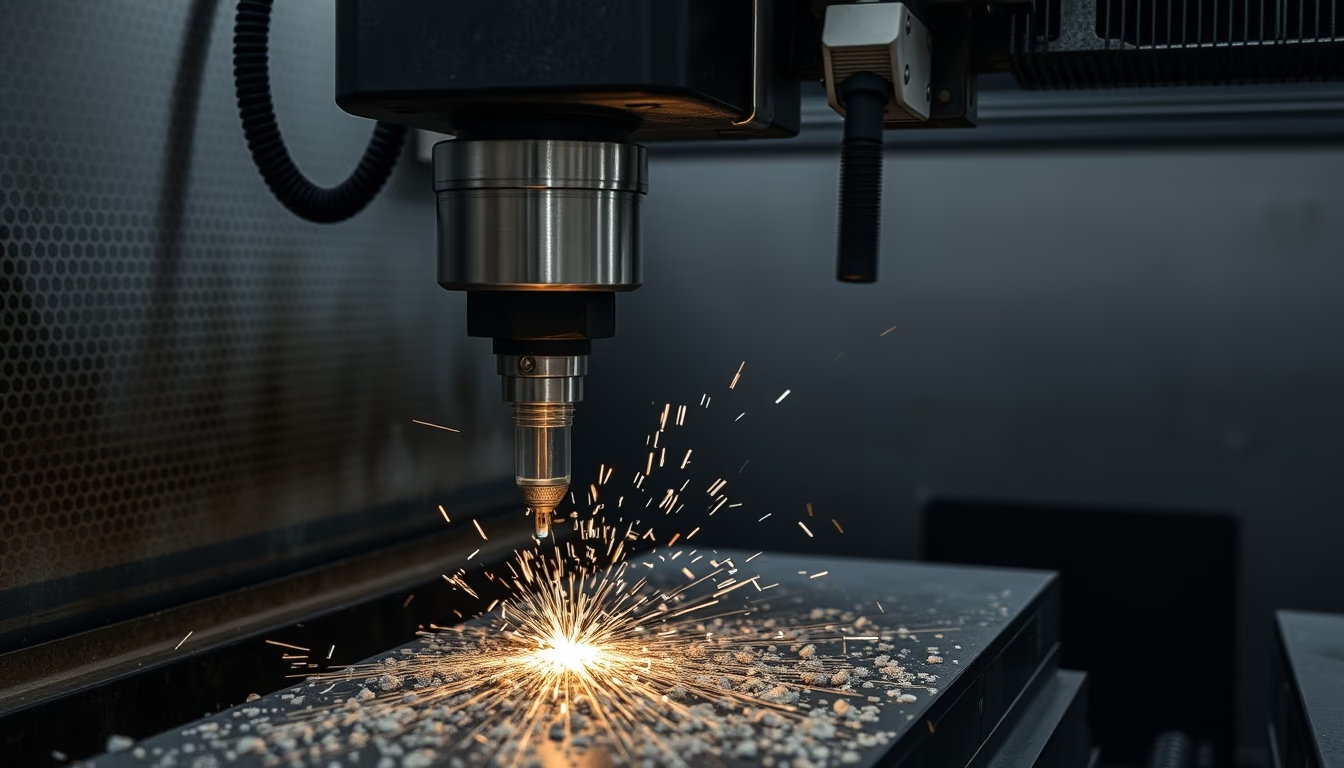
CNC machines perform high-precision cuts on metals, plastics, and wood, revolutionizing modern manufacturing with automation and repeatability.
About this subject
CNC (Computer Numerical Control) refers to the automated control of machine tools such as mills, lathes, and plasma cutters via computer commands. These machines interpret CAD/CAM files to guide cutting tools with micrometer precision, replacing manual operation with digital instructions. The development of CNC began in the 1940s and 1950s, when engineer John T. Parsons, in collaboration with MIT, created the first prototypes funded by the U.S. Air Force to manufacture helicopter blades. Since then, the technology has spread to all industrial sectors.
A typical CNC machine moves the tool along three axes (X, Y, Z), but advanced models can have five or more axes, enabling cuts on complex geometries without repositioning the workpiece. Movements are driven by servo motors and ball screws, with encoder feedback to correct deviations. Cutting speed, feed rate, and depth are programmed individually for each material, optimizing finish and tool life. Common materials include aluminum, steel, titanium, acrylic, MDF, and composites, with typical tolerances of ±0.001 inches (0.025 mm).
In aerospace, CNC is essential for machining engine components and airframes using exotic alloys; in medical, it produces orthopedic implants and surgical instruments; in woodworking, it enables precise joinery for custom furniture. Beyond boosting productivity, CNC reduces material waste and human error, enabling mass production of identical parts. Small workshops also adopt benchtop CNC machines for rapid prototyping, democratizing access to precision manufacturing.
An interesting fact: the G-code, CNC's standard programming language, was standardized as RS-274 in the 1960s and remains in use today, with variations among manufacturers. Evolution includes integration with IoT and remote monitoring, allowing machines to self-adjust based on tool wear. Despite automation, the operator remains essential for programming toolpaths, selecting parameters, and inspecting quality, combining technical skill with software knowledge.
Frequently Asked Questions
What is the difference between CNC and 3D printing?
CNC machining is a subtractive process: it removes material from a solid block to create the part. 3D printing is additive: it builds the part layer by layer from a digital model. CNC is ideal for metal parts and tight tolerances; 3D printing excels at complex geometries and rapid prototyping.
What are the main types of CNC machines?
CNC mills (shape surfaces), CNC lathes (cylindrical parts), plasma and laser cutters (sheet metal), EDM (electrical discharge machining) for hard materials, and CNC routers for wood and plastics.
Can you operate a CNC machine without technical knowledge?
No. You need basic understanding of G-code programming, cutting parameters, safety, and materials. Many technical courses and online tutorials teach from scratch, but operation requires practice and caution to avoid accidents or machine damage.
Direct URL
https://pub-c7d6a6ea828543ac903a74a341ccb2e1.r2.dev/imagens/cnc-machine-cutting-national-geographic-style-p7.avifHow to credit
Include a visible link back to UtilizAí. Copy one of the snippets below:
<a href="https://xn--utiliza-eza.com/en/midia/imagens/cnc-machine-cutting-national-geographic-style-p7">Cnc machine cutting</a> by <a href="https://xn--utiliza-eza.com">UtilizAí</a>, licensed under <a href="https://creativecommons.org/licenses/by/4.0/">CC BY 4.0</a>.
[Cnc machine cutting](https://xn--utiliza-eza.com/en/midia/imagens/cnc-machine-cutting-national-geographic-style-p7) by [UtilizAí](https://xn--utiliza-eza.com), CC BY 4.0
License: CC-BY-4.0