Cnc machine cutting
1344×768 · AVIF · CC BY 4.0
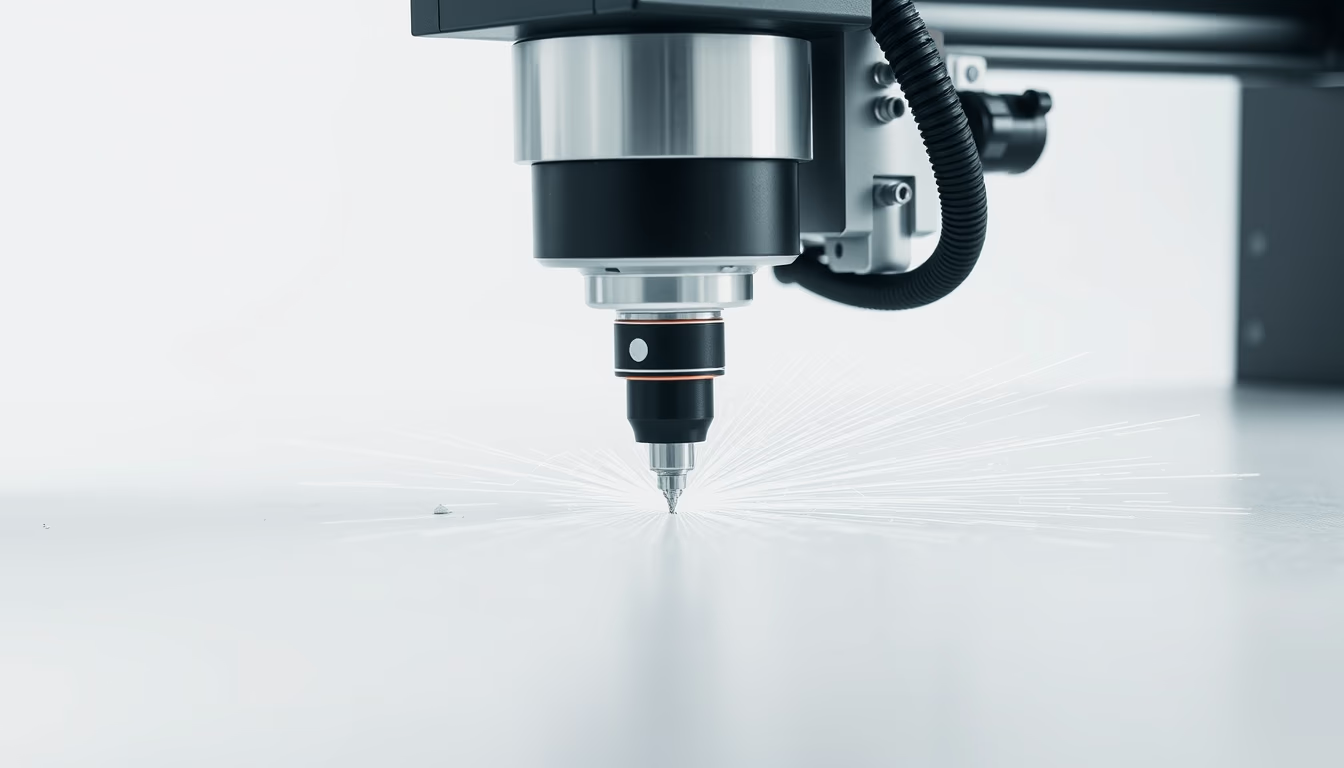
CNC cutting machines transform metal blocks into precise parts, revolutionizing industrial manufacturing with programmable automation.
About this subject
Computer numerical control, or CNC, enables machine tools to perform cutting operations with extremely high precision based on digital instructions. Unlike manual machinery, where the operator guides the tool, in CNC a computer interprets a CAD file and commands motors that move the cutting axis along multiple axes. This technology emerged in the 1940s, initially with punched tapes, and today uses CAM software to generate complex toolpaths.
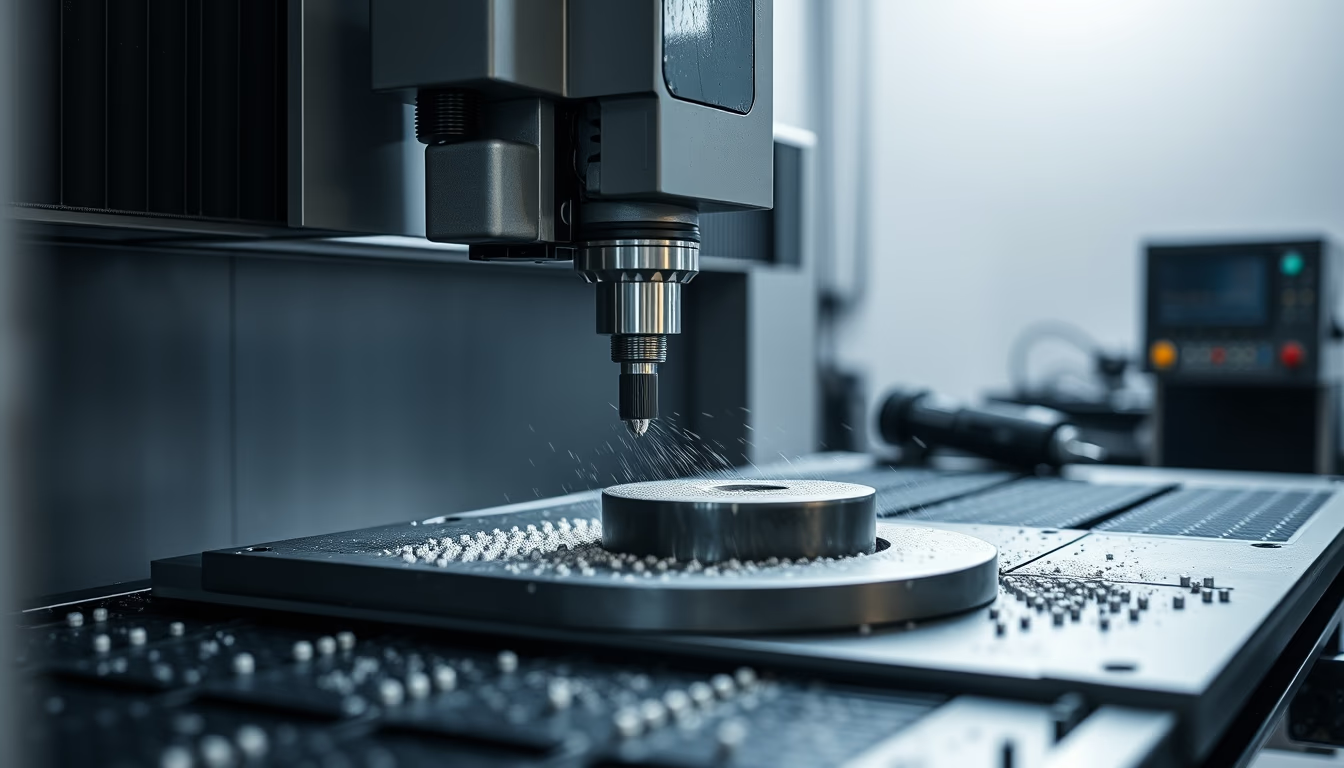
A typical CNC cutting operation involves clamping the material, usually metals such as steel, aluminum, brass or titanium, but also plastics and wood. The rotating tool, such as an end mill or drill bit, removes excess material as the G-code commands. Modern machines can have 3, 4 or even 5 axes, allowing three-dimensional cuts and intricate geometries impossible by hand. Spindle speed and feed rate are adjusted according to the material, ensuring superior surface finish.
The automotive industry uses CNC to manufacture engine blocks and transmission parts. In aerospace, precision is critical for turbine components and fuselages. It is also essential in producing molds for plastic injection and in surgical instrument fabrication. The ability to produce thousands of identical replicates makes CNC indispensable for high-value serial production.
Advantages of CNC cutting include repeatability within micrometers, reduced material waste, and increased safety because the operator does not need to approach the moving tool. Programming with virtual simulations allows testing the process without risks. With Industry 4.0, CNC machines are integrated with sensors and IoT, optimizing real-time monitoring and predictive maintenance.
Frequently Asked Questions
What does CNC stand for and how did it originate?
CNC stands for Computer Numerical Control. The technology emerged in the 1940s with punched tape and evolved with modern computers to automate machine tools.
What materials can be cut on a CNC machine?
Common materials include metals like steel, aluminum and titanium, as well as plastics, wood, composites and foams, provided the tool and parameters are suitable.
What are the main advantages of CNC cutting over manual cutting?
It offers micrometric precision, infinite repeatability, reduced human error, higher safety, and the ability to produce complex geometries that would be impractical manually.
Direct URL
https://pub-c7d6a6ea828543ac903a74a341ccb2e1.r2.dev/imagens/cnc-machine-cutting-commercial-product-photography-p5.avifHow to credit
Include a visible link back to UtilizAí. Copy one of the snippets below:
<a href="https://xn--utiliza-eza.com/en/midia/imagens/cnc-machine-cutting-commercial-product-photography-p5">Cnc machine cutting</a> by <a href="https://xn--utiliza-eza.com">UtilizAí</a>, licensed under <a href="https://creativecommons.org/licenses/by/4.0/">CC BY 4.0</a>.
[Cnc machine cutting](https://xn--utiliza-eza.com/en/midia/imagens/cnc-machine-cutting-commercial-product-photography-p5) by [UtilizAí](https://xn--utiliza-eza.com), CC BY 4.0
License: CC-BY-4.0