Chameleon color changing
1344×768 · AVIF · CC BY 4.0
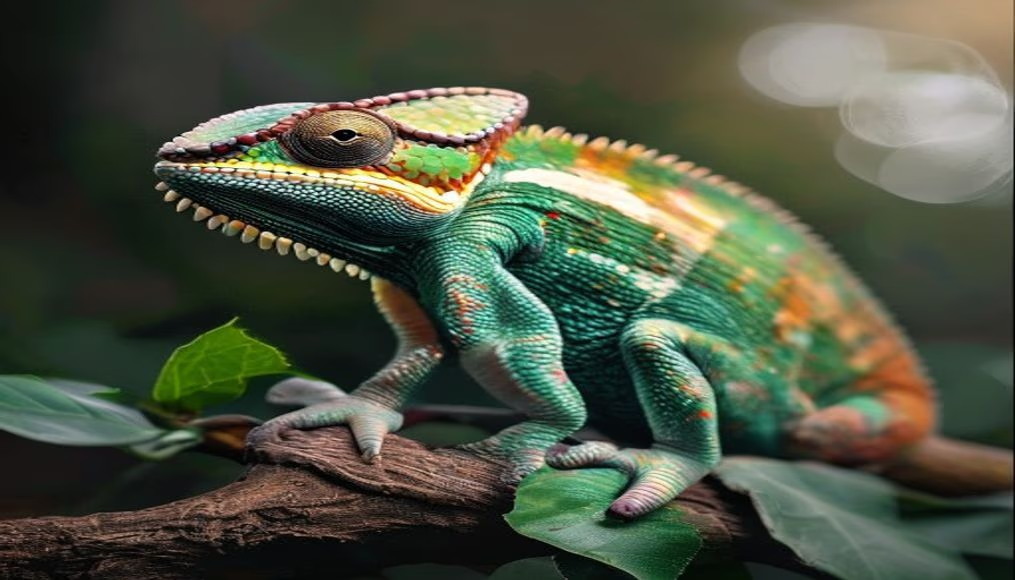
Chameleons are reptiles famous for their ability to change color, a fascinating biological phenomenon involving specialized skin cells.
About this subject
Chameleons belong to the family Chamaeleonidae and are primarily found in Madagascar, mainland Africa, southern Europe, and southern Asia. There are about 200 described species, displaying a wide range of sizes and behaviors. Color change is not solely for camouflage, as commonly believed, but also serves social communication (expressing aggression, submission, or mating interest) and thermoregulation (darker colors absorb more heat).
The biological basis of color change lies in layers of specialized cells called iridophores, containing nanocrystals of guanine. By contracting or relaxing the skin, the chameleon alters the spacing between these crystals, reflecting different wavelengths of light. This produces vibrant colors such as green, blue, yellow, orange, red, and even pink. Unlike squids and octopuses that use mechanical pigments, chameleons employ a structural optical mechanism.
Notable species include the panther chameleon (Furcifer pardalis) from Madagascar, which exhibits vivid colors and is popular in the exotic pet trade, and the veiled chameleon (Chamaeleo calyptratus), known for its large head crest (casque). Chameleons have independently rotating eyes that can swivel 360 degrees, a long extensible tongue that can exceed their body length, and zygodactyl feet (two toes forward, two backward) that enable a strong grip on branches.
Typical habitats include tropical rainforests, savannas, and scrublands. They are solitary and territorial, spending most of their time motionless while waiting for prey (insects, spiders, and small vertebrates). Reproduction varies by species; many are oviparous, burying eggs in the ground. Unfortunately, several species are threatened by habitat loss and the illegal wildlife trade.
Frequently Asked Questions
Why do chameleons change color?
Chameleons change color for camouflage, social communication (such as showing aggression or attraction), and temperature regulation. It is not solely for hiding from predators.
How do chameleons change color?
They have specialized skin cells called iridophores containing nanocrystals of guanine. By contracting or relaxing the skin, they alter the spacing between crystals, changing the reflected color. This is a structural optical process, not pigment-based.
Are chameleons only found in Madagascar?
No. Although Madagascar has the highest diversity, chameleons are also found in mainland Africa, southern Europe (e.g., Spain, Portugal), and southern Asia (India, Sri Lanka). Introduced populations exist in places like Hawaii.
Direct URL
https://pub-c7d6a6ea828543ac903a74a341ccb2e1.r2.dev/imagens/chameleon-color-changing-documentary-photography-p1.avifHow to credit
Include a visible link back to UtilizAí. Copy one of the snippets below:
<a href="https://xn--utiliza-eza.com/en/midia/imagens/chameleon-color-changing-documentary-photography-p1">Chameleon color changing</a> by <a href="https://xn--utiliza-eza.com">UtilizAí</a>, licensed under <a href="https://creativecommons.org/licenses/by/4.0/">CC BY 4.0</a>.
[Chameleon color changing](https://xn--utiliza-eza.com/en/midia/imagens/chameleon-color-changing-documentary-photography-p1) by [UtilizAí](https://xn--utiliza-eza.com), CC BY 4.0
License: CC-BY-4.0