Butterfly wing macro detail
1344×768 · AVIF · CC BY 4.0
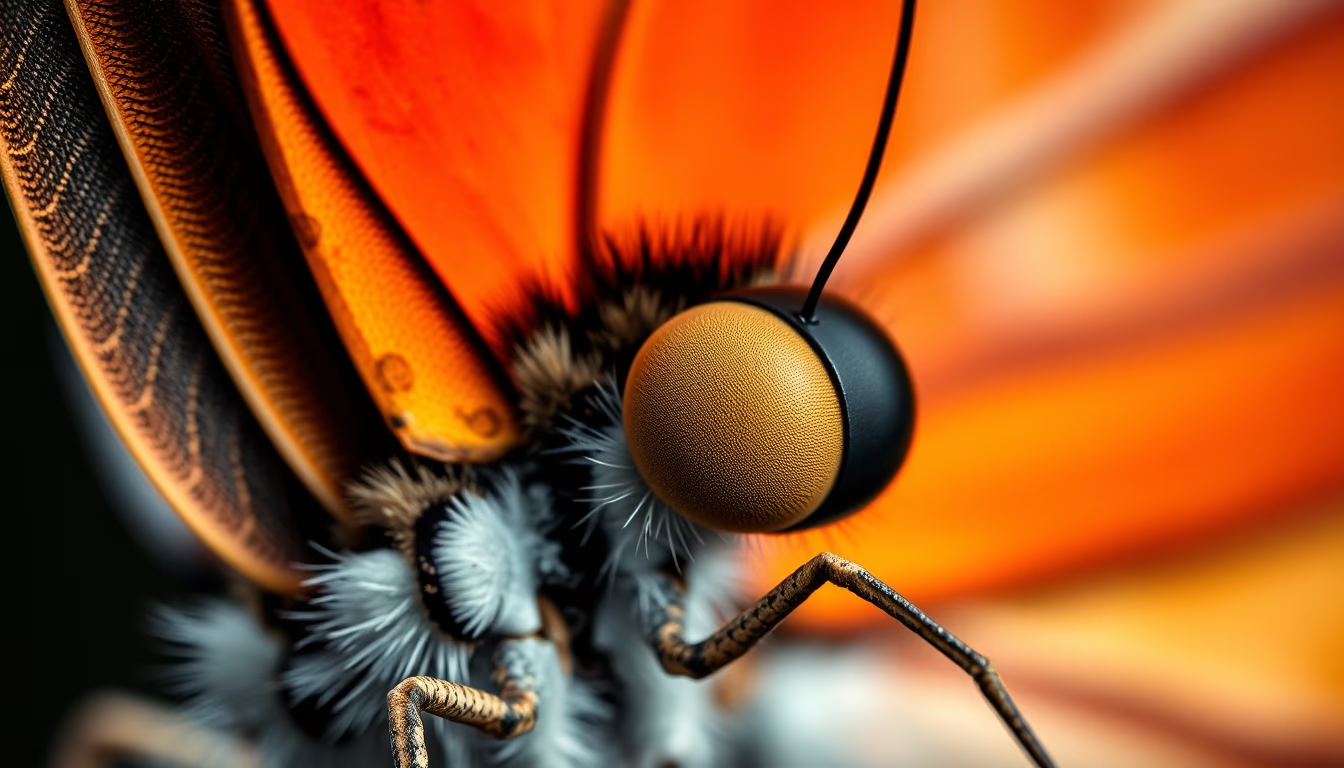
Butterfly wings are covered in thousands of scales that create vibrant colors and unique patterns, essential for camouflage and communication.
About this subject
Butterfly wings are fascinating structures made of two thin chitinous membranes, between which veins provide rigidity and nutrients. The surface is covered with overlapping scales, like shingles on a roof. These scales are modified hairs and come in various shapes, from elongated to round. Each scale can contain pigments or have microscopic structures that interfere with light, creating so-called structural colors.
Wing colors can be produced by chemical pigments (melanins for dark tones, flavonoids for yellows) or by physical effects of light interference and diffraction in nanostructures. Structural colors, such as the metallic blues of morpho butterflies, result from photonic crystals in the scales. These colors are iridescent, changing with the viewing angle. Beyond beauty, colors have crucial functions: camouflage to avoid predators, mimicry to imitate toxic species, and signaling for mate attraction.
Interestingly, some butterflies, like the glasswing butterfly (Greta oto), have nearly transparent wings. This happens because their scales are spaced apart and do not reflect light, allowing light to pass through. Another remarkable feature is that many butterflies see ultraviolet light, and their wings often display UV patterns invisible to humans, used for interspecies recognition. Scales also aid in thermoregulation, absorbing solar heat to warm the body during flight.
It is estimated that there are about 20,000 butterfly species worldwide, each with unique wing patterns. Habitat loss and pesticide use threaten many species, making conservation of these insects crucial not only for their beauty but for their role as pollinators and indicators of environmental health.
Frequently Asked Questions
Why do butterfly wings have such vivid colors?
Vivid colors come from pigments or microscopic structures that refract light, creating metallic hues. They serve for camouflage, mate attraction, and warning predators.
How do the scales on butterfly wings work?
Scales are chitinous plates that overlap. They contain pigments or nanostructures that generate colors through light interference. They also aid in thermoregulation and flight.
What is the difference between structural and pigmentary colors?
Pigmentary colors are produced by chemical compounds that absorb certain light wavelengths. Structural colors result from light reflection and interference in nanostructures, usually appearing brighter and iridescent.
Direct URL
https://pub-c7d6a6ea828543ac903a74a341ccb2e1.r2.dev/imagens/butterfly-wing-macro-detail-studio-editorial-portrait-p1.avifHow to credit
Include a visible link back to UtilizAí. Copy one of the snippets below:
<a href="https://xn--utiliza-eza.com/en/midia/imagens/butterfly-wing-macro-detail-studio-editorial-portrait-p1">Butterfly wing macro detail</a> by <a href="https://xn--utiliza-eza.com">UtilizAí</a>, licensed under <a href="https://creativecommons.org/licenses/by/4.0/">CC BY 4.0</a>.
[Butterfly wing macro detail](https://xn--utiliza-eza.com/en/midia/imagens/butterfly-wing-macro-detail-studio-editorial-portrait-p1) by [UtilizAí](https://xn--utiliza-eza.com), CC BY 4.0
License: CC-BY-4.0