Butterfly wing macro detail
1344×768 · AVIF · CC BY 4.0
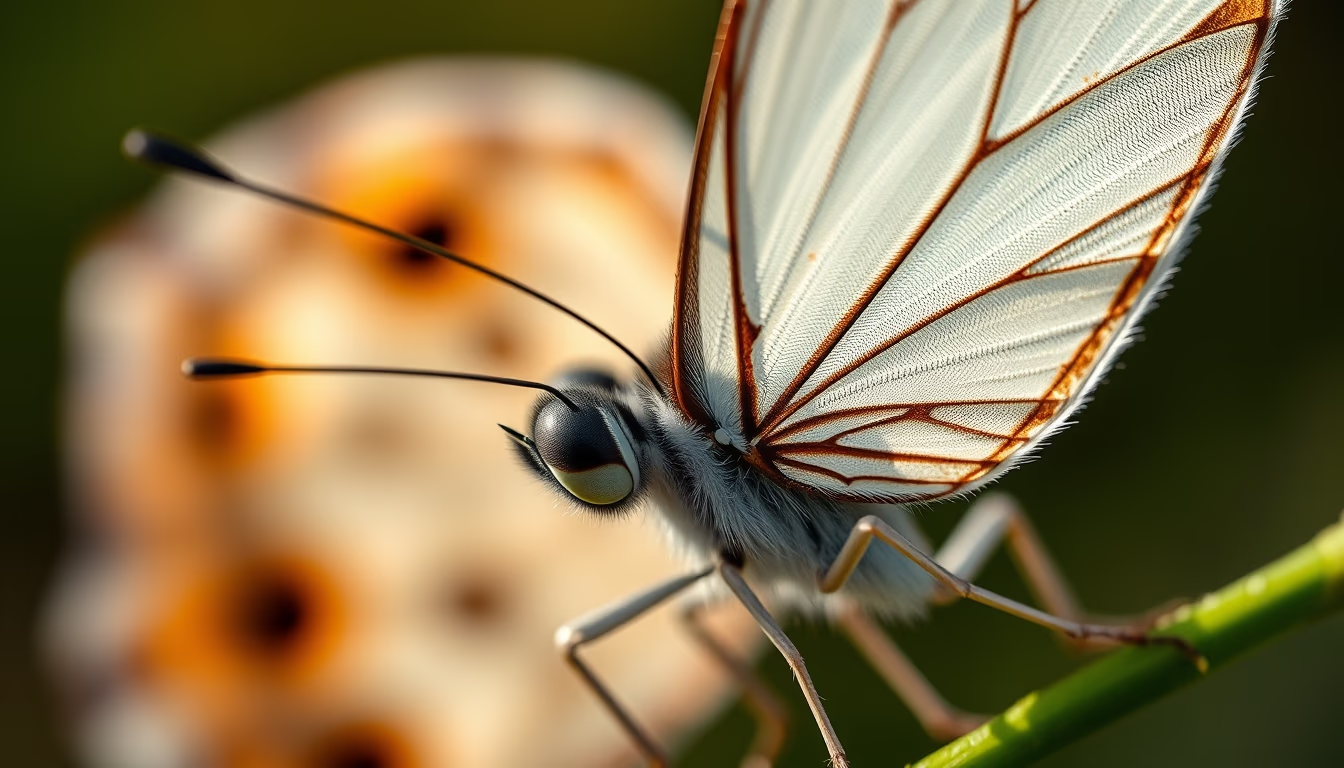
Microscopic details of butterfly wings reveal overlapping scales that create structural colors and camouflage patterns, a mechanism studied by biomimetics.
About this subject
Butterfly wings are covered with thousands of tiny scales arranged like roof tiles. These scales, actually modified hairs, are responsible for the vibrant colors and distinctive patterns. Unlike pigments, many colors are structural: the microstructure of the scales interferes with light, producing metallic and iridescent tones, such as the electric blue of Morpho rhetenor. This phenomenon, called structural coloration, also occurs in beetles and some birds.\n\nScales have multiple functions. Beyond sexual attraction and camouflage against predators, they aid in thermoregulation and water repellency. Studies show that the wing surface has superhydrophobic properties, inspiring self-cleaning materials. The arrangement of scales also influences aerodynamics during flight.\n\nScientists use electron microscopy to analyze these structures, which can be only a few micrometers across. Biomimetic research has already yielded advances in optical sensors, pigment-free paints, and more efficient solar panels. Butterflies are an example of how evolution produced complex solutions at the nanoscale.\n\nThere are about 20,000 butterfly species worldwide, each with unique scale patterns. Some, like the glasswing butterfly (Greta oto), have transparent scales that reduce reflection, an optical trick studied for anti-reflective displays. Scales can also contain pigments that absorb UV light, visible only to other butterflies.
Frequently Asked Questions
Why do butterfly wings have iridescent colors?
Iridescence is caused by the microscopic structure of the scales, which refracts light at different angles, creating colors that change with the viewing angle.
How many scales does a butterfly wing have?
A wing can have thousands of scales arranged in precise rows. Large species may have over 100,000 scales per wing.
How do scales help with camouflage?
The scale patterns mimic leaves, bark, or predator eyes, confusing enemies. Structural coloration also allows the butterfly to blend into the environment.
Direct URL
https://pub-c7d6a6ea828543ac903a74a341ccb2e1.r2.dev/imagens/butterfly-wing-macro-detail-magazine-editorial-p6.avifHow to credit
Include a visible link back to UtilizAí. Copy one of the snippets below:
<a href="https://xn--utiliza-eza.com/en/midia/imagens/butterfly-wing-macro-detail-magazine-editorial-p6">Butterfly wing macro detail</a> by <a href="https://xn--utiliza-eza.com">UtilizAí</a>, licensed under <a href="https://creativecommons.org/licenses/by/4.0/">CC BY 4.0</a>.
[Butterfly wing macro detail](https://xn--utiliza-eza.com/en/midia/imagens/butterfly-wing-macro-detail-magazine-editorial-p6) by [UtilizAí](https://xn--utiliza-eza.com), CC BY 4.0
License: CC-BY-4.0