Butterfly wing macro detail
1344×768 · AVIF · CC BY 4.0
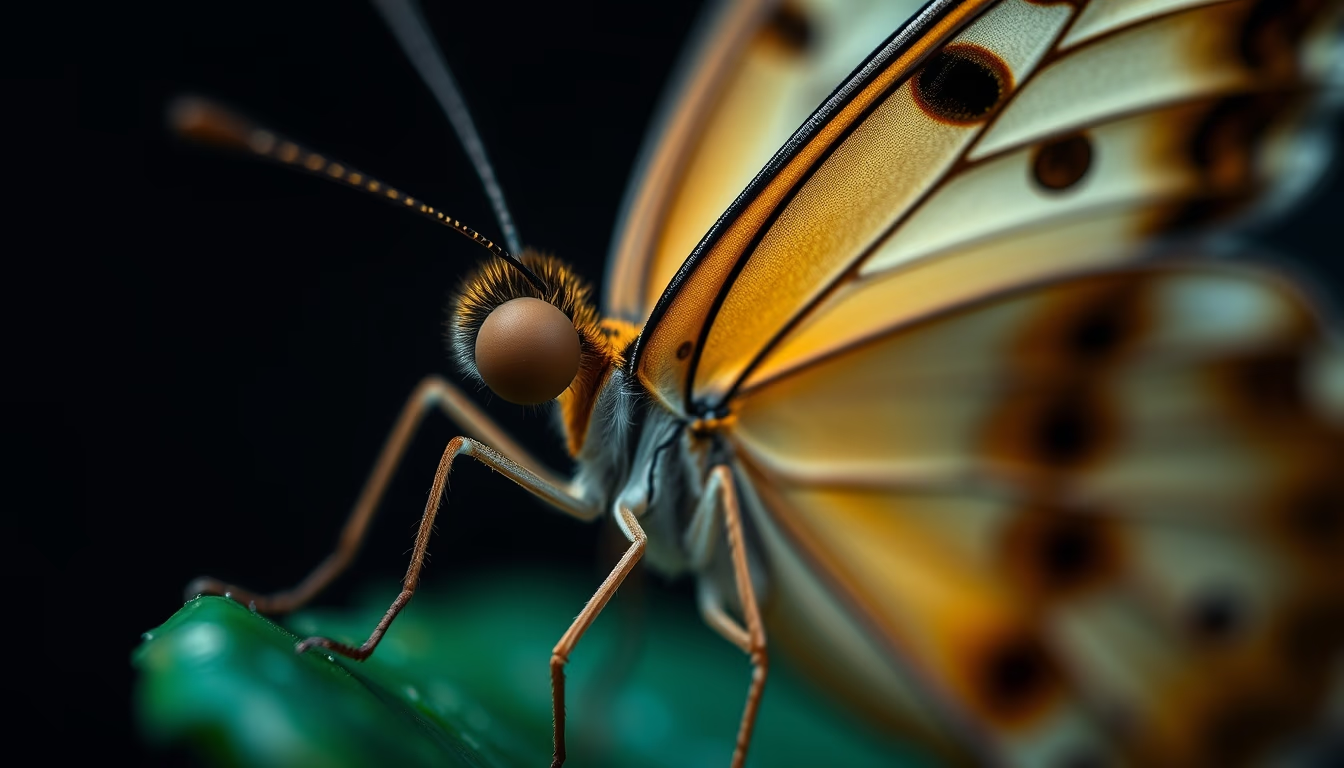
Butterfly wings reveal a microcosm of structural colors and overlapping scales, each detail telling an evolutionary story.
About this subject
Butterfly wings are covered by thousands of tiny scales that overlap like roof tiles. These scales, actually modified bristles, are responsible for the vibrant colors and characteristic patterns. Coloration can be of two types: pigmentary, derived from chemical compounds such as melanin and flavonoids, or structural, resulting from light interference in the scales' microstructures. The combination of these mechanisms produces iridescent effects, like those seen on the wings of the Morpho butterfly, native to the Amazon.
Each scale has a complex morphology, with ridges and lamellae that diffract light at specific wavelengths. This architecture not only produces colors but also aids in thermoregulation, camouflage, and communication among individuals. In many species, wing patterns function as sexual signaling or defense against predators, with false eyes or warning colors.
The detailed study of butterfly wings has inspired technological innovations, such as optical sensors and anticounterfeiting materials. Scientific macrophotography allows documenting these structures at sufficient resolution for taxonomic analysis and evolutionary studies, revealing adaptations that have occurred over millions of years.
In Brazil, a country with one of the highest diversities of lepidopterans in the world, macro recording of butterfly wings is an important tool for conservation. Every detail, from scale density to microtopography, carries information about the habitat and behavior of species, making each image a valuable scientific document.
Frequently Asked Questions
Why are butterfly wings colorful?
Wing colors serve multiple functions: attracting mates, camouflage against predators, toxicity signaling (aposematism), and thermoregulation. Colors can be produced by pigments or by microscopic structures that interfere with light.
How are the scales on butterfly wings organized?
Scales are arranged in rows on the wing membrane, usually overlapping like roof tiles. Each scale has an elongated shape and may contain ridges and lamellae that create optical effects. Density and orientation vary among species.
What is the difference between pigmentary and structural color?
Pigmentary color comes from molecules that absorb certain wavelengths (e.g., melanin produces black/brown). Structural color results from light reflection on nanostructures, such as scale lamellae, and can produce iridescence (changes with viewing angle).
Direct URL
https://pub-c7d6a6ea828543ac903a74a341ccb2e1.r2.dev/imagens/butterfly-wing-macro-detail-fine-art-photography-p5.avifHow to credit
Include a visible link back to UtilizAí. Copy one of the snippets below:
<a href="https://xn--utiliza-eza.com/en/midia/imagens/butterfly-wing-macro-detail-fine-art-photography-p5">Butterfly wing macro detail</a> by <a href="https://xn--utiliza-eza.com">UtilizAí</a>, licensed under <a href="https://creativecommons.org/licenses/by/4.0/">CC BY 4.0</a>.
[Butterfly wing macro detail](https://xn--utiliza-eza.com/en/midia/imagens/butterfly-wing-macro-detail-fine-art-photography-p5) by [UtilizAí](https://xn--utiliza-eza.com), CC BY 4.0
License: CC-BY-4.0