Brazilian highway BR-101 stretching toward horizon with cargo trucks at golden hour
1344×768 · AVIF · CC BY 4.0
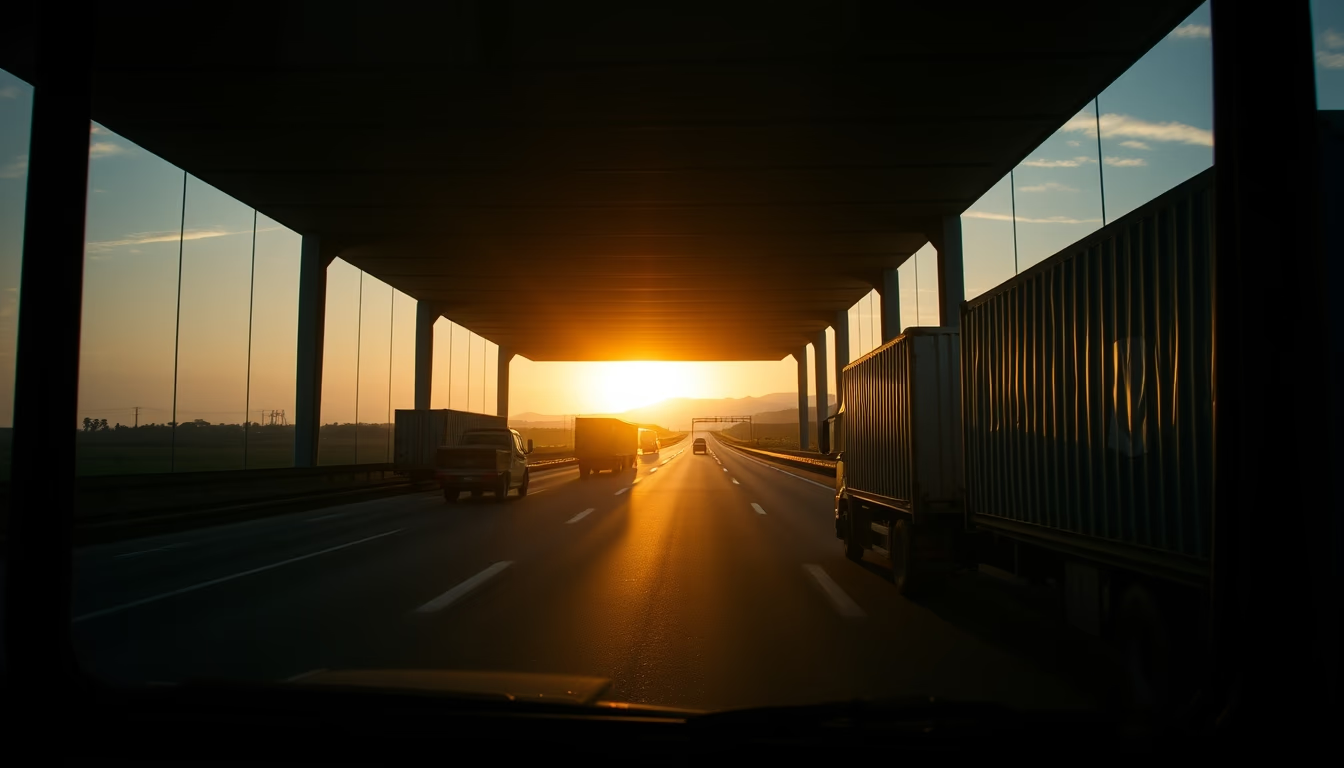
BR-101, Brazil's main longitudinal highway, stretches over 4,800 km from Rio Grande do Norte to Rio Grande do Sul. At golden hour, heavy cargo truck traffic highlights its crucial role in moving the country's production.
About this subject
BR-101 is one of Brazil's most important highways, running north-south along the coast. Stretching approximately 4,800 kilometers, it connects 12 states from Rio Grande do Norte to Rio Grande do Sul, passing through capitals such as Salvador, Vitória, Rio de Janeiro and Florianópolis. Construction began in the 1940s but was only completed in the 1970s, marking a milestone in Brazilian transport infrastructure. The highway is responsible for a large share of the country's agricultural, industrial and mineral output, especially grains, meat and ores. The stretch in São Paulo, between Ubatuba and the border with Rio de Janeiro, is known for its winding curves and Serra do Mar landscapes, while in the Northeast it crosses Atlantic Forest areas and sugarcane fields. Golden hour, with its warm light, is common in documentary photos capturing heavy truck traffic, symbolizing Brazil's economic dynamism and logistical challenges. BR-101 is also the scene of frequent accidents due to heavy vehicle overload and lack of duplication on many sections. Despite this, it remains the backbone of Brazilian road transport, with concession and modernization projects underway to improve safety and efficiency.
Frequently Asked Questions
What is the total length of BR-101?
BR-101 is approximately 4,800 kilometers long, connecting Rio Grande do Norte to Rio Grande do Sul.
Why is BR-101 important for the Brazilian economy?
It is crucial for transporting agricultural, industrial and mineral production, linking ports and consumer centers along the coast.
Is BR-101 fully duplicated?
No. Only some sections are duplicated, such as in Rio de Janeiro and São Paulo. Many sections are still single-lane, contributing to traffic jams and accidents.
Direct URL
https://pub-c7d6a6ea828543ac903a74a341ccb2e1.r2.dev/imagens/brazilian-highway-br-101-stretching-toward-horizon-with-cargo-trucks-at-golden-h-documentary-morning-6.avifHow to credit
Include a visible link back to UtilizAí. Copy one of the snippets below:
<a href="https://xn--utiliza-eza.com/en/midia/imagens/brazilian-highway-br-101-stretching-toward-horizon-with-cargo-trucks-at-golden-h-documentary-morning-6">Brazilian highway BR-101 stretching toward horizon with cargo trucks at golden hour</a> by <a href="https://xn--utiliza-eza.com">UtilizAí</a>, licensed under <a href="https://creativecommons.org/licenses/by/4.0/">CC BY 4.0</a>.
[Brazilian highway BR-101 stretching toward horizon with cargo trucks at golden hour](https://xn--utiliza-eza.com/en/midia/imagens/brazilian-highway-br-101-stretching-toward-horizon-with-cargo-trucks-at-golden-h-documentary-morning-6) by [UtilizAí](https://xn--utiliza-eza.com), CC BY 4.0
License: CC-BY-4.0