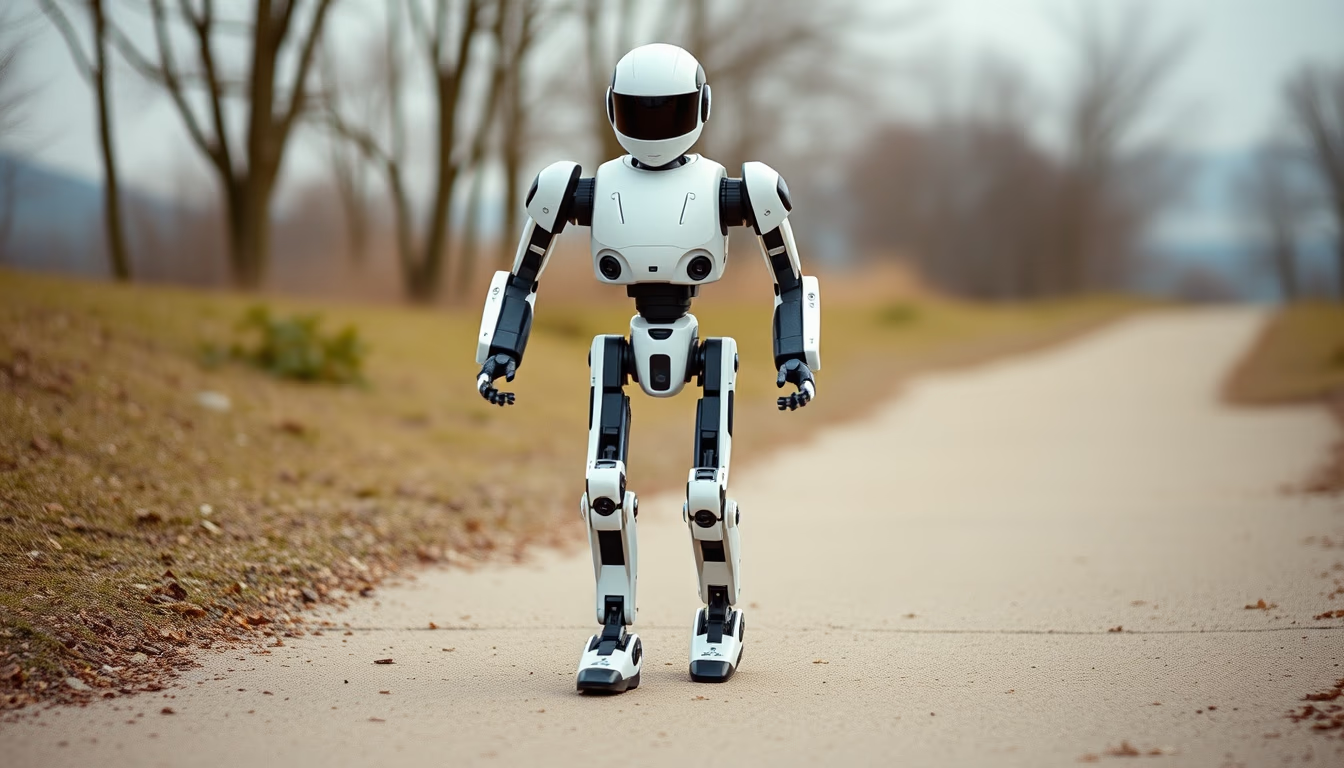
Bipedal robot walking
1344×768 · AVIF · CC BY 4.0
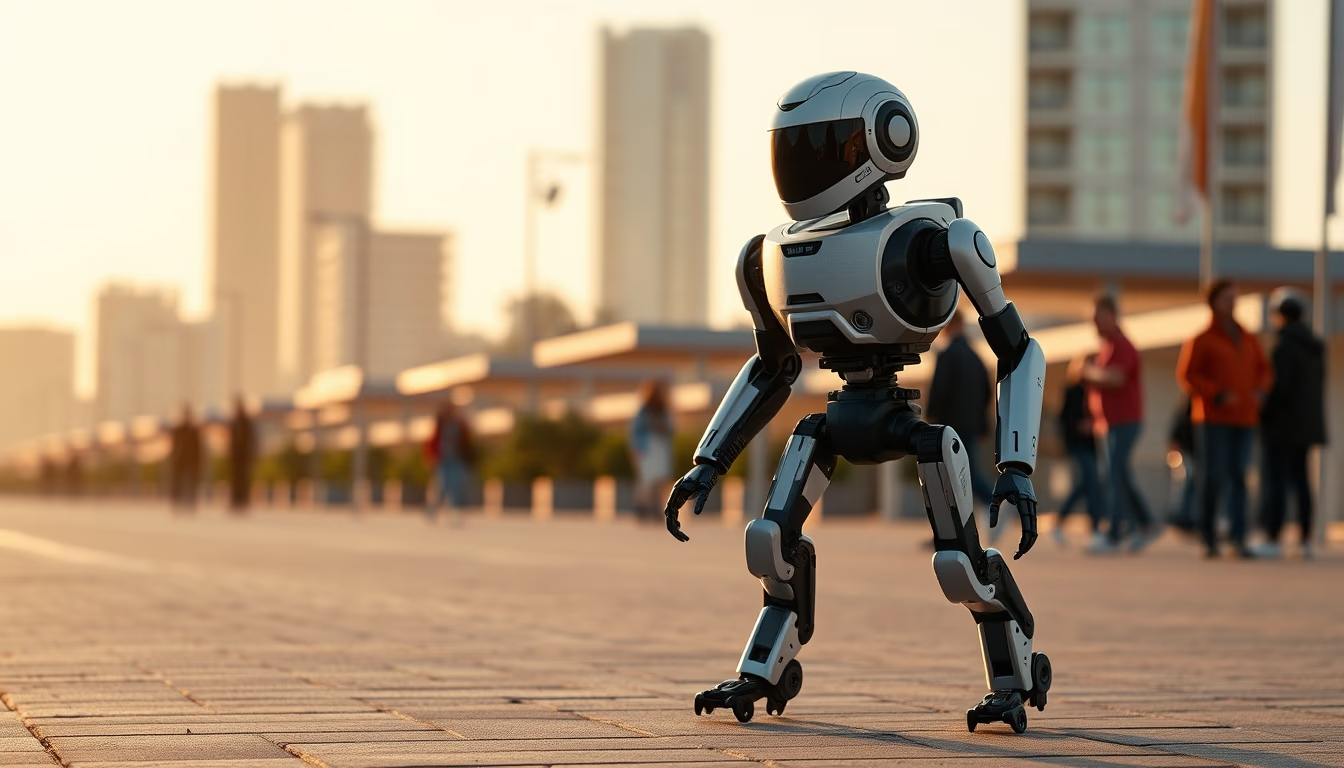
Bipedal robots combine advanced engineering to mimic human locomotion, with applications ranging from industry to space exploration.
About this subject
Bipedal robots are machines designed to walk on two legs, replicating human movement. Unlike wheeled or tracked robots, they face unique challenges of balance and coordination. The first functional bipedal robot was ASIMO, launched by Honda in 2000, which could walk, climb stairs, and interact with objects. Since then, advances in inertial sensors, actuators, and artificial intelligence have enabled significant leaps.
Today, companies like Boston Dynamics have developed Atlas, a hydraulic bipedal robot capable of jumping, running, and performing acrobatics. Another example is Digit from Agility Robotics, designed for warehouse logistics. These robots use predictive control algorithms and reinforcement learning to maintain stability on uneven terrain. Bipedal locomotion is energy-efficient on flat surfaces but requires intense computational processing to adapt to obstacles.
In academic research, universities such as MIT and ETH Zurich develop bipedal robots with lightweight legs and elastic joints, mimicking human muscles and tendons. Bipedal robotics also inspires prosthetics and exoskeletons for rehabilitation of people with disabilities. The main challenge is replicating the energy efficiency and adaptability of the human body, which uses about 100 muscles just for walking.
Future applications include exploration of rough terrain in space missions, disaster rescue, and domestic assistance. Although still expensive and limited in autonomy, bipedal robots represent a crucial step toward machines that interact naturally with human-designed environments.
Frequently Asked Questions
What was the first functional bipedal robot?
ASIMO, developed by Honda, was introduced in 2000 and is considered the first bipedal robot capable of walking, climbing stairs, and performing simple tasks.
What are the main challenges in building bipedal robots?
Maintaining dynamic balance on uneven terrain, managing energy consumption, and coordinating multiple joints in real time are the biggest challenges.
What practical applications do bipedal robots have today?
They are used in robotics research, warehouse logistics (such as Agility Robotics' Digit), and as platforms for developing prosthetics and exoskeletons.
Direct URL
https://pub-c7d6a6ea828543ac903a74a341ccb2e1.r2.dev/imagens/bipedal-robot-walking-travel-photography-p8.avifHow to credit
Include a visible link back to UtilizAí. Copy one of the snippets below:
<a href="https://xn--utiliza-eza.com/en/midia/imagens/bipedal-robot-walking-travel-photography-p8">Bipedal robot walking</a> by <a href="https://xn--utiliza-eza.com">UtilizAí</a>, licensed under <a href="https://creativecommons.org/licenses/by/4.0/">CC BY 4.0</a>.
[Bipedal robot walking](https://xn--utiliza-eza.com/en/midia/imagens/bipedal-robot-walking-travel-photography-p8) by [UtilizAí](https://xn--utiliza-eza.com), CC BY 4.0
License: CC-BY-4.0