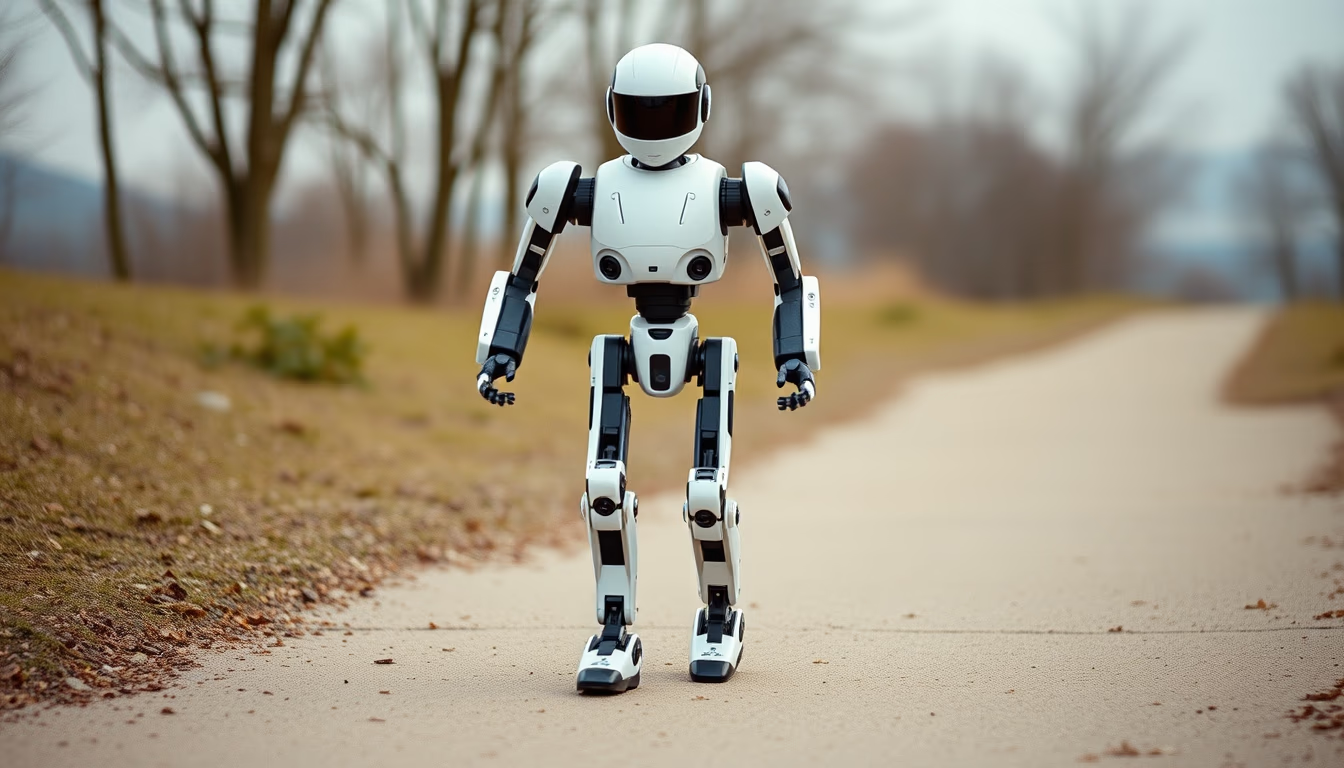
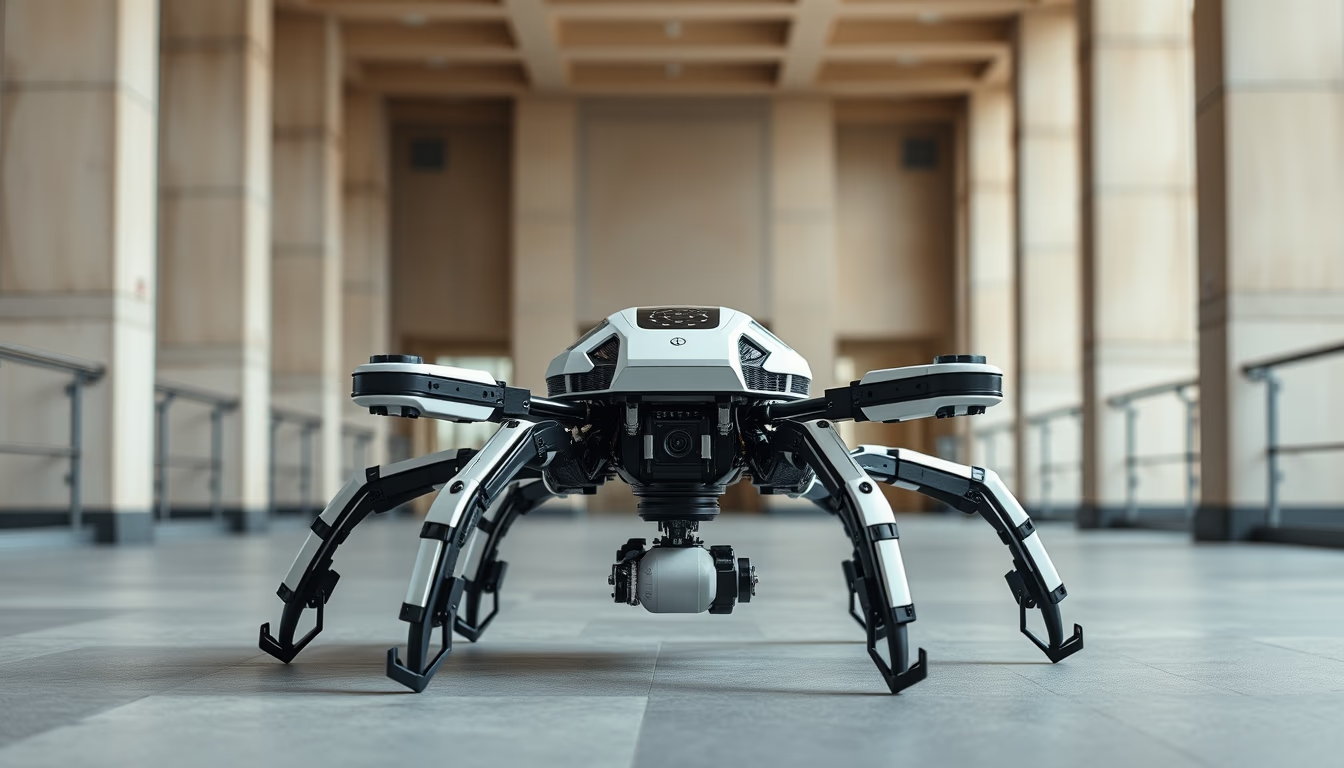
Bipedal robot walking
1344×768 · AVIF · CC BY 4.0
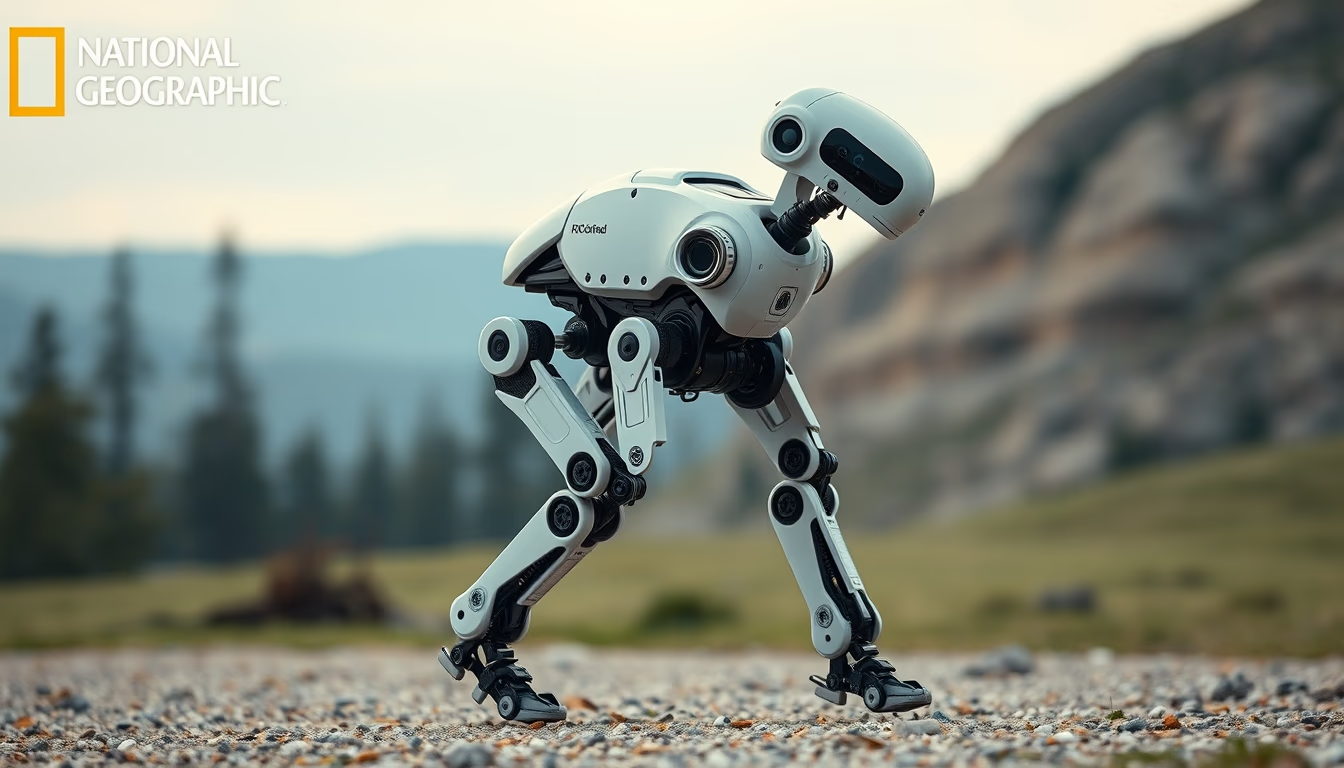
Bipedal robots mimic human locomotion, tackling balance and energy challenges to operate in rescue, exploration, and assistance roles.
About this subject
Bipedal robots are machines designed to walk on two legs, mimicking human locomotion. This field of robotics faces significant technical challenges, such as dynamic balance control, joint synchronization, and energy efficiency. Unlike wheeled or tracked robots, bipeds must constantly adjust their center of mass to avoid falling, requiring advanced sensors, real-time control algorithms, and precise actuators.
Notable bipedal robot development began in the 1980s with projects like Honda's ASIMO, which after years of research was unveiled in 2000 as a humanoid robot capable of walking, climbing stairs, and interacting with people. Another milestone is Boston Dynamics' Atlas, which demonstrates impressive skills like running, jumping, and performing backflips. Companies such as Tesla and Figure AI are also investing in bipedal robots for domestic and industrial tasks.
Practical applications include search and rescue operations in difficult-to-access environments, exploration of rugged terrain in space missions, and assistance for the elderly or people with reduced mobility. In Brazil, research groups like the Robotics Laboratory at the University of São Paulo develop bipedal prototypes for studying control and locomotion, contributing to the scientific foundation of the area.
Despite advances, most bipedal robots are still slower and less efficient than humans, and their autonomy is limited by batteries. The quest for natural and adaptive locomotion remains one of robotics' greatest challenges, with the potential to revolutionize sectors such as logistics, healthcare, and entertainment.
Frequently Asked Questions
What makes bipedal robots so challenging to build?
The main challenge is maintaining dynamic balance while walking, requiring high-precision sensors, complex control algorithms, and fast actuators. Additionally, energy efficiency is low compared to wheeled robots.
What are the main uses of bipedal robots today?
They are used in academic research, search and rescue, space exploration (e.g., on Mars), domestic assistance, and entertainment. Companies are also investigating their use in warehouses and factories.
Which bipedal robot is considered the most advanced currently?
Boston Dynamics' Atlas is widely considered the most advanced, capable of acrobatics like backflips and parkour. Other examples include Tesla's Optimus and Figure AI's Figure 01.
Direct URL
https://pub-c7d6a6ea828543ac903a74a341ccb2e1.r2.dev/imagens/bipedal-robot-walking-national-geographic-style-p9.avifHow to credit
Include a visible link back to UtilizAí. Copy one of the snippets below:
<a href="https://xn--utiliza-eza.com/en/midia/imagens/bipedal-robot-walking-national-geographic-style-p9">Bipedal robot walking</a> by <a href="https://xn--utiliza-eza.com">UtilizAí</a>, licensed under <a href="https://creativecommons.org/licenses/by/4.0/">CC BY 4.0</a>.
[Bipedal robot walking](https://xn--utiliza-eza.com/en/midia/imagens/bipedal-robot-walking-national-geographic-style-p9) by [UtilizAí](https://xn--utiliza-eza.com), CC BY 4.0
License: CC-BY-4.0